Thuja trees in landscape design: how to arrange them and what to combine them with (64 photos)
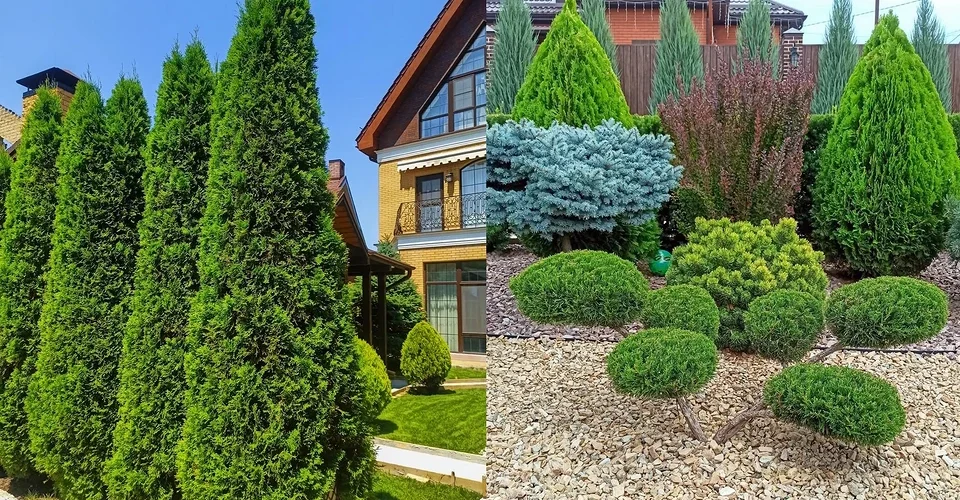
You can find out from our article how to improve your land using different types of this crop.
This family of conifers has long been used for landscaping. They come in a variety of shapes, colors, and sizes so that you can find the right option for both a small minimalist area and a spacious plot planted with various plants. Thuja embodies natural elegance and looks great on its own or alongside its peers. What’s more, it goes well with shrubs, flowers, and grasses. Could you take a look at photos of thuja in landscape design and learn how to reproduce these beautiful ideas at your cottage?
All about using thuja in landscaping
Pros and cons
This plant is considered one of the best options for natural site decoration.

All about using thuja in landscaping | Social media accounts of the master tierraverde.prof

And there are good reasons for this.
Pros
- Unpretentiousness — most varieties tolerate harsh winters and short periods of drought well, are undemanding in terms of soil composition, and can go without fertilization for a long time.
- Attractive appearance all year round — the plant does not shed its needles in winter and remains green. Some varieties may change the color of their crown in winter (to brownish-yellow or brown), but by summer, the emerald hue returns.
- If you plant thuja as a hedge, it will provide good protection from noise from neighbors or the road, as well as from strong gusts of wind.
- Spherical varieties look neat even without regular pruning, thanks to which the area always looks well-groomed.
- Like most conifers, this plant releases phytoncides that purify the air and fill it with a pleasant aroma.
However, thuja trees in landscape design have both advantages and disadvantages.
Cons
- Large varieties have a potent root system, which can damage the foundation (if planted close to the house) and utilities, or take water and nutrients from nearby flowers and shrubs.
- The dense crown provides thick shade, under which most ornamental plants either cannot grow or lose their appeal.
Seedlings should only be purchased from reputable nurseries; otherwise, there is a risk of buying something completely different from what you want. Unscrupulous sellers may sell Brabant or Columna varieties as dwarf varieties, only to find they grow to large sizes.
-

- Thuja trees in landscape design | Social media accounts of the company klukvalandscaping


The main varieties for decorating your plot
There are wide varieties of these conifers, but most are not suitable for landscape design for one reason or another: some species grow too large, others require too frequent pruning, and still others can only grow in strictly defined climatic conditions, etc.

The main varieties for decorating your plot | Social media accounts of blogger mulcha.vrn

Therefore, it is better to use the most popular varieties for decorating a summer cottage area — they are beautiful (even without regular pruning and shaping), unpretentious, and adapted to life in the middle lane.
All thujas can be divided into pyramidal and spherical. Each of them has its own characteristics.
Please note that “Golden” is sometimes added to the name, indicating that the tree’s crown will be yellow-gold. If the description includes the word “Silver,” it means that the needles on young shoots will be silvery or white. Variegated white-green colors are indicated by the addition of “Variegata.”
Here is a list of pyramidal (narrow/columnar) varieties of thuja (Thuja) that are grown and sold in the United States (mainly Thuja occidentalis and the hybrid Thuja × ‘Green Giant’), which are popular in landscaping:
Main pyramidal varieties of thuja in the United States
Popular narrow pyramidal varieties (for hedges, screens, solitary plantings):
- Thuja occidentalis ‘Emerald Green’ – narrow, dense pyramidal thuja, ~10–15 ft (~3–4.5 m) tall.
- Thuja occidentalis ‘North Pole’ – narrow pyramidal shape ~12–15 ft (~3.5–4.5 m).
- Thuja occidentalis ‘Pyramidalis’ – tall narrow column ~20–30 ft (~6–9 m).
- Thuja occidentalis ‘Brandon’ – dark green narrow pyramidal thuja ~12–15 ft.
- Thuja occidentalis ‘Holmstrup’ – compact narrow pyramidal shape ~6–8 ft (~2 m).
- Thuja occidentalis ‘Rushmore’ – narrow, winter-hardy column ~12–20 ft.
Wider / more varied pyramidal shapes:
- Thuja occidentalis ‘Techny’ – wide pyramidal shape, 15–20 ft (~4.5–6 m).
- Thuja occidentalis ‘Technito’ (BailJohn) – compact pyramidal (~8–10 ft).
- Thuja occidentalis ‘Wareana’ – pyramidal with bluish foliage, ~8–10 ft.
- Thuja occidentalis ‘Lutea’ (George Peabody) – golden-yellow pyramidal form.
- Thuja occidentalis ‘Sunkist’ – golden pyramidal thuja ~10–12 ft.
Hybrids and large pyramidal:
- Thuja × ‘Green Giant’ – a very popular fast-growing pyramidal hybrid (can exceed 40 ft in height, excellent for hedges and screens).
- Thuja plicata ‘Forever Goldy’ – a narrow golden pyramidal form of a western thuja hybrid.
Notes on selection
- Most of the varieties listed are Thuja occidentalis (Eastern Arborvitae), popular in the US in regions with temperate climates.
- The ‘Green Giant’ hybrid is more commonly used where fast growth and a tall hedge are required.
- Golden varieties (e.g., Sunkist, Lutea) look decorative throughout the season, but may change color slightly in winter.
Here is a clear English table of pyramidal (columnar) arborvitae (Thuja) varieties that are commonly grown and sold in the USA.
| Variety | Mature Height | Mature Width | Growth Rate | USDA Zones | Notes |
|---|---|---|---|---|---|
| Thuja occidentalis ‘Emerald Green’ (Smaragd) | 10–15 ft (3–4.5 m) | 3–4 ft (0.9–1.2 m) | Slow–Medium | 3–8 | Most popular narrow pyramidal arborvitae; dense, bright green year-round |
| Thuja occidentalis ‘North Pole®’ | 12–15 ft (3.5–4.5 m) | 3–5 ft (0.9–1.5 m) | Slow | 3–7 | Very narrow column; excellent for tight spaces |
| Thuja occidentalis ‘Pyramidalis’ | 20–30 ft (6–9 m) | 5–8 ft (1.5–2.4 m) | Medium | 3–7 | Classic tall pyramidal form |
| Thuja occidentalis ‘Brandon’ | 12–15 ft (3.5–4.5 m) | 4–6 ft (1.2–1.8 m) | Medium | 3–8 | Dense, cold-hardy, good winter color |
| Thuja occidentalis ‘Holmstrup’ | 6–10 ft (1.8–3 m) | 3–4 ft (0.9–1.2 m) | Slow | 3–8 | Compact pyramidal shape, low maintenance |
| Thuja occidentalis ‘Techny’ | 15–20 ft (4.5–6 m) | 6–8 ft (1.8–2.4 m) | Medium | 3–8 | Broad pyramidal form, very hardy |
| Thuja occidentalis ‘Technito®’ | 8–10 ft (2.5–3 m) | 4–5 ft (1.2–1.5 m) | Slow | 3–8 | Compact pyramidal arborvitae |
| Thuja occidentalis ‘Wareana’ | 8–10 ft (2.5–3 m) | 6–8 ft (1.8–2.4 m) | Slow | 3–8 | Bluish-green foliage, wide pyramid |
| Thuja occidentalis ‘Sunkist’ | 10–12 ft (3–3.5 m) | 4–6 ft (1.2–1.8 m) | Medium | 3–7 | Golden pyramidal foliage |
| Thuja occidentalis ‘Lutea’ (George Peabody) | 12–15 ft (3.5–4.5 m) | 5–6 ft (1.5–1.8 m) | Medium | 4–8 | Bright golden color, classic pyramid |
| Variety | Mature Height | Growth Rate | USDA Zones | Notes |
|---|---|---|---|---|
| Thuja × ‘Green Giant’ | 30–40+ ft (9–12+ m) | Fast | 5–8 | Very popular for tall privacy screens; pyramidal but much larger |
- Most pyramidal arborvitae sold in the US are Thuja occidentalis (Eastern Arborvitae).
- These varieties are widely available in US nurseries, garden centers, and online plant stores.
- Best uses: privacy hedges, windbreaks, formal landscapes, narrow yards.
Here is a list of globose (ball-shaped) varieties of thuja (Thuja) that grow and are sold in the United States — mainly low ornamental forms for borders, rockeries, containers, and small gardens:
| Variety | Mature Height | Mature Width | Growth | USDA Zones | Notes |
|---|---|---|---|---|---|
| Thuja occidentalis ‘Danica’ | 2–3 ft (0.6–0.9 m) | 3–4 ft (0.9–1.2 m) | Slow | 3–7 | Classic globe shape; excellent low-growing accent plant |
| Thuja occidentalis ‘Little Giant’ | 3–4 ft (0.9–1.2 m) | 3–4 ft (0.9–1.2 m) | Slow | 3–7 | Dense, naturally compact rounded form |
| Thuja occidentalis ‘Mirjam’ | 2–3 ft (0.6–0.9 m) | 3–4 ft (0.9–1.2 m) | Slow | 3–7 | Compact, tidy globe shape |
| Thuja occidentalis ‘Tom Thumb’ | 2–3 ft (0.6–0.9 m) | 2–3 ft (0.6–0.9 m) | Slow | 3–8 | Very small, naturally rounded variety |
| Thuja occidentalis ‘Hetz Midget’ | 1.5–2.5 ft (0.5–0.8 m) | 2–3 ft (0.6–0.9 m) | Slow | 3–8 | Extremely compact globe-shaped arborvitae |
| Thuja occidentalis ‘Golden Globe’ | 3–4 ft (0.9–1.2 m) | 3–4 ft (0.9–1.2 m) | Slow–Medium | 3–8 | Golden foliage with a compact globe form |
| Thuja occidentalis ‘Rheingold’ (when pruned into ball) | 3–5 ft (1–1.5 m) | 3–5 ft (1–1.5 m) | Slow–Medium | 3–8 | Naturally conical but commonly shaped into a ball |
Notes on Ball-Shaped Thuja
Growth & Use
- These are slow-growing, compact ornamental forms best for:
- Rock gardens
- Foundation plantings
- Containers
- Formal gardens
- Accent focal points
- Most stay under 3–4 ft tall and wide, making them ideal where space is limited.
USDA Hardiness
- Most grow well in USDA zones 3–8, meaning they’re hardy across much of the continental United States.
Appearance
- Leaves can be green or golden depending on the cultivar.
- Many maintain good color year-round, though gold tones may deepen in winter.
| Best For Small Borders | Best For Accent Containers | Best for Golden Color |
|---|---|---|
| ‘Hetz Midget’ | ‘Tom Thumb’ | ‘Golden Globe’ |
| ‘Danica’ | ‘Little Giant’ | (also prune ‘Rheingold’) |
-

- Thuja trees in landscape design | Social media accounts of the company klukvalandscaping


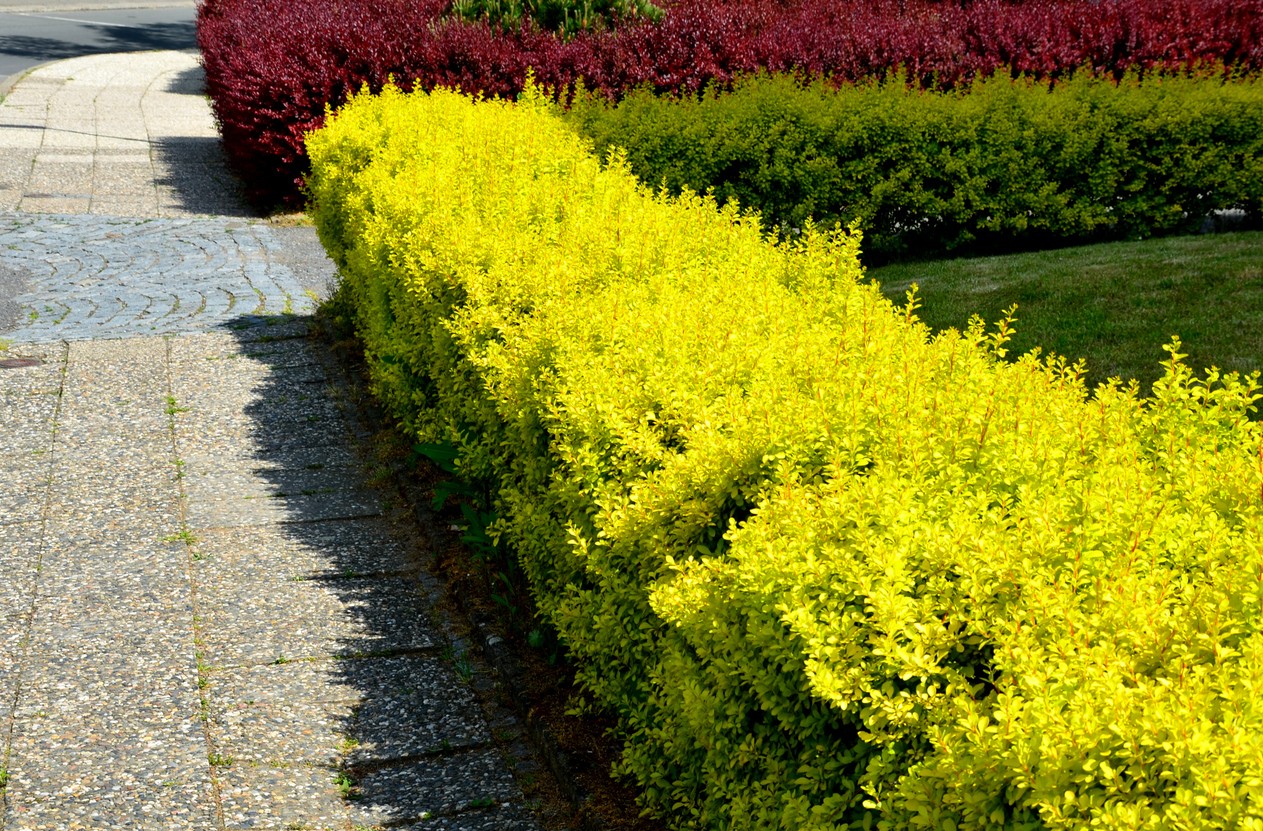
How to arrange thuja trees on your property
Thuja trees, in all shapes and sizes, look good on their own. This is the ideal solution when you want to decorate your garden but don’t like flowering shrubs and spreading trees. With this type of plant, the space looks minimalistic and elegant, but not as dull as a flat lawn.
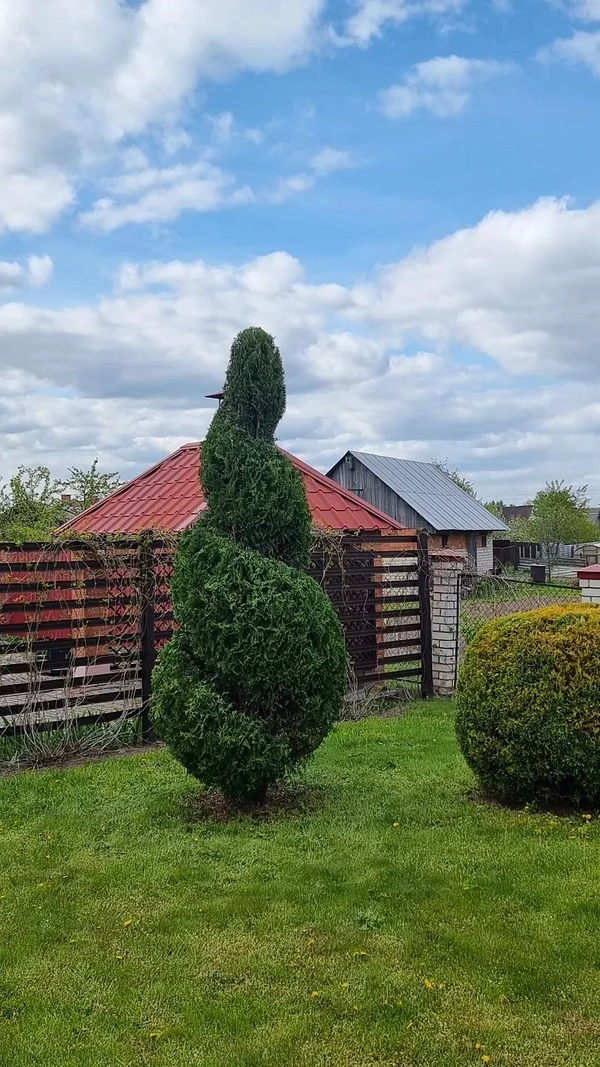
How to arrange thuja trees on your property | Social media accounts of blogger tuikovod
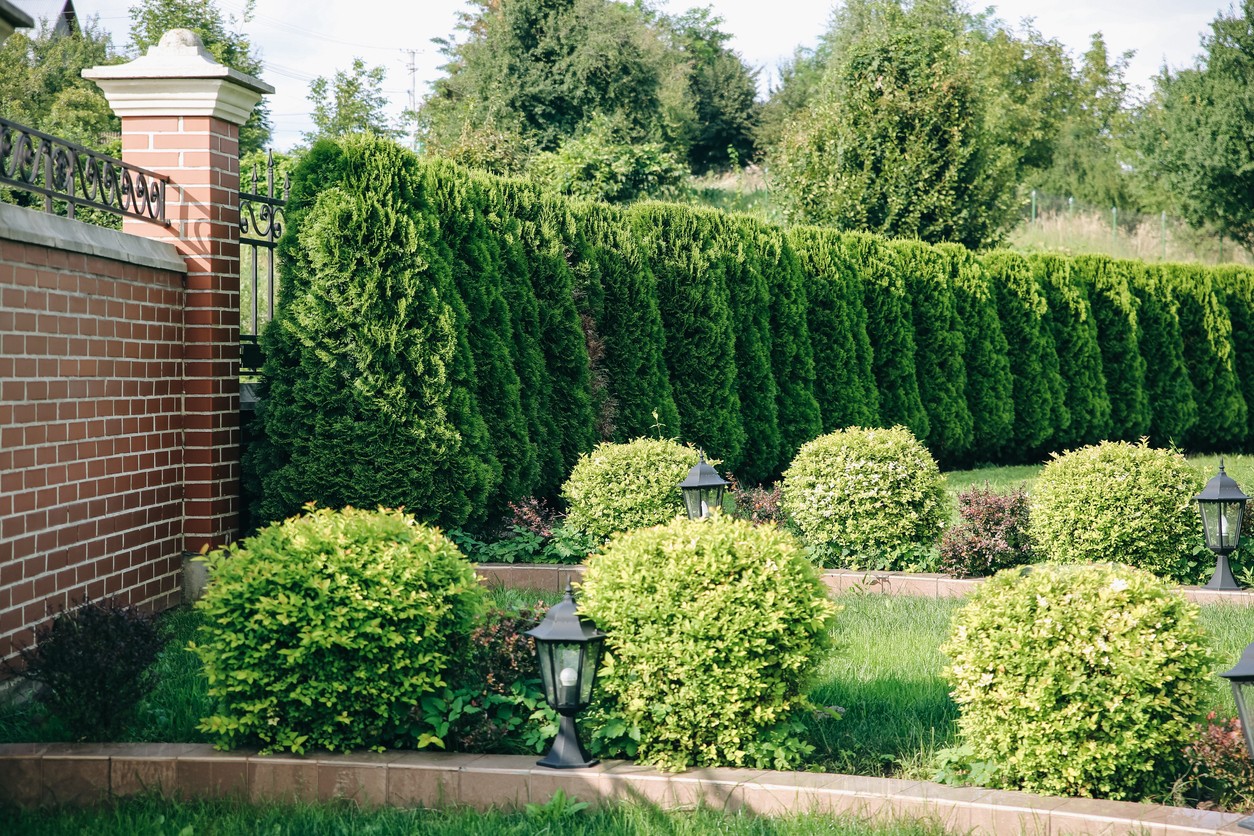
Since all species are evergreen, they can be safely planted in the center of the lawn—unlike deciduous plants, this crop will decorate the lawn not only in the warm season, but also in winter, and will not drop withered leaves on the grass.
-

- How to arrange thuja trees on your property | Social media accounts of blogger sad.o.v.nik


Group
Pairing and grouping plantings is a good way to plant thuja trees beautifully on your plot, filling empty spaces without creating visual noise.

Thuja trees in landscape design | Social media accounts of blogger verberry_garden

Two trees of the same variety and age will make a beautiful frame for a gate or porch.
Three to five plants can be used to create an accent composition on the site, but they require a lot of space: standard “hundred-square-meter” plots usually lack enough space for such a landscape design element. At the same time, it is better to plant different species: it will not be difficult to find successful combinations, as all thuja trees look good together.
Another option is to create a green arch. To do this, dig two pipes to the width of the passage, into which you insert an arc made of metal reinforcement (plastic may not withstand the weight of grown trees). As the seedlings grow, they are carefully tied to it with thick elastic rope or wire, ensuring they do not dig into the trunk. Gradually, the trees will grow to the very top and close together, forming a beautiful semicircular passage.
-

- Thuja trees in landscape design | Social media accounts of the master tierraverde.prof


Line
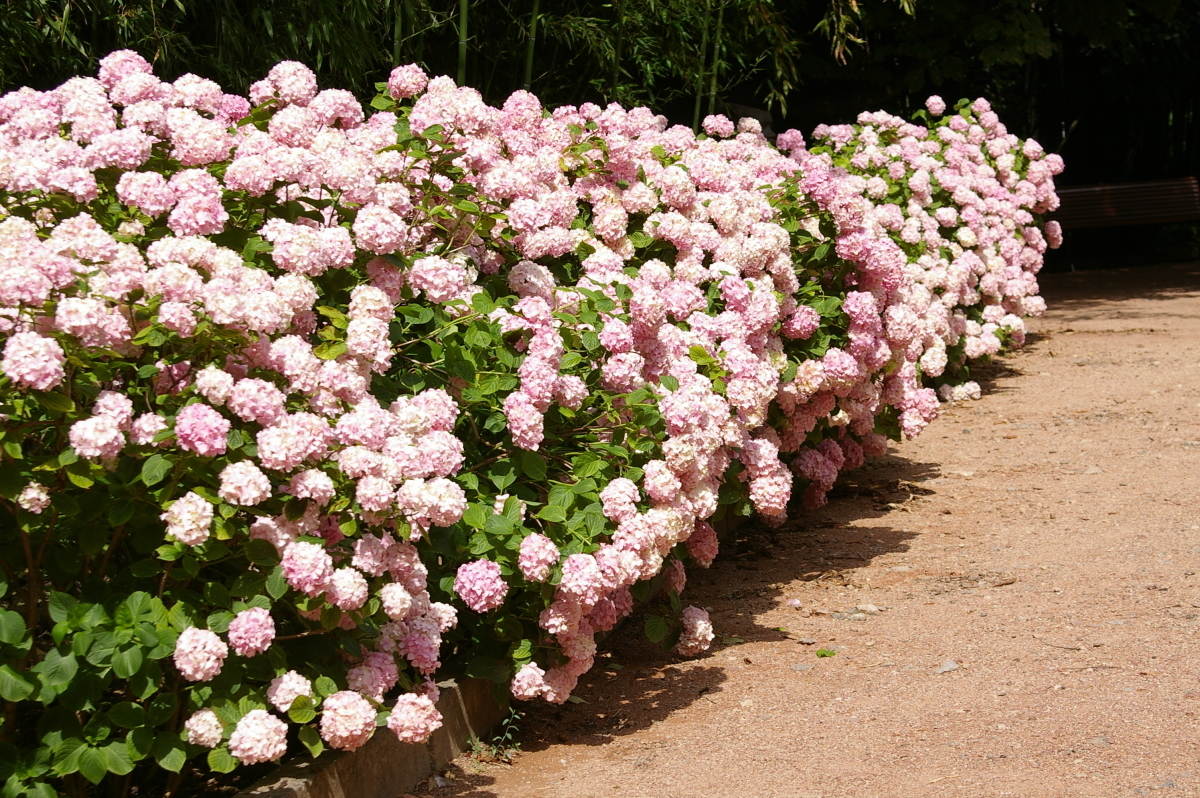
Thanks to their uniform shape, conifers look good when planted in a line.

Thuja trees in landscape design | Social media accounts of the company landshaft_dekor
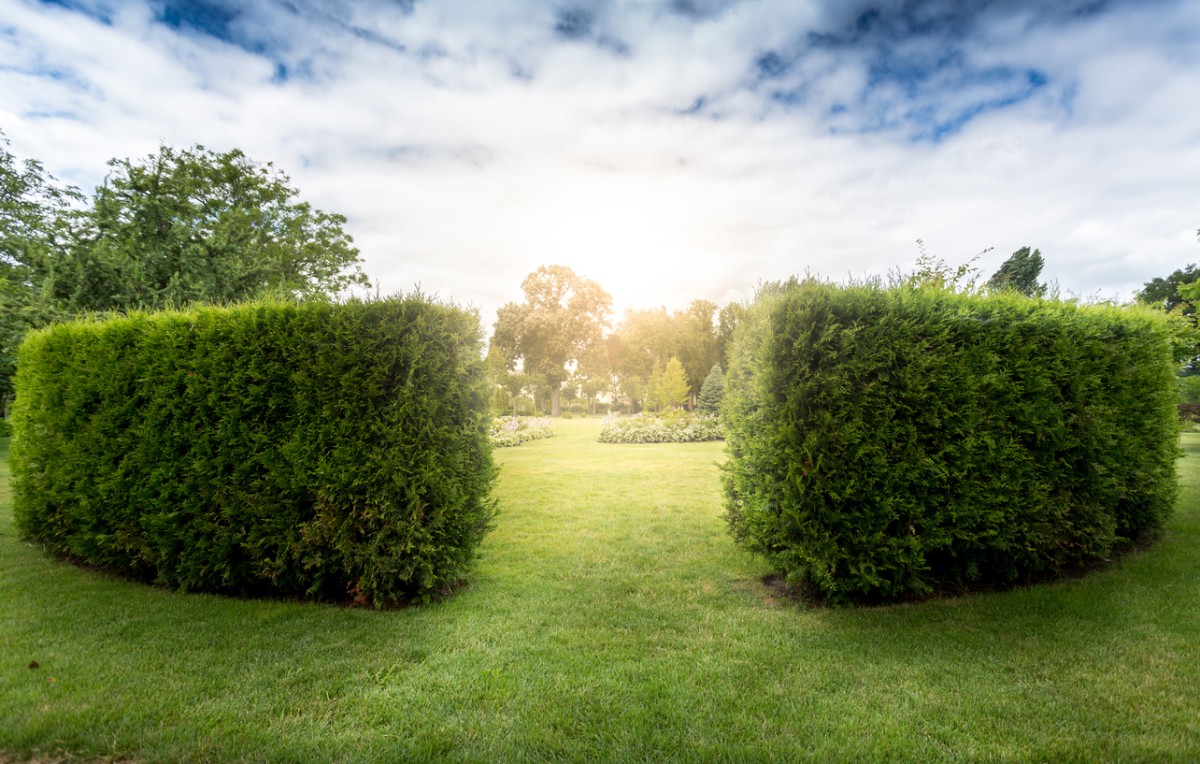
A clear row of slender trees or lush green balls gives the landscape visual completeness and rhythm. This way, you can mark the site boundary, decorate garden paths, or use it to zone the territory.
If a strip of identical plants seems too strict and banal, you can try alternating varieties, choosing ones with different heights or needle colors.
Tip: It is more appropriate to plant dwarf spherical thujas along paths, while 60-80 inch (1.5-2 meter) varieties look better next to farm buildings or fences, as they mask them well.
The plant can also be used to create a hedge or backdrop for other decorative plantings. To do this, the seedlings are placed as close together as possible or planted in a checkerboard pattern along the edge of the plot.

Seating in a checkerboard pattern

Linear planting
With such dense planting, you get a beautiful natural fence that not only hides you from the gaze of neighbors, but also protects you from dust and noise if your house is located near a road.


Topiary
You can also trim plants to give them an original shape (this is called “topiary pruning”).

Topiary | Social media accounts of blogger tuikovod
The most common shapes are spheres, cubes, pyramids, cones, spirals, several spheres or hemispheres (nivaki technique), etc. The aesthetics of this solution are undeniable—just a few unusual plants can transform a garden, making it elegant and refined.
For this type of pruning, medium-height species with a dense and thick crown are chosen, such as Emerald. Usually, several trees of the same kind are used, but you can use your imagination and create a whole exhibition of different shapes.
Tip: You can cut a ball or cube out of a plant yourself, but for more complex configurations, it is worth inviting a pruning specialist.




What thuja trees go well with
This plant looks great in alpine gardens, rockeries, flower beds, and other plant compositions.
What thuja trees go well with | Social media accounts of blogger garden_blogs
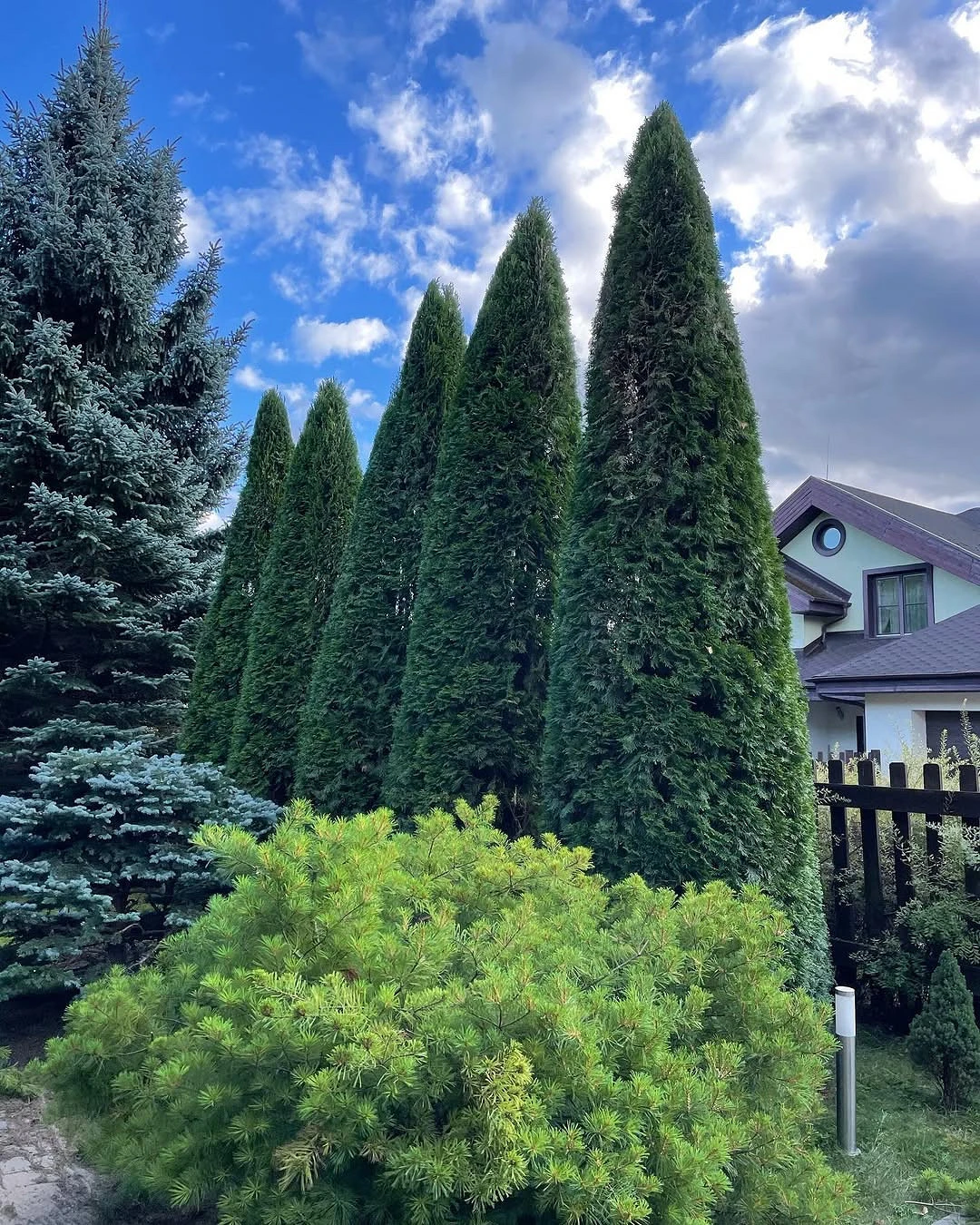
Columnar and pyramidal varieties are usually planted at the back or in the center of the flower bed or mixed border.
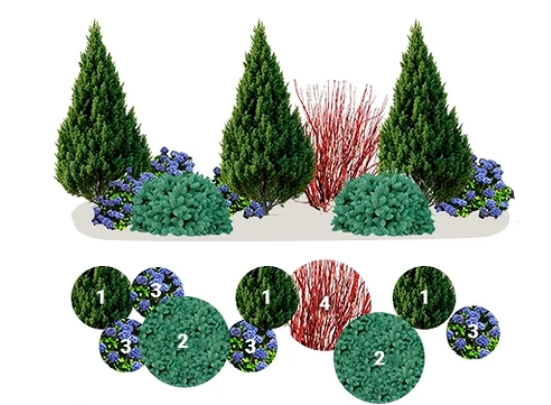
- Thuja
- Spruce
- Hydrangea
- Dogwood
Ball-shaped varieties can be placed closer to the front edge of the flower bed. In addition, thuja trees are often planted in a line, alternating with tall, lush bushes. Tall varieties of this plant are not grown in rock gardens and rockeries—instead, dwarf and spherical varieties are chosen.
What do members of this family look good with?
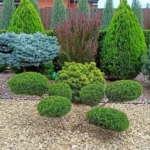
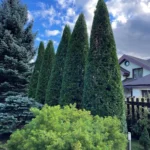
- Conifers go best with thuja trees. This tree looks most natural when accompanied by firs, spruces, and junipers.
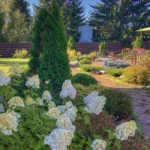
- Flowers — a lush green ball of Danica surrounded by a carpet of ground cover plants or a pyramid of Smaragda, in front of which flowers with large buds (lilies, phlox, astilbe) grow, will be an excellent decoration for the site.
- Shrubs — for this combination to look impressive, it is advisable to choose flowering shrubs or look for species with unusual leaves: barberry, spirea, and hydrangea are suitable.
- Grasses — the same rule applies here: choose tall species with large leaves or variegated colors.
When choosing companions for this plant, consider not only the beauty of the future landscape but also how comfortable the plants will be next to each other. For example, you should not plant thuja close to fruit trees: they have completely different soil requirements and may also have common pests. Berry bushes are also unsuitable neighbors, as the thuja will take nutrients from them. In addition, spherical varieties usually have a shallow root system, so it is not recommended to place perennials that need to be dug up for the winter next to them.







❓ Questions and answers

How far apart should I plant Thuja trees for a hedge or screen?
Spacing depends on the variety and your goal. For a dense privacy screen, plant taller varieties closer together, leaving enough room for them to grow (often 6–8 ft apart). For a more natural look or a mixed border, stagger the spacing or combine with other shrubs.
What plants go well with Thuja in a garden design?
Thuja pairs nicely with other evergreens (e.g., firs, spruces, junipers), as well as flowering shrubs like hydrangeas and barberries, and perennial flowers or grasses for seasonal color. Please be careful when you mix plants that need very different soil or light conditions.
Do Thuja trees require special maintenance?
Once established, most Thuja trees are low-maintenance. They stay green year-round and tolerate a wide range of soil types. Occasional watering, pruning, and spacing consideration help them look their best and avoid crowding.
Are Thuja trees suitable for small yards or containers?
Yes! Dwarf and globe-shaped varieties, such as Danica or Little Giant, are ideal for small gardens, containers, or formal borders. They offer an evergreen structure without overwhelming limited space.
Arthur Lansley: Certified arborist with 15 years of experience. Specialist in trees, shrubs, and landscape design. I can help you choose, plant, and maintain your trees.