
Bright hedges: how to combine shrubs and with their surroundings

The purpose of a hedge is to separate a suburban plot from the outside world or to delineate areas within a garden. In addition, it can serve as a backdrop for a flower garden, cover an unsightly building, and perform other secondary functions. Let’s consider how to create the most impressive hedge — one that will become a bright accent and a hallmark of your plot.
It is unlikely that we will arrange a spectacular hedge around the perimeter of the site or as a backdrop for a flower garden — green leaves or pine needles are best suited for these purposes. However, when we want to add a touch of flair, emphasize the importance and/or attractiveness of the garden area, we will definitely opt for a hedge of bright, shrubby plants.
Purple-leaved shrubs
The deepest, most expressive color. Varies from wine red to brownish. Only appears brightly in the sun. In the shade, it turns a very green, almost dirty green. This color is found in the following varieties: ‘Diabolo’, ‘Lady in Red’, ‘Schuch’, ‘Summer Wine’, ‘Rubella’, Ottawa barberry ‘Superba’, common barberry ‘Atropurpurea’, and Thunberg’s barberry ‘Atropurpurea’.
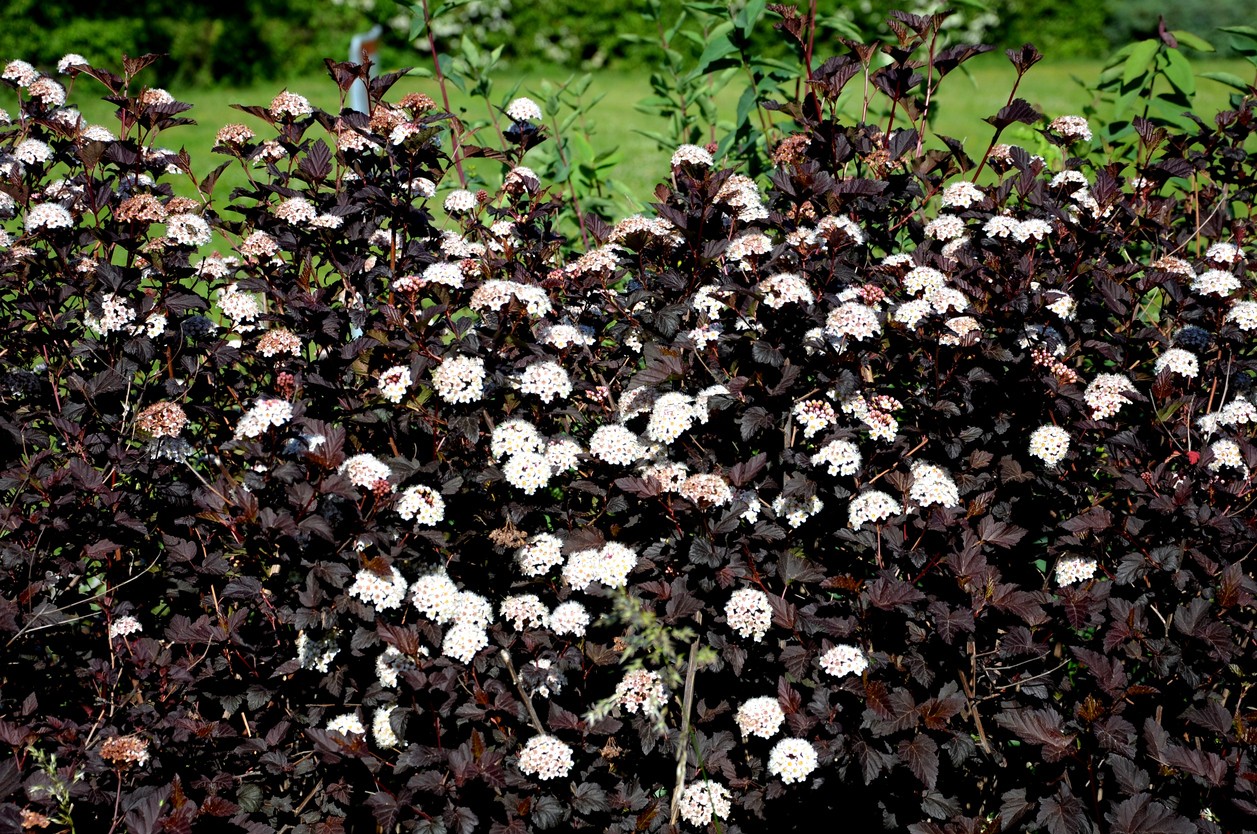
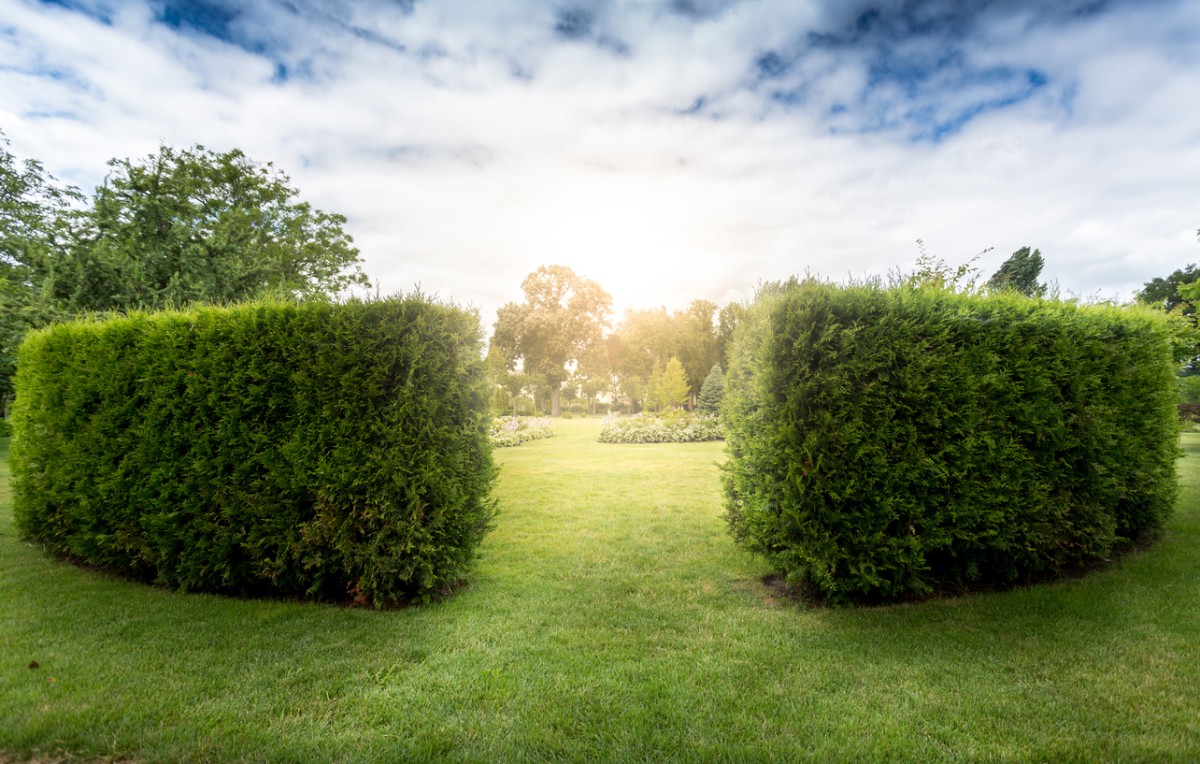
Shades of purple-leaved plants
It should be noted that some purple-leaved plants do not have a stable purple hue to their leaves, but rather one that changes throughout the growing season. Examples include the viburnum ‘Center Glow’, ‘Diable d’Or’, ‘Andre’, and ‘Zdechovice’.
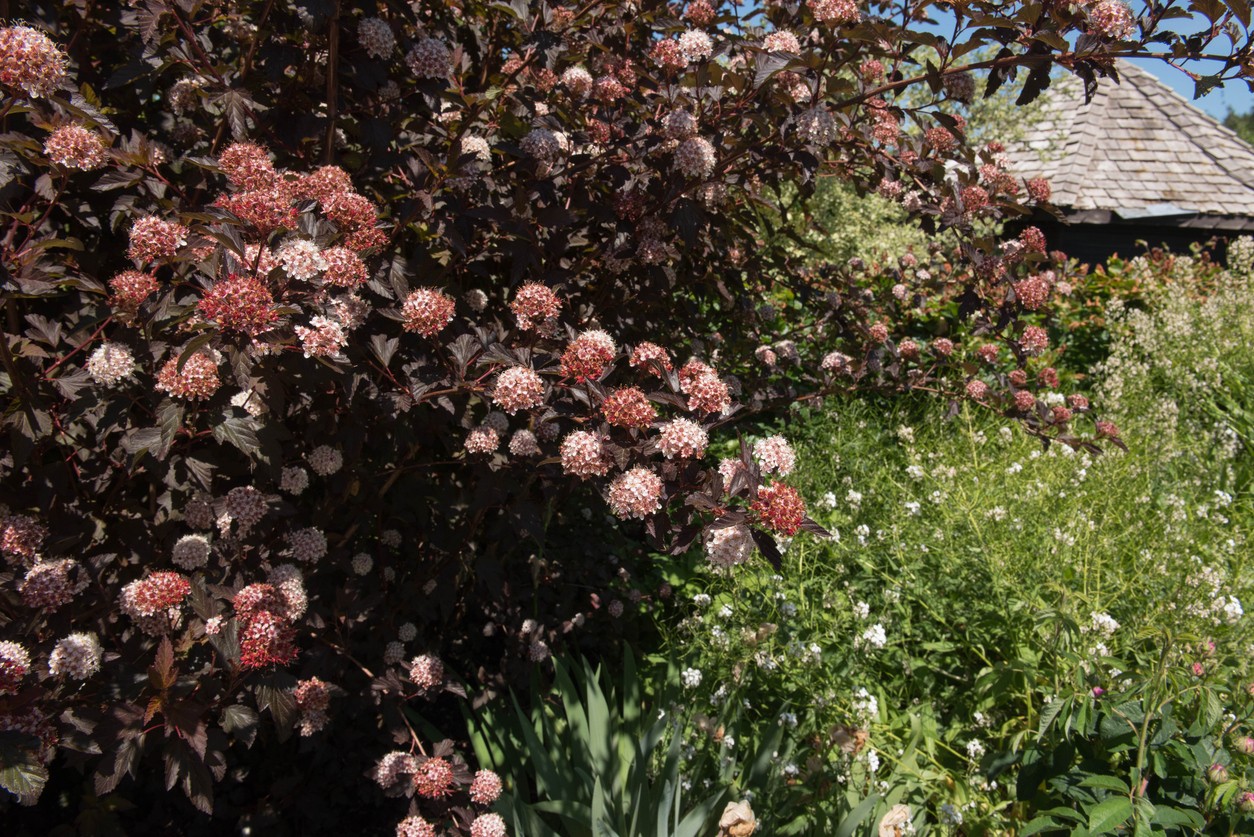
Ninebark is a Genus of Flowering plants native to North America and Asia.
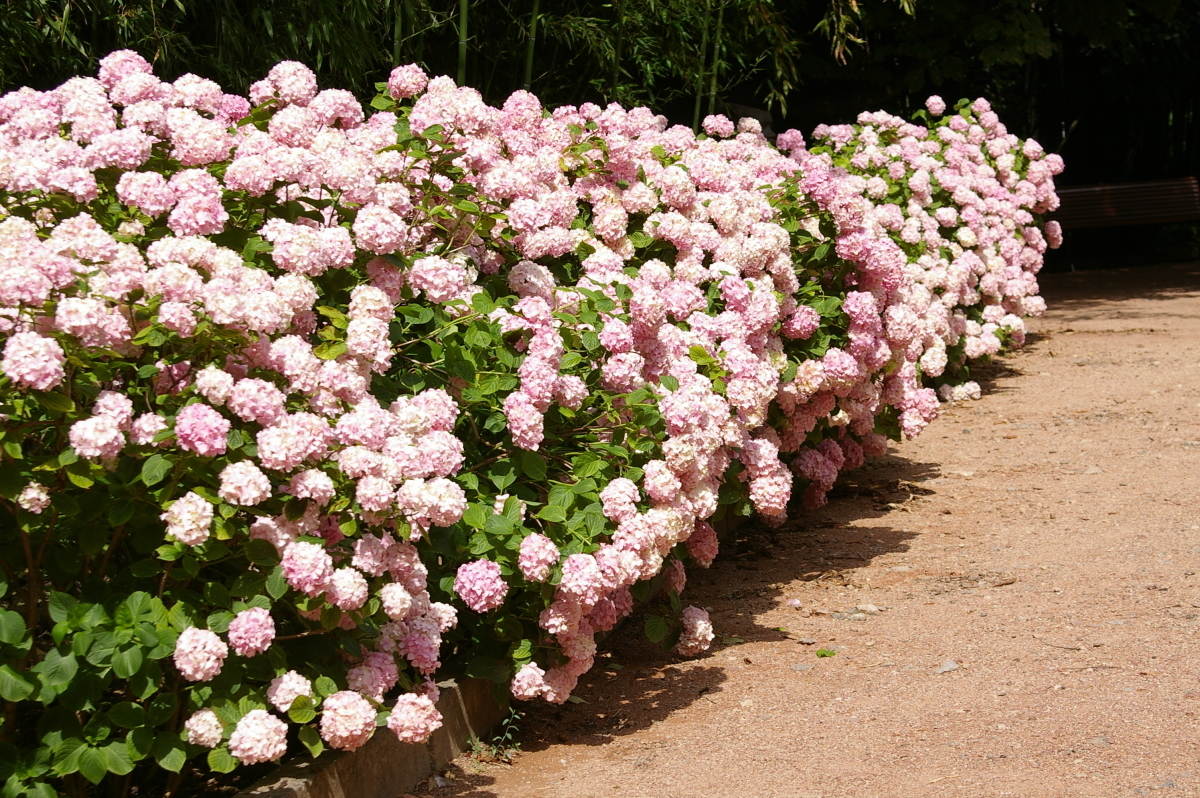
I want to mention separately shrubs with purple foliage and white or silver splashes. Up close, such plants look very unusual and may not be to everyone’s taste. However, when viewed from a distance, they create a beautiful and unusual background, similar to the color of blueberry yogurt. This shade is scarce in gardens, lighter and less severe than purple. Barberry Ottawa ‘Silver Miles’ and B. Tunberg ‘Harlequin’ have such amazing leaves.
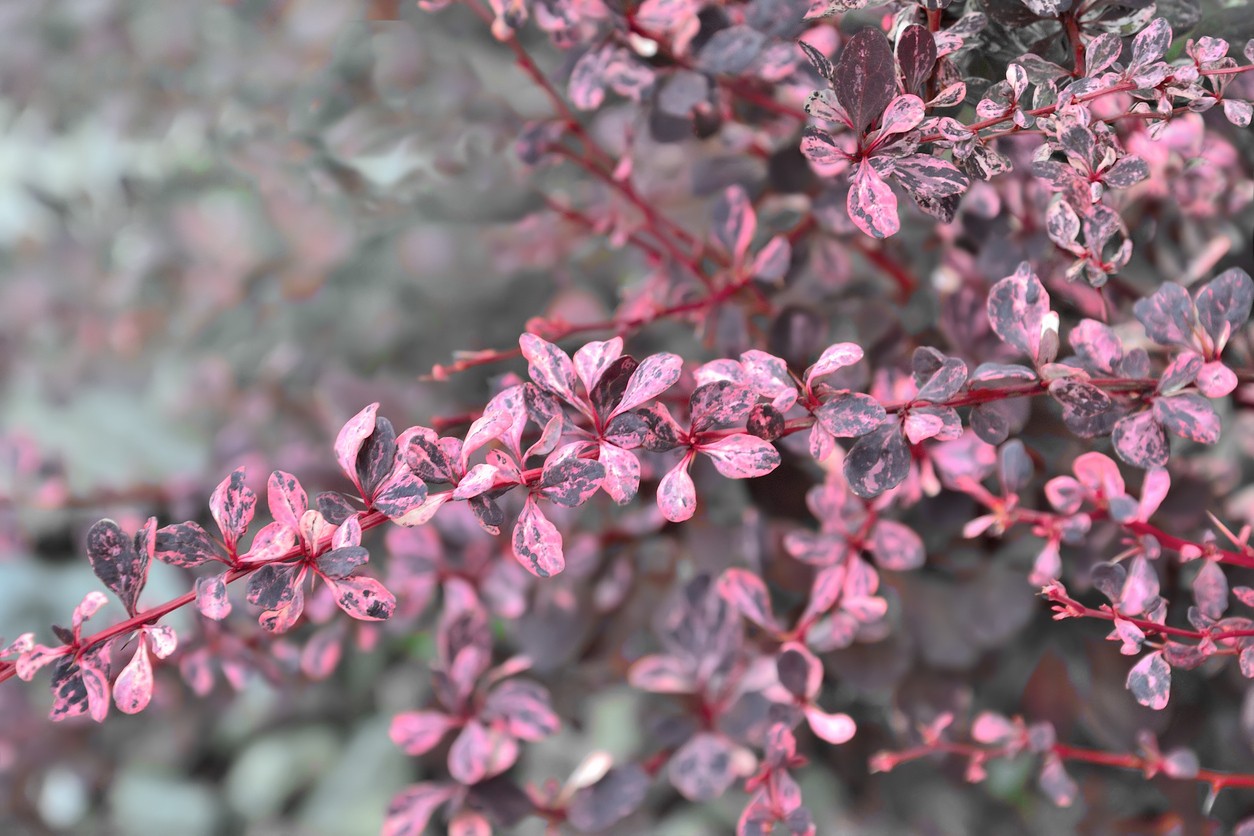
Variegated pink-purple leaves of Cultivar Thunberg’s barberry (Berberis thunbergii “Harlequin”). Blurred background, selective focus. Gardening or landscaping concept

Purple looks quite “heavy” in the garden, but at the same time, aristocratic. At dusk, it quickly “sinks” into darkness. There should not be too much of it. Please pay attention to how often the viewer’s gaze is directed toward the supposed purple hedge and how close it is to the viewing point. If this is a window view where the whole family often gathers, and the hedge is close to the window, then such a view can be depressing. Conversely, if the purple hedge is moved a few dozen feet away from the observers and the green surroundings are visible, the picture will be harmonious and more pleasant.
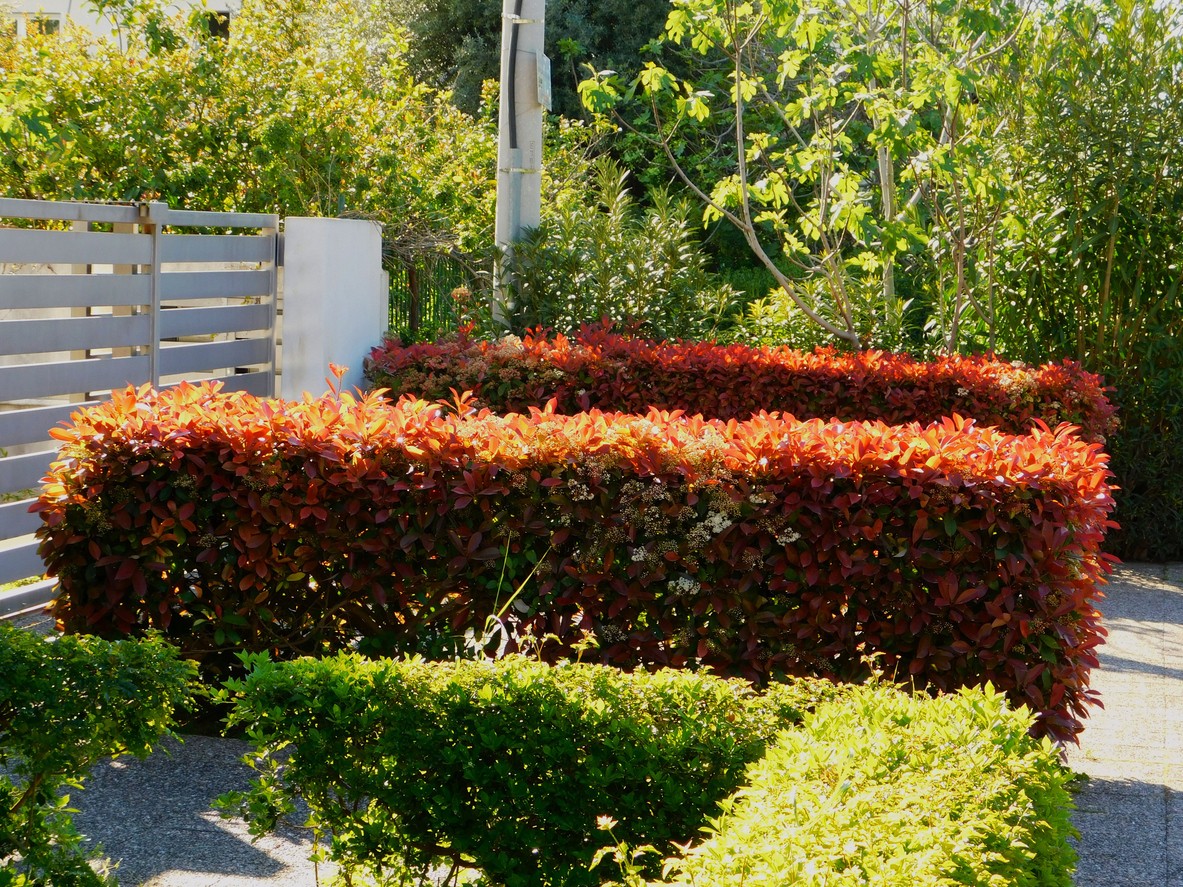
Photinia fraseri red robin hedges with red and green leaves, and other green plants, in a garden in Attica, Greece
Thus, if purple is added to the garden in the right place, well-matched to the buildings and the house, skillfully combined with decorative foliage perennials featuring silvery leaves and/or yellow flowers, the effect is guaranteed.
Shrubs with yellow leaves and needles
Sunny, warm… or autumnal? Everyone perceives the yellow color of leaves in their own way. Golden yellow, surrounded by the greenery of other species, is usually perceived not as autumnal but as accentuated. After all, not all species retain their green color in the fall.
Decorative yellow can be used in the shade, where it takes on the color of an unripe lemon or salad leaf, becoming greenish-yellow. It will brighten up the shade and serve as an elegant, unobtrusive, and restful accent. This color is found in the leaves of the bubblegum tree ‘Dart’s Gold’, ‘Luteus’, ‘Nugget’, gray spirea ‘Kazui’, Japanese spirea ‘Golden Princess’, ‘Goldfire’, ‘Candlelight’, ‘Aurea’ dogwood, ‘Evita’, ‘Maria’, ‘Golden Rocket’ barberry, and ‘Aureum’ oval-leaved privet.
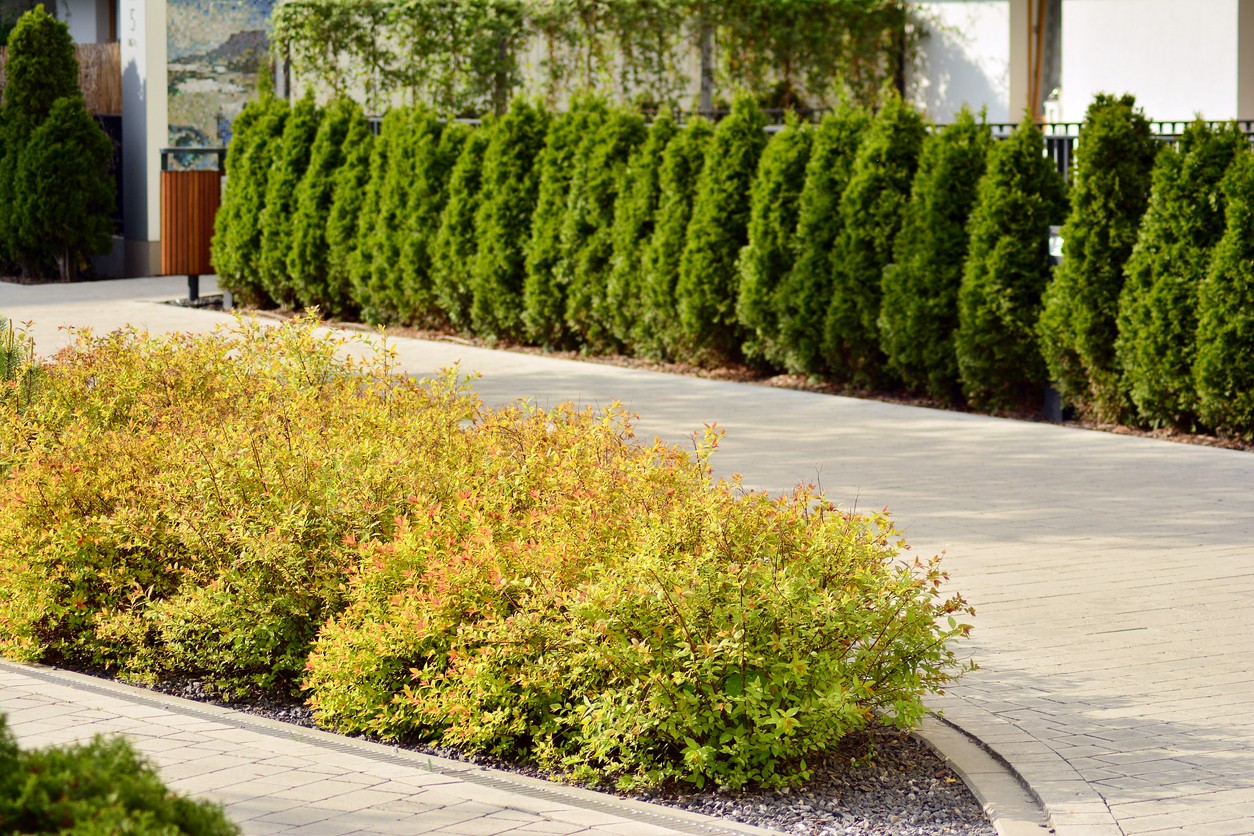
Urban space with a natural green surrounding

With golden edges
The yellow color may be expressed not on the entire leaf blade, but only on its edges. These are golden-edged (aureovariegata) varieties — white dogwood ‘Spaethii’, ‘Gauchaultii’, privet f. variegata ‘Aureum’, weigela ‘Moulin Rouge’, ‘Florida Variegata’. Compared to yellow-leaved forms, they look greener, as the area of yellow in them is significantly smaller. But they still stand out against the background of their green counterparts.
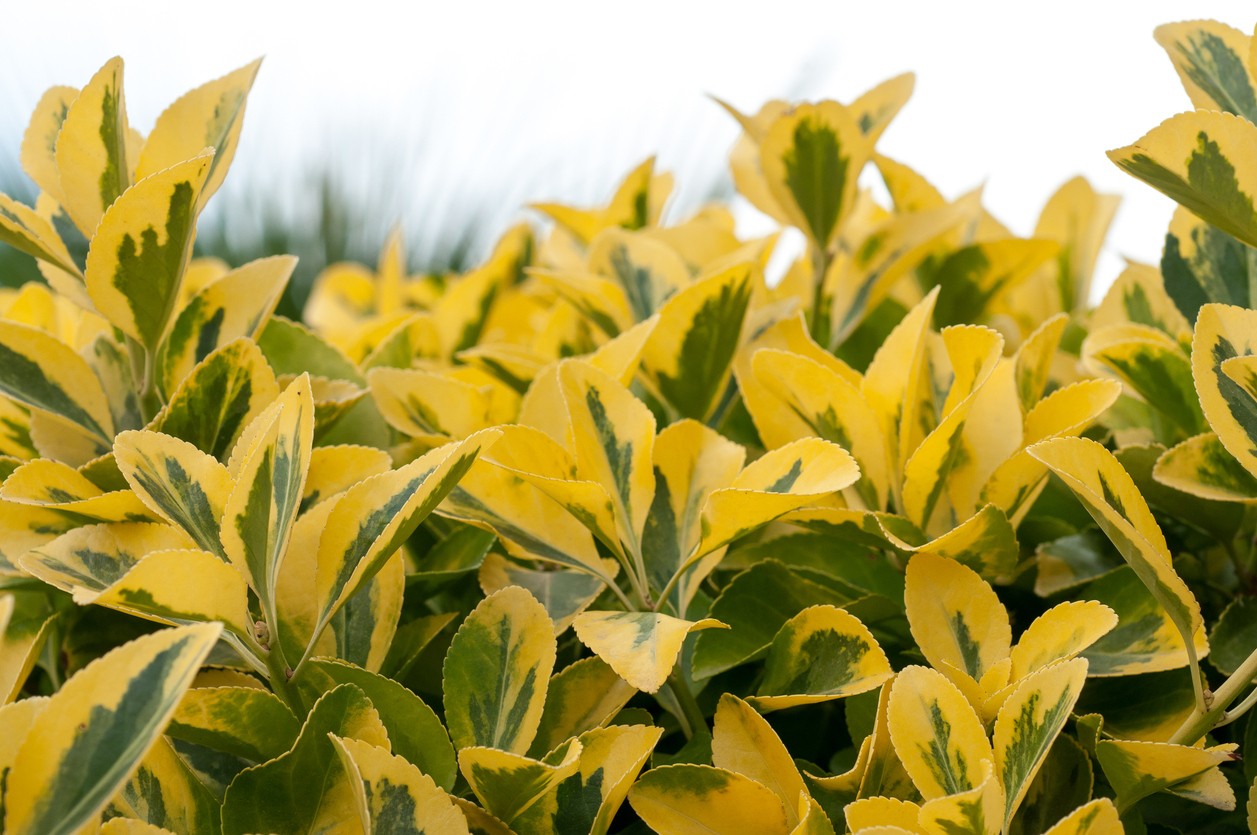
Plant Ligustrum ovalifolium Aureum on the street
At a short distance (about 2-3 plant heights), golden-edged varieties appear as yellow strokes on a green background; at greater distances, on small-leaved species, yellow and green practically blend, while on species with larger leaves (deren), they stand out. This feature can be enhanced with neighboring flower beds; all you need to do is add perennials with similar leaf shades (for example, cultivars of host, such as golden-edged periwinkle).
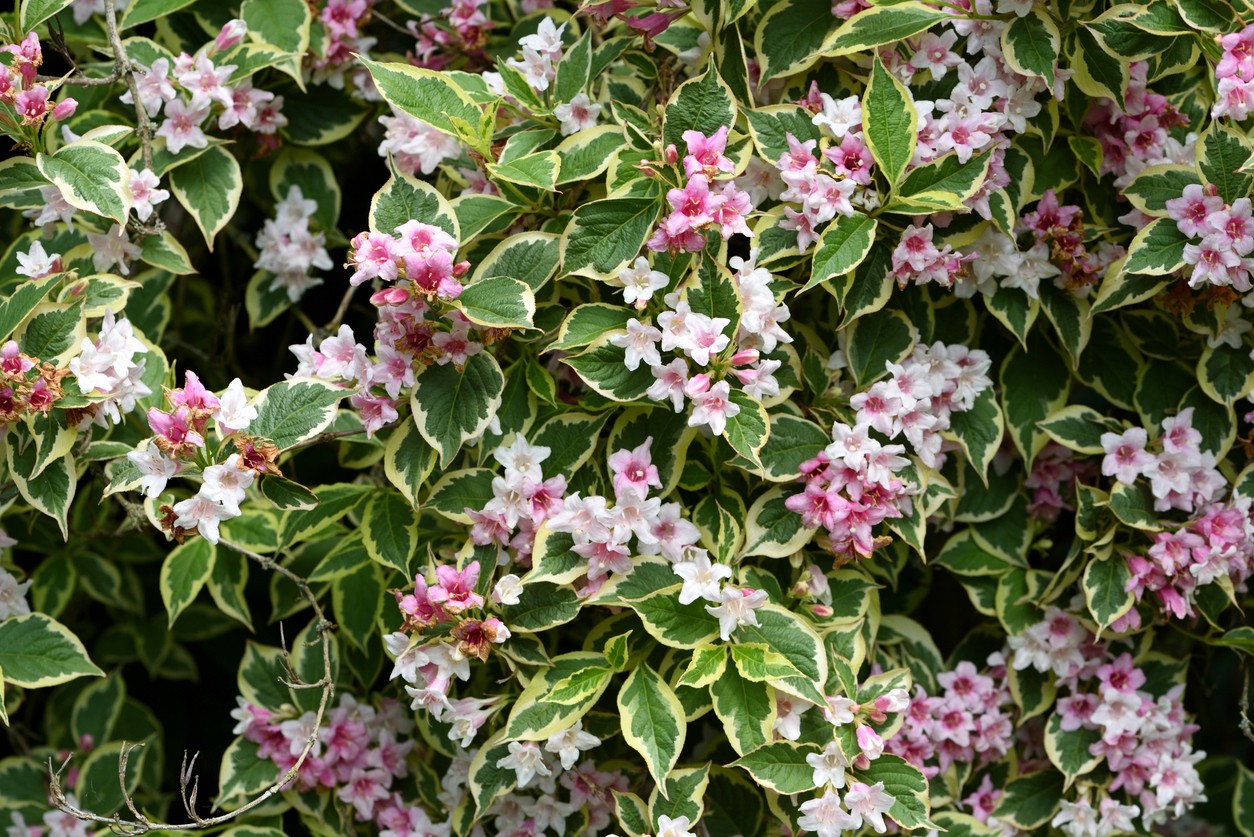
Variegated weigela in flower
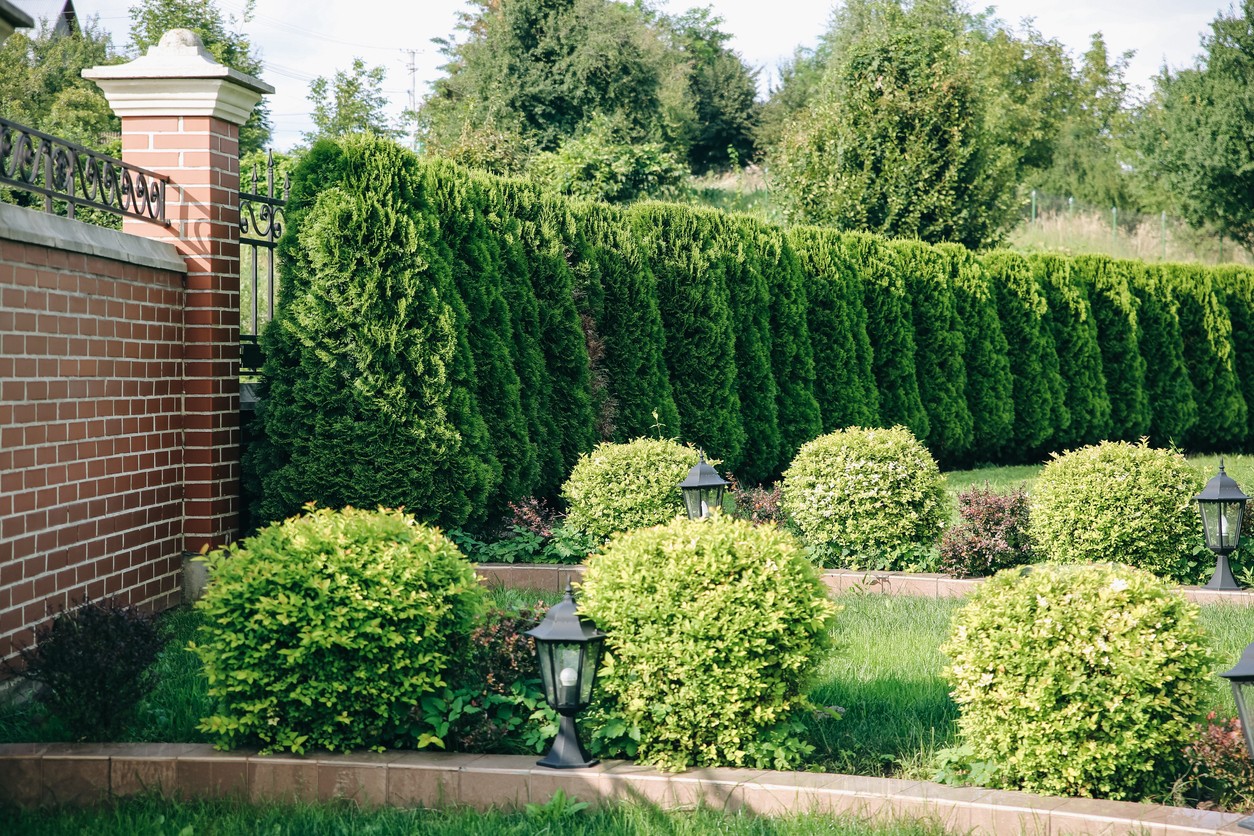
In the shade, golden-edged forms look almost green, and their use there is inappropriate. The variegated stripe nearly disappears, replaced by the leaf’s main background.
Conifers in gold
Golden color is found not only in deciduous species, but also in conifers. You will not find purple thujas, firs, or junipers. Still, golden ones (including those with golden tips — with the “sunny” color of young shoots) are present in considerable numbers (thuja ‘Golden Smaragd’, common firs ‘Golden Beskid’ and ‘Aurea Magnifica’, juniper ‘Gold Cone’). They are usually more expensive than green cultivars, but a hedge made of them will be an accent throughout the year, not just during the growing season. This can be important if you visit the garden in both winter and summer.
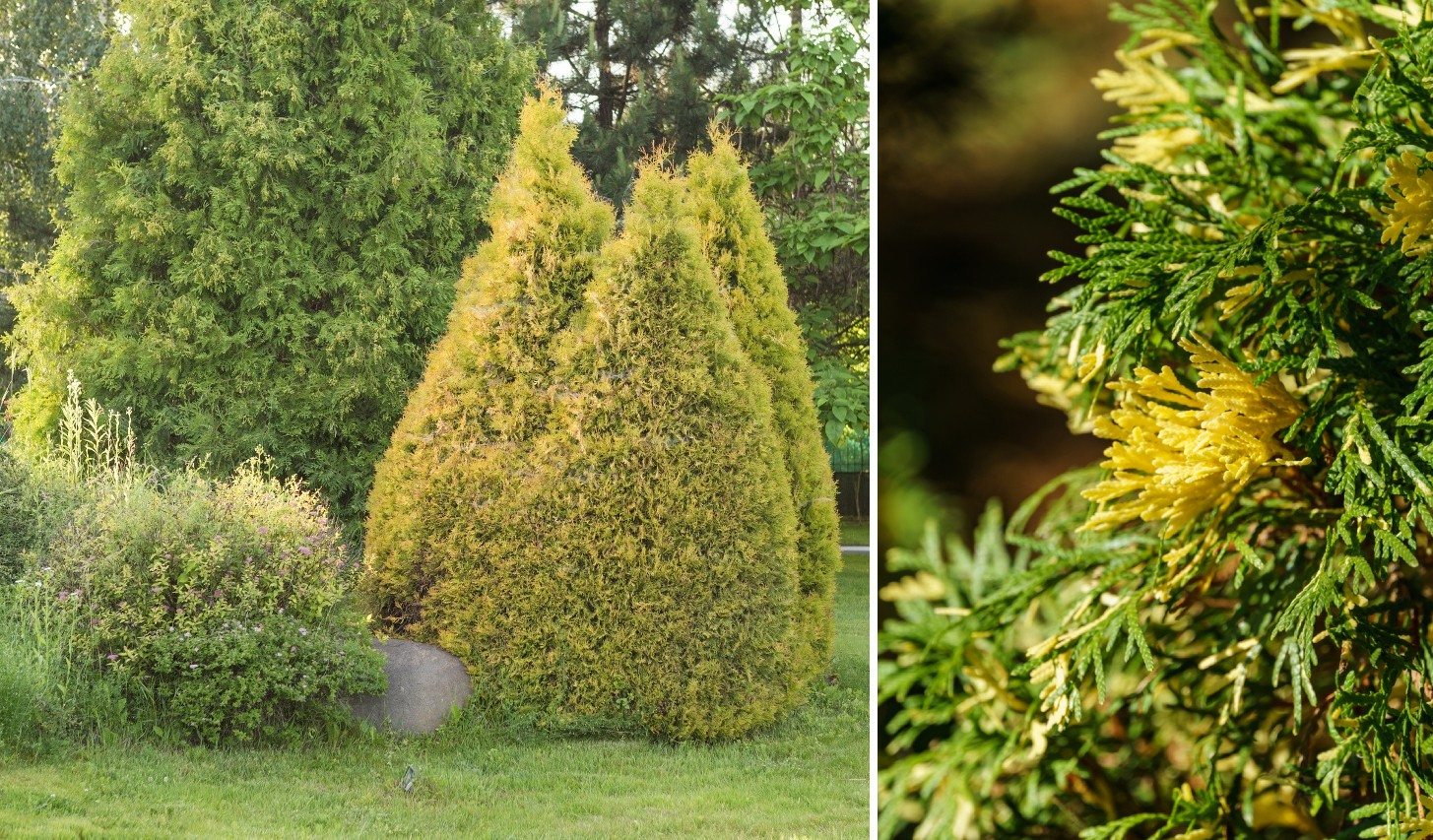
Western thuja ‘Golden Smaragd’ (left) and its needles up close (right)
Cultivars with golden tips are the most decorative, while those that are entirely yellow make a different impression on people: sometimes they can be mistaken for diseased, withering specimens. It is worth noting that conifers change color throughout the year, though only slightly. The needles may lose their bright yellow color and take on bronze tones (for example, as in western thuja ‘Morgan’), but each spring everything returns to its original appearance.
Shrubs with almost white leaves
The white color in decorative foliage forms is represented by variegation — a wide or narrow stripe along the edge of the leaf blade. Classic examples are the white dogwood ‘Ivori Halo’, the crown spirea ‘Variegatus’, and the flowering weigela ‘Nana Variegata’. The narrow stripe is almost indistinguishable from a distance. Such plants are beautiful up close, looking elegant and unusual: the shape of each leaf seems to have been drawn by an artist’s hand.
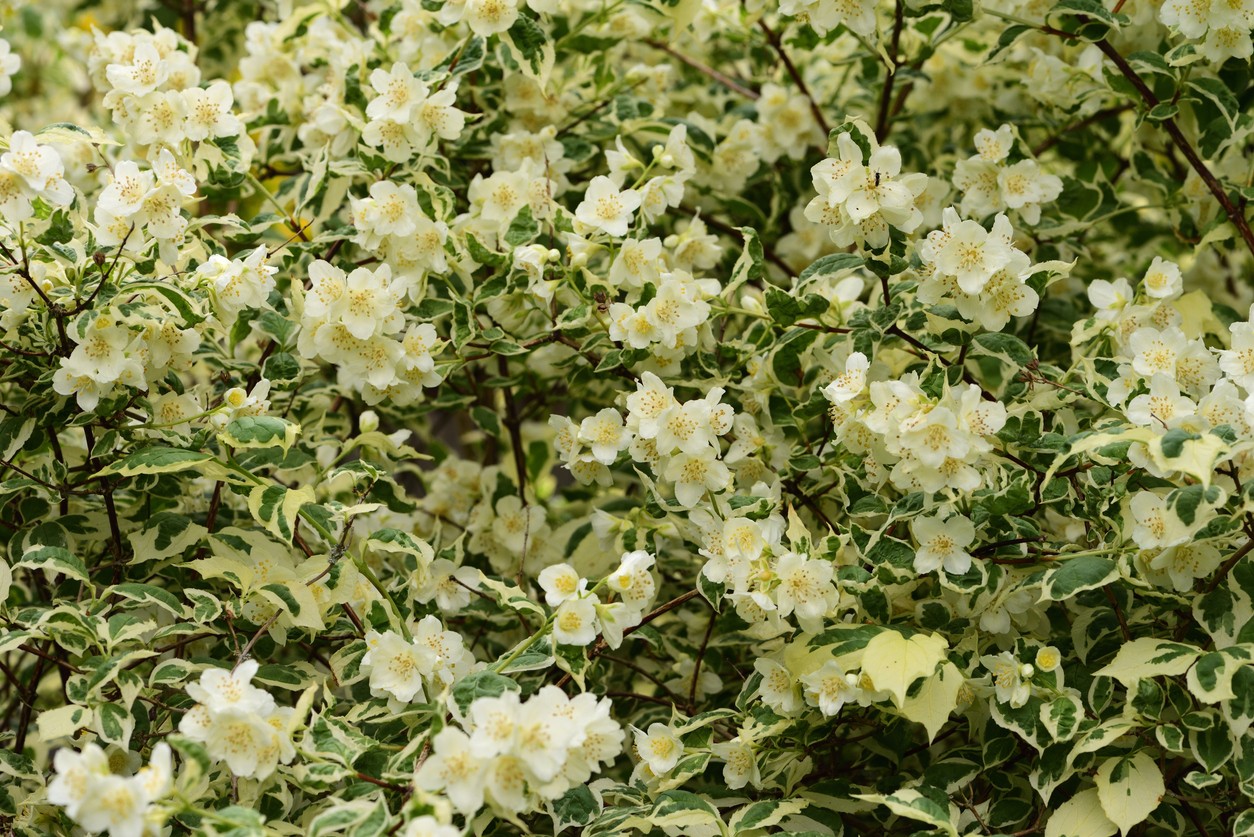
Variegated philadelphus

A hedge of these species is clearly visible from a short distance, and it will look especially harmonious as a backdrop or alongside a white flower bed. In this case, the backdrop will not be so much a backdrop as a continuation of the flower bed, a white spot in the garden that smoothly transitions into the surrounding green.
A broad white stripe on the leaf blade allows the shrubs to produce a much lighter green color. Such accent hedges are excellent if there is gray in the garden, in the color of the house, buildings, small architectural forms, or paving (fill) of the path.
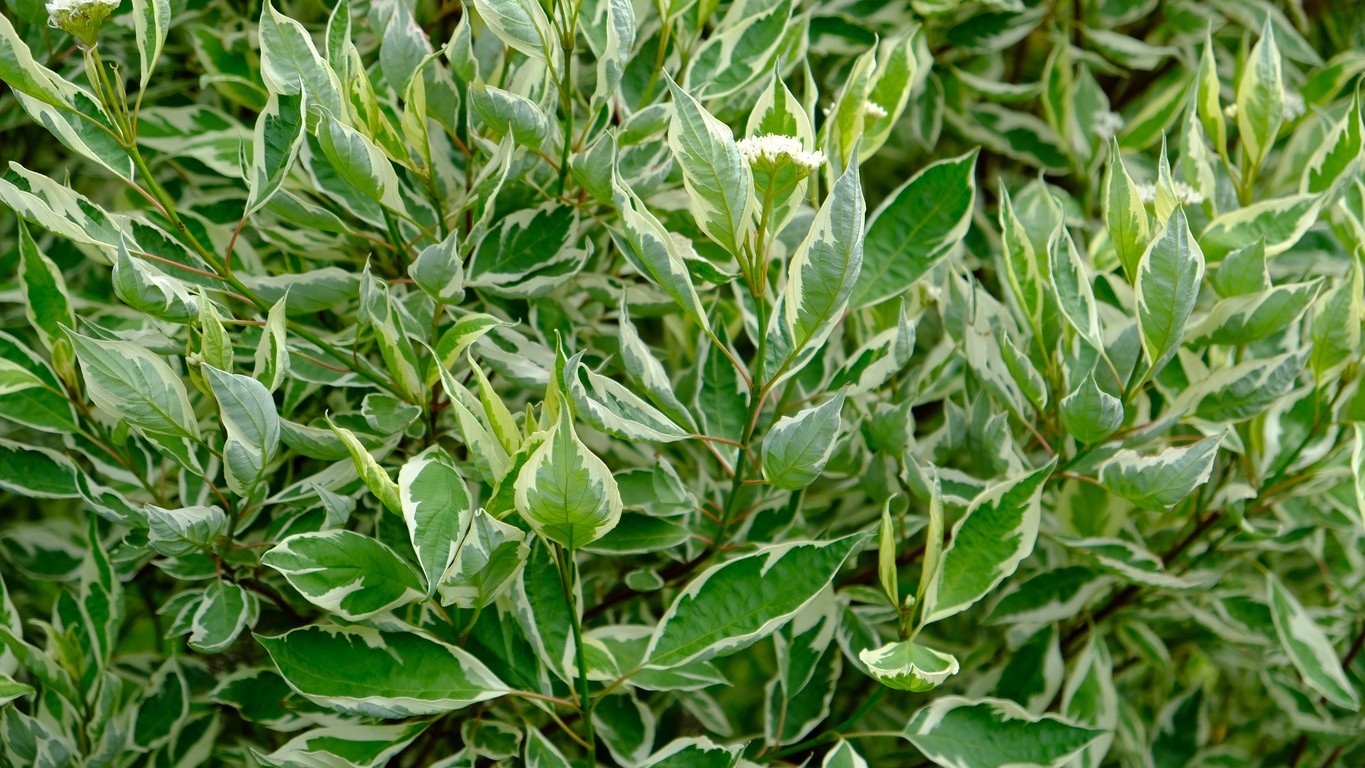
Leaves of ornamental shrub Variegated Dogwood (Cornus alba Sibirica Variegata). Decorative bush with variegated foliage – white border edges on green leaves. Bush derain white (Elegantissima). Close up.
White-edged plants behave differently in the shade. Some retain their white stripes quite consistently (Sibirica Variegata), while most others lose them over time (Elegantissima).
Rare colors: shrubs with orange and pink leaves
Among the rarer shades of decorative foliage, pink and orange are worth mentioning. They are characteristic of a small number of species, but can be incorporated into the garden if it aligns with its concept.
Orange is found in some forms of Viburnum kalinolistny, for example, in ‘Amber Jubilee’ and in those named among the purple-leaved varieties with an unstable purple hue. The same list includes spirea ‘Goldflame’, ‘Firelight’, Thunberg’s barberry ‘Orange Ace’, ‘Orange Rocket’, and ‘Orange Dream’.
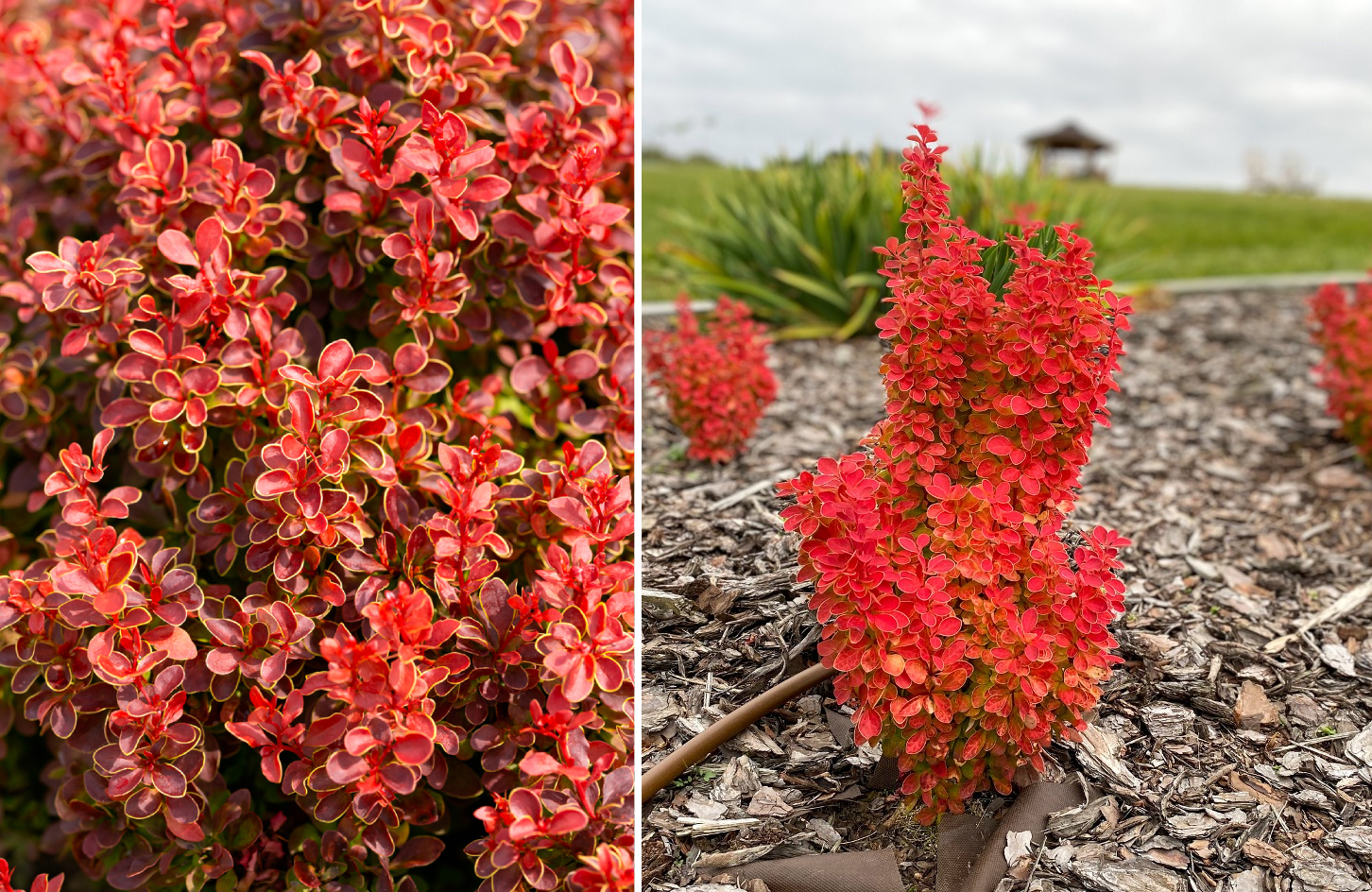
Left: foliage of Thunberg’s barberry ‘Orange Rocket’. Right: Thunberg’s barberry ‘Orange Ace’
Orange can be expressed only at the tops of the shoots (while the central mass is colored golden yellow) or change throughout the growing season, turning green and then returning to brightness, like spirea. This color will be a successful accent, especially if there are brown or terracotta tones in the garden and small architectural forms are made of clay, unpainted wood, or brown (“clay”) plastic. This color is more vibrant and life-affirming than the austere and aristocratic purple.
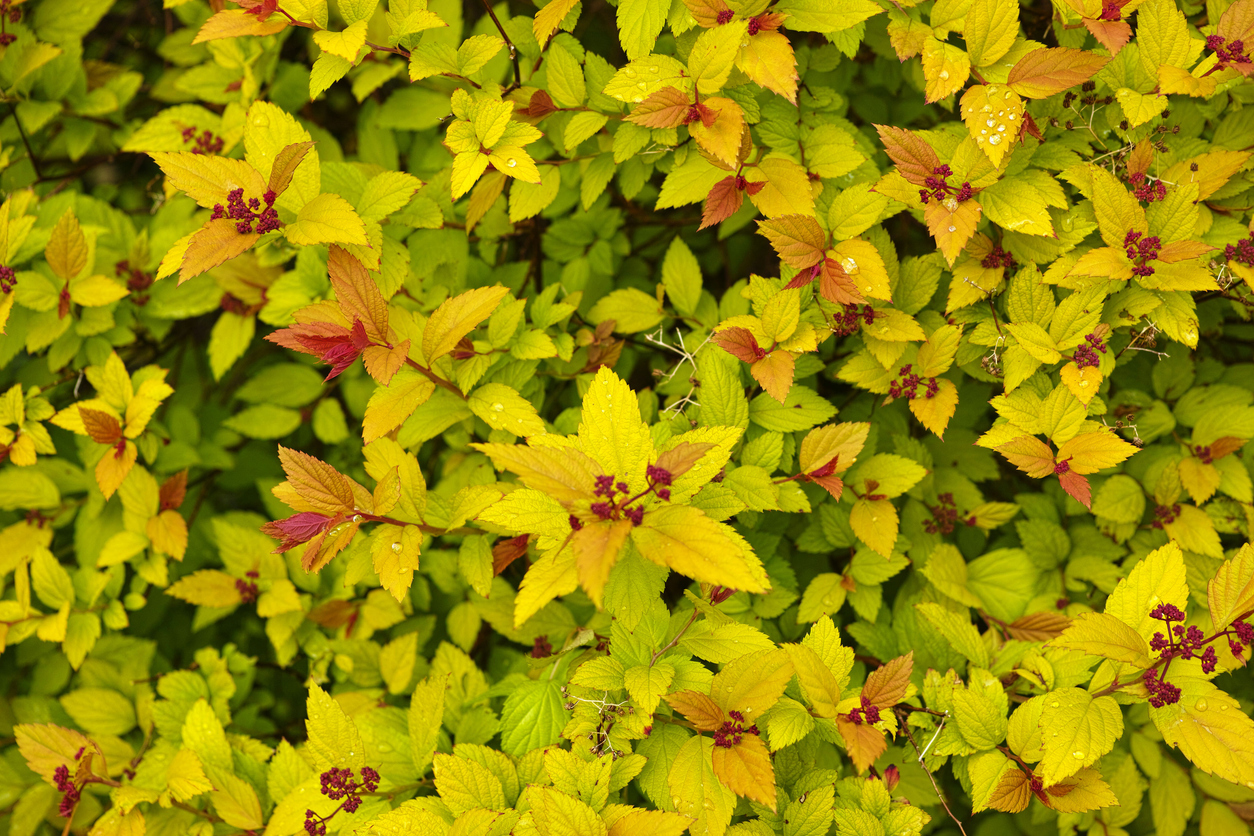
Spirea japonica ‘Goldflame’ is a colourful shrub. The foliage emerges bronze-red in spring, maturing to bright yellow and then green. From midsummer, clusters of dark pink flowers appear, contrasting with the glowing foliage.
Pink can only be created from a few cultivars of barberry (e.g., Thunberg’s barberry ‘Pink Queen’ and ‘Natasza’). The red background of these plants’ leaves is “splashed” with white, which creates an exciting rosy color when viewed from a distance. It can be used when red or purple is desired, but their intensity is alarming and frightening. In this case, the pink tone will create a slight resemblance to fire and charm. The color is appropriate in romantic gardens, where the exact shade is also found in perennial compositions.
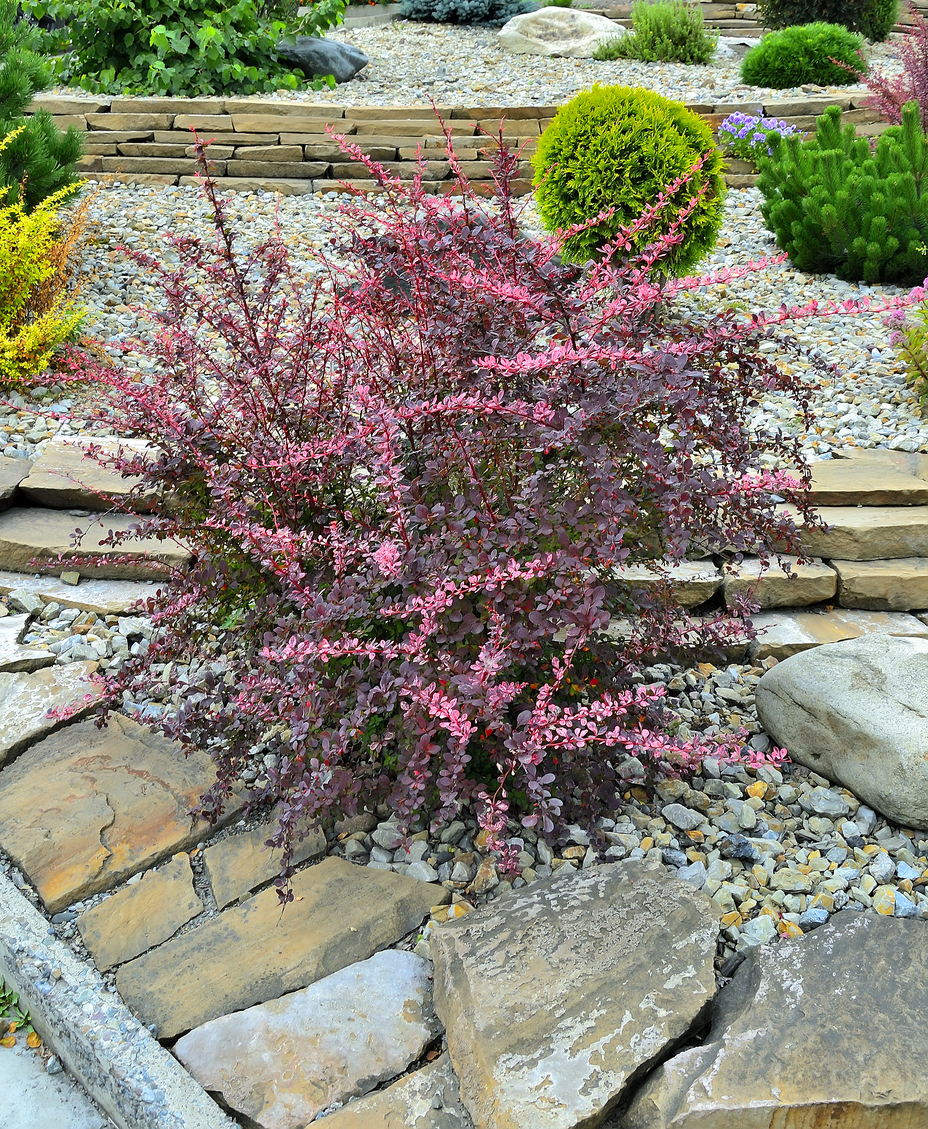
Cultivar Thunberg’s barberry (Berberis thunbergii “Pink Queen”) in a rocky garden. Bright ornamental bush with variegated pink and purple leaves. Gardening or landscaping concept
Nuances of combinations and spatial arrangement
If we create a very long hedge from a single brightly colored shrub (yellow or purple-leaved), we may experience visual fatigue. It is much better to alternate yellow cultivars with green-leaved ones: this way, the hedge will still be unusual, but the bright color will be more evenly distributed.
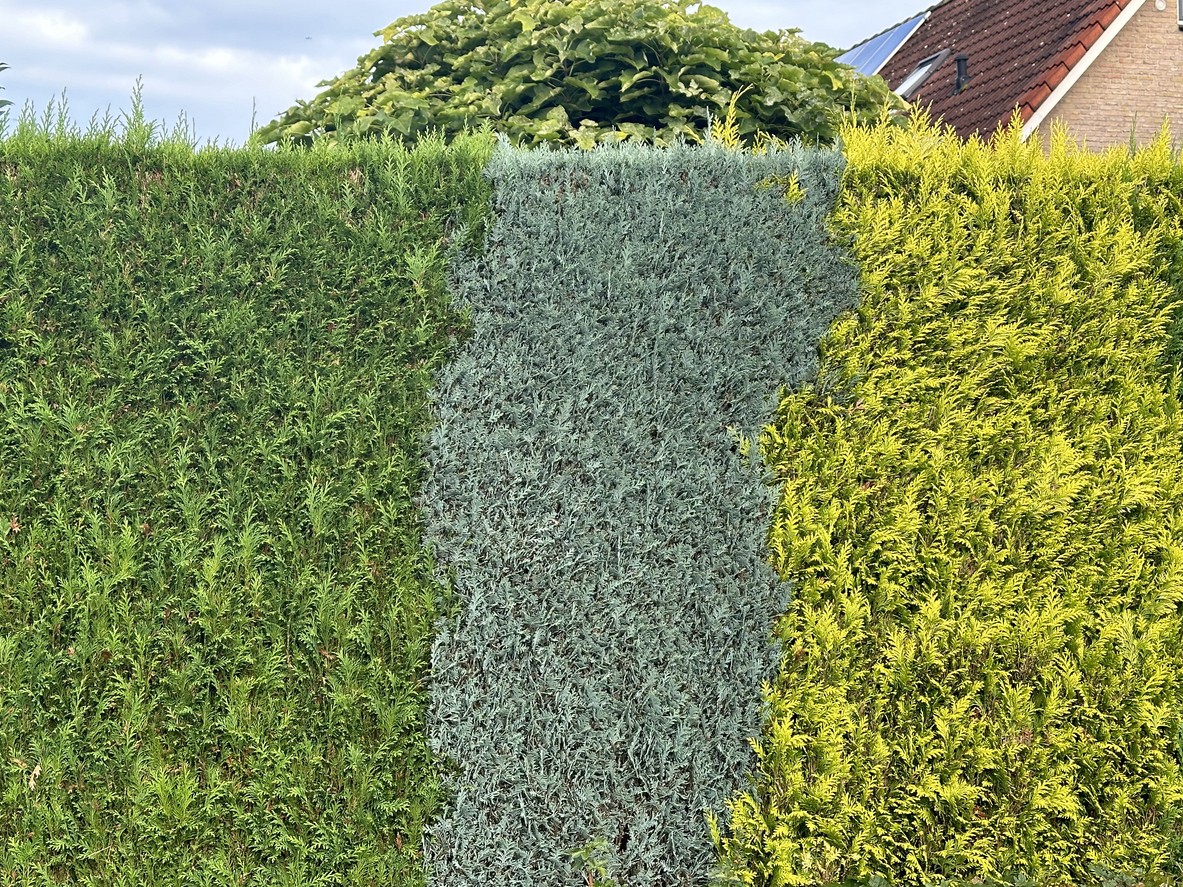
The distinct mix of vibrant green and yellow creates a natural contrast. This well-maintained conifer hedge adds texture and visual appeal to the garden. Photographed in the Netherlands
I would not recommend alternating purple and yellow in a very long hedge. Most purple-leaved plants have a color that transitions from purple to orange-bronze or golden. Such gradual transitions are attractive, but the simultaneous presence of yellow on purple, or vice versa, relies on contrast and looks too bright and distracting. This can also cause fatigue and a desire to look away toward a more peaceful composition.
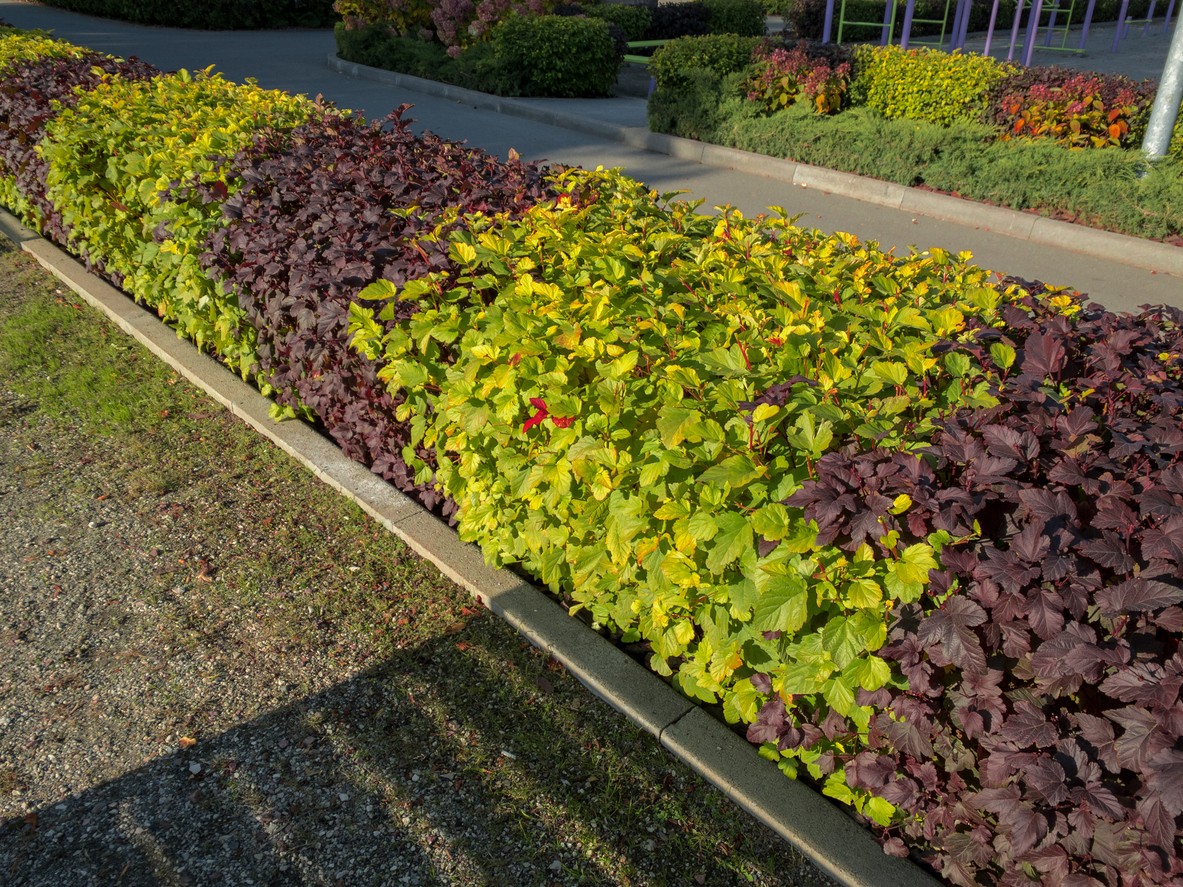
Park design: two-tone hedge. Hedge: green and purple bushes.
It is undesirable to fill a single garden with large quantities of decorative foliage plants of different colors. If you want to use different leaf colors, it is better to do so in separate patches: a patch of bright hedges, a solitary patch of a different color in the distance.
An exception may be white-edged varieties, which can be combined with cultivars of purple, yellow, pink, and orange. But combine them in patches: a patch of variegated plants against the background of a bright hedge or, conversely, a bright decorative leaf variety against the background of a hedge of white-edged shrubs.
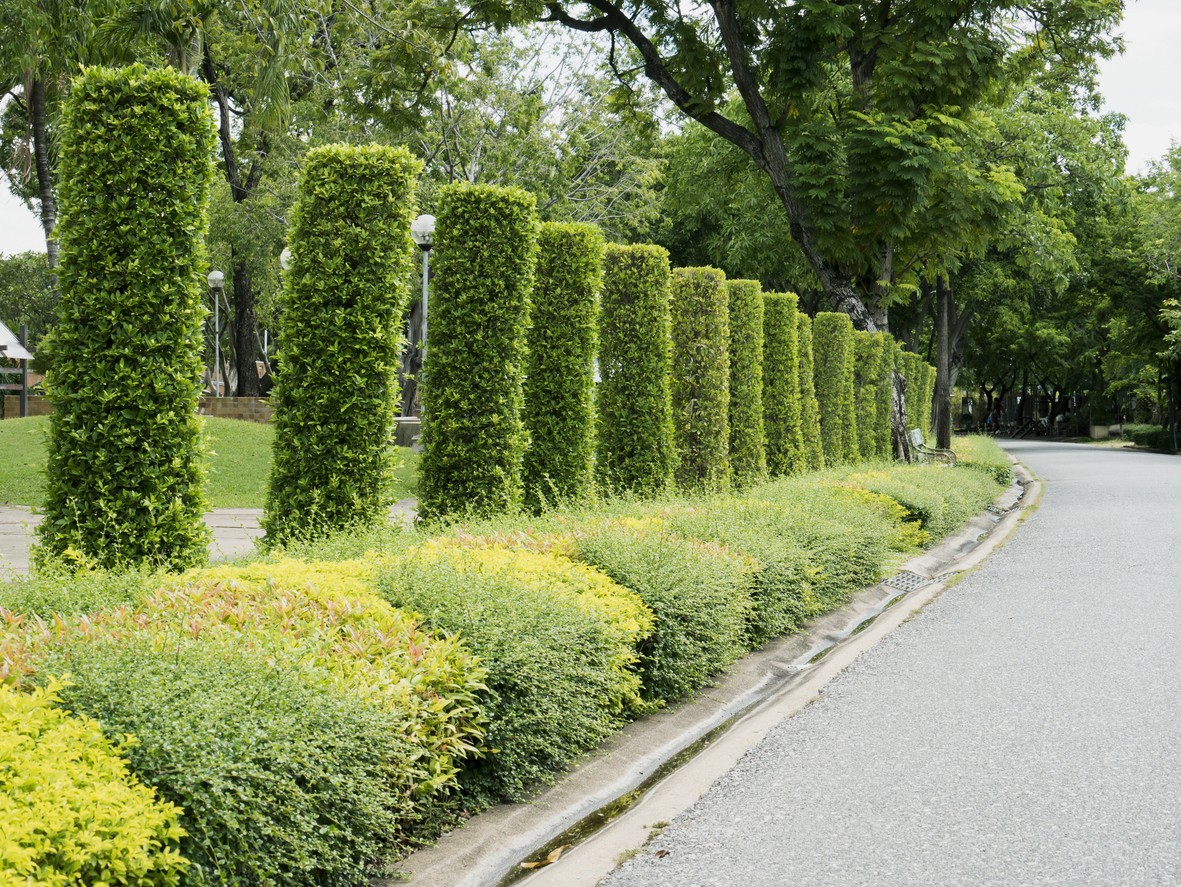
Wayside tree decoration in the walkway at the park
What do you think about bright hedges? Which plants did you like so much that you are ready to plant them in neat rows right away? Share your thoughts in the comments—and if you have photos of your own hedge, share them with all our readers.
❓ Questions and answers

How often should decorative hedges with bright foliage be pruned to maintain their shape and color?
Decorative shrubs are usually pruned once or twice a year — in late spring and after flowering (or in summer, if the variety is actively growing). However, it is essential not to prune too aggressively: remove no more than one-third of the growth per season to avoid compromising the plant's health and preserve its decorative appearance.
Can bright shrubs be combined with evergreen plants in the same hedge?
Yes, you can — and this is a common design technique. For example, alternating shrubs with golden foliage with evergreen varieties of thuja or juniper creates visual rhythm and balance between color and structure. The primary consideration is selecting plants with compatible requirements for soil, drainage, and lighting.
How should the soil be prepared when planting bright shrubs so that they take root faster and show their color?
Before planting, add organic compost and thoroughly drain the soil to ensure optimal conditions. Ensure that the soil pH is moderately acidic or neutral (pH 6.0–7.0) and add mulch around the base. For the first 1–2 years, water the plants regularly during dry periods to help them establish a strong root system and display their decorative qualities.
How do I care for a hedge with bright shrubs in winter?
During the cold months, cover the root zone with mulch if necessary to protect it from freezing. In the fall, reduce nitrogen fertilization (so as not to stimulate new growth in late fall). In regions with severe frosts, select hardy varieties and refrain from pruning in late fall.
Arthur Lansley: Certified arborist with 15 years of experience. Specialist in trees, shrubs, and landscape design. I can help you choose, plant, and maintain your trees.


25 Responses
[…] Bright hedges: how to combine shrubs and with their surroundings […]
[…] for a hedge to fully display its decorative qualities, it must grow in a well-lit area. Yes, many shrubs are quite shade-tolerant, but this applies to sparse planting. Since the plants in a hedge are […]
[…] Bright hedges: how to combine shrubs with their surroundings […]
[…] Bright hedges: how to combine shrubs with their surroundings […]
[…] Bright hedges: how to combine shrubs with their surroundings […]
[…] Bright hedges: how to combine shrubs with their surroundings […]
[…] Bright hedges: how to combine shrubs with their surroundings […]
[…] Bright hedges: how to combine shrubs with their surroundings […]
[…] Bright hedges: how to combine shrubs with their surroundings […]
[…] Bright hedges: how to combine shrubs with their surroundings […]
[…] Bright hedges: how to combine shrubs with their surroundings […]
[…] Bright hedges: how to combine shrubs with their surroundings […]
[…] Bright hedges: how to combine shrubs with their surroundings […]
[…] Bright hedges: how to combine shrubs with their surroundings […]
[…] Bright hedges: how to combine shrubs with their surroundings […]
[…] Bright hedges: how to combine shrubs with their surroundings […]
[…] Bright hedges: how to combine shrubs with their surroundings […]
[…] Bright hedges: how to combine shrubs with their surroundings […]
[…] Bright hedges: how to combine shrubs with their surroundings […]
[…] Bright hedges: how to combine shrubs with their surroundings […]
[…] Bright hedges: how to combine shrubs with their surroundings […]
[…] Bright hedges: how to combine shrubs with their surroundings […]
[…] Bright hedges: how to combine shrubs with their surroundings […]
[…] Bright hedges: how to combine shrubs with their surroundings […]
[…] Bright hedges: how to combine shrubs with their surroundings […]