
A tall hedge instead of a fence. How to create and maintain it
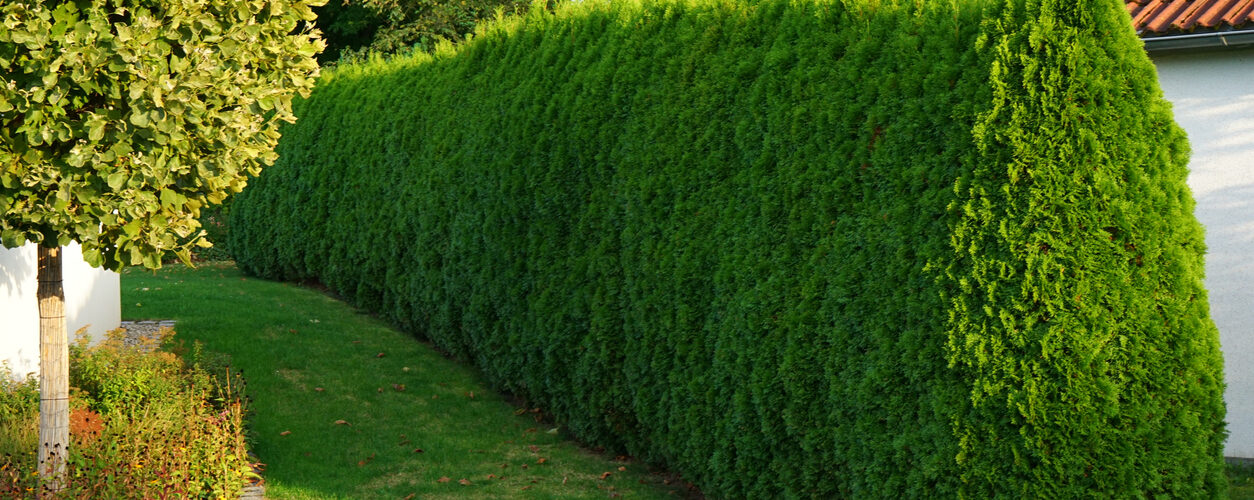
Walls define the boundaries of a home—they create a comfortable space where we feel confident and calm. In the garden, a fence or hedge serves as a protective barrier. When we want to create a space protected from prying eyes, we often opt for a tall hedge rather than a solid fence. Let’s examine the nuances to consider when making a tall hedge.
First, let’s agree that we will call a hedge 6.6 feet or higher “tall.” Like any other hedge, a tall green wall can be made of deciduous or coniferous species. Deciduous plants that overwinter in the middle latitudes shed their leaves at the end of the season, which means they can only provide complete visual protection during the growing season. Suppose it is essential for the gardener that the living barrier protects from view and wind year-round, or serves as a mandatory green backdrop for other plantings. In that case, it is worth making it from coniferous plants.
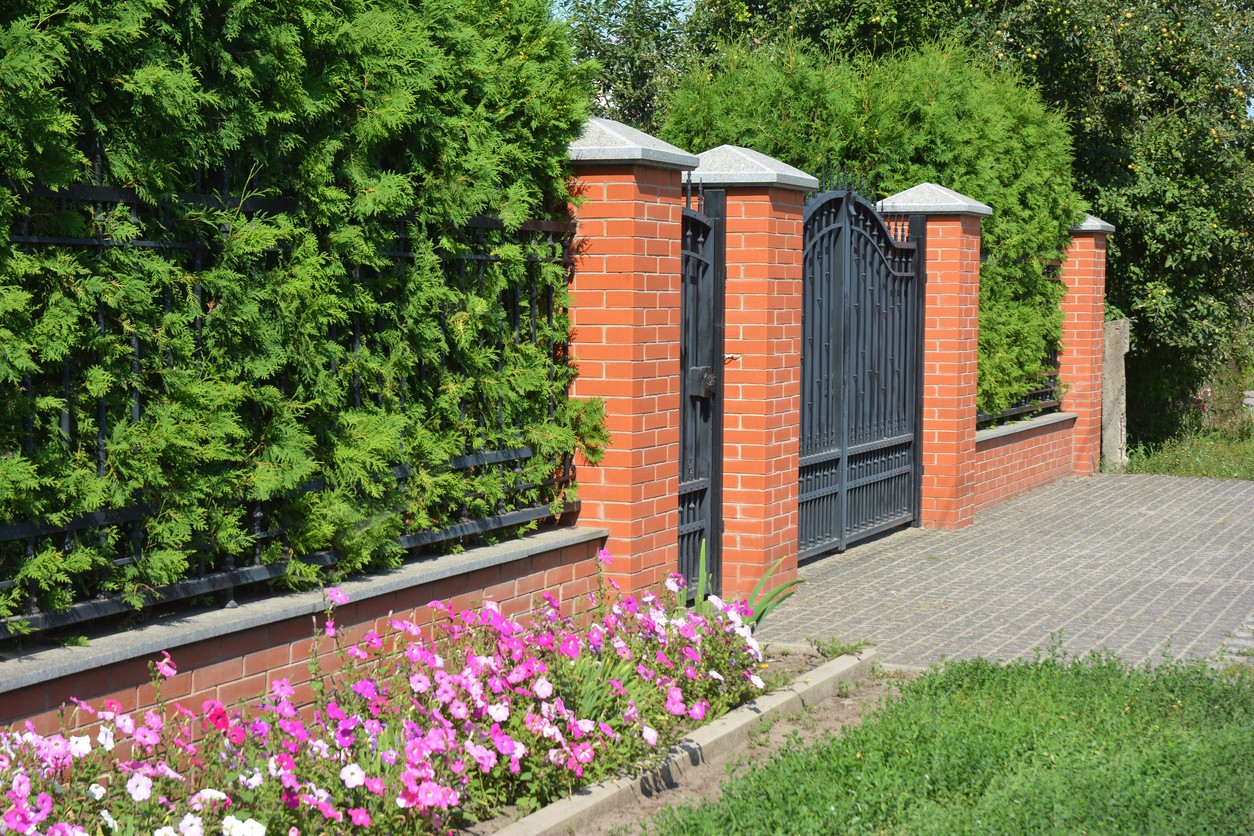
Green hedge fence with a brick-and-metal door and gate. Live fencing.
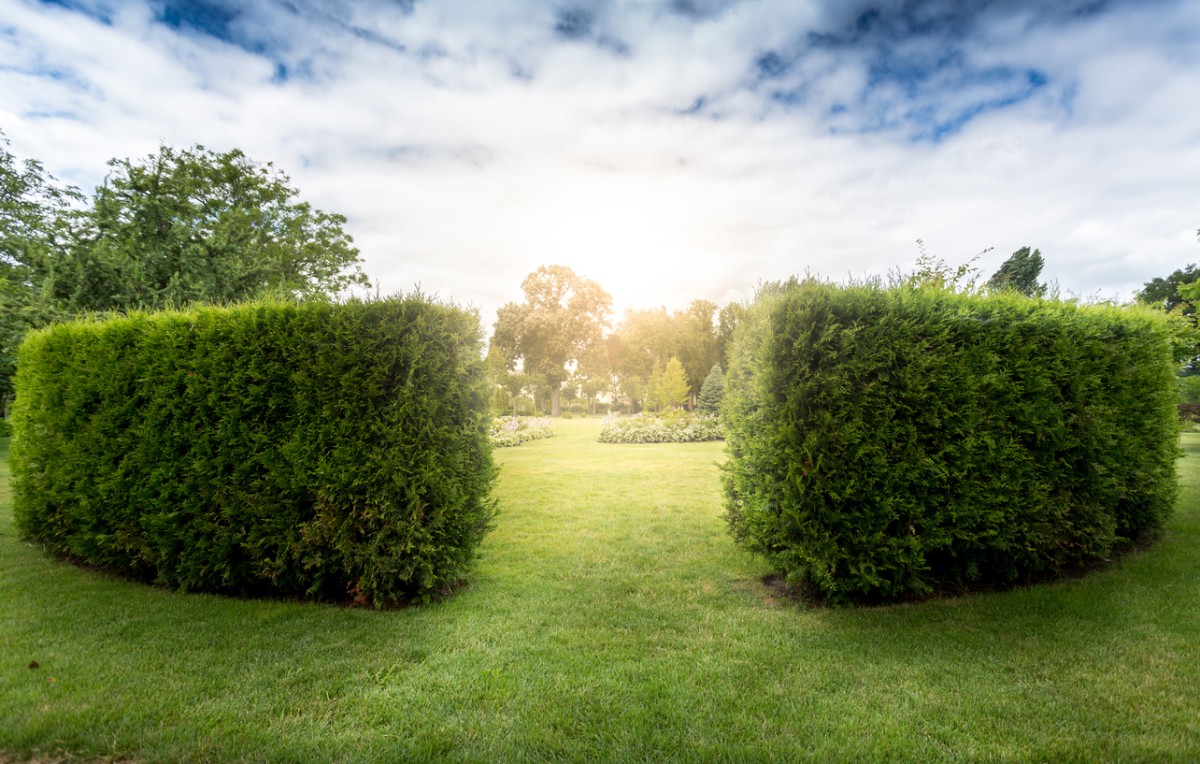
Conifers
The best conifers for hedges are yew, thuja, and spruce. You can also use fir and juniper, but the former is very expensive, and the latter is very prickly, limiting its use.
- Yew is shade-tolerant, so hedges made from it are dense, thick, and richly colored, even at the bottom. However, it grows slowly, so you will either have to be patient or purchase larger (mature) seedlings, which will undoubtedly be more expensive.
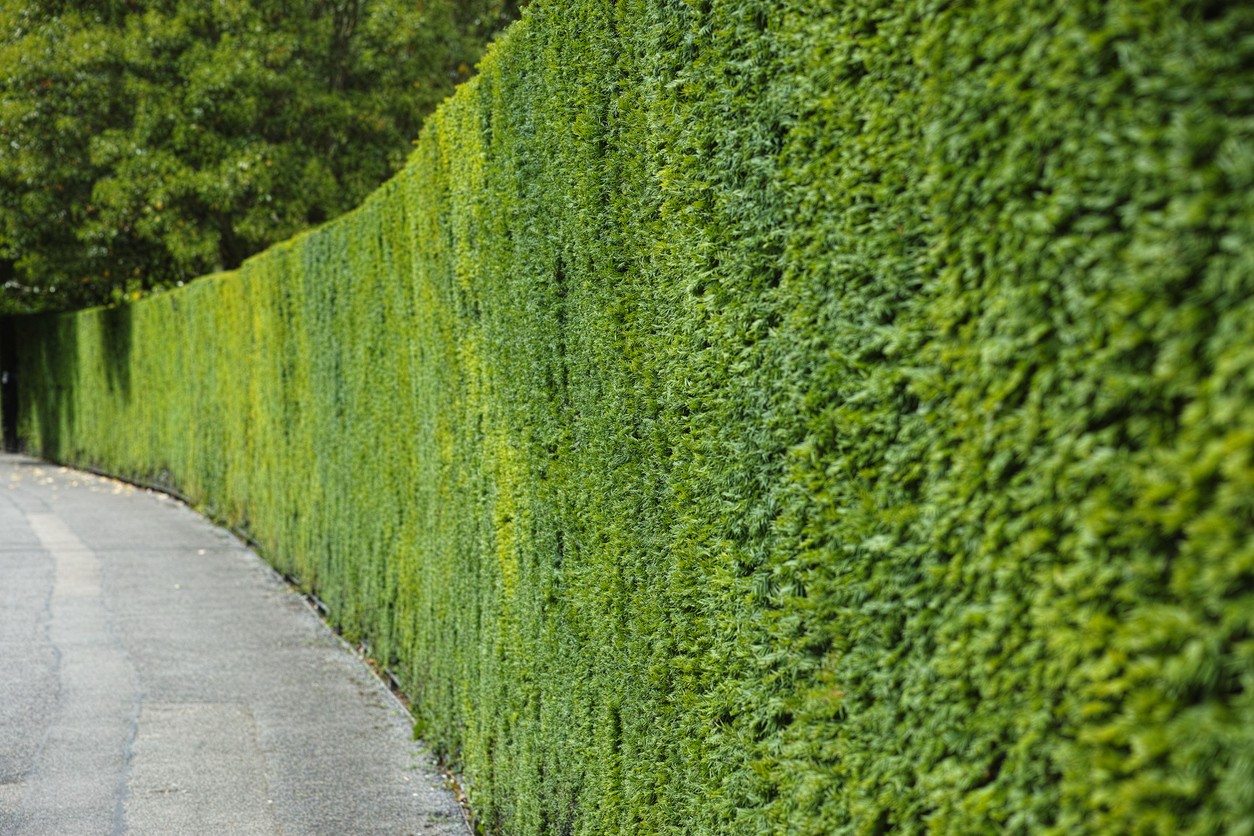
Taxus baccata is a medium-sized bushy evergreen tree with narrow, leathery, very dark green leaves arranged in two rows on the shoots, and insignificant flowers followed on female plants by fleshy red fruits.
- Thuja grows much faster, but it should be noted that compact cultivars are slow-growing. Fast-growing thuja varieties allow you to hide mistakes made during formation, but you will have to trim such a hedge more often.
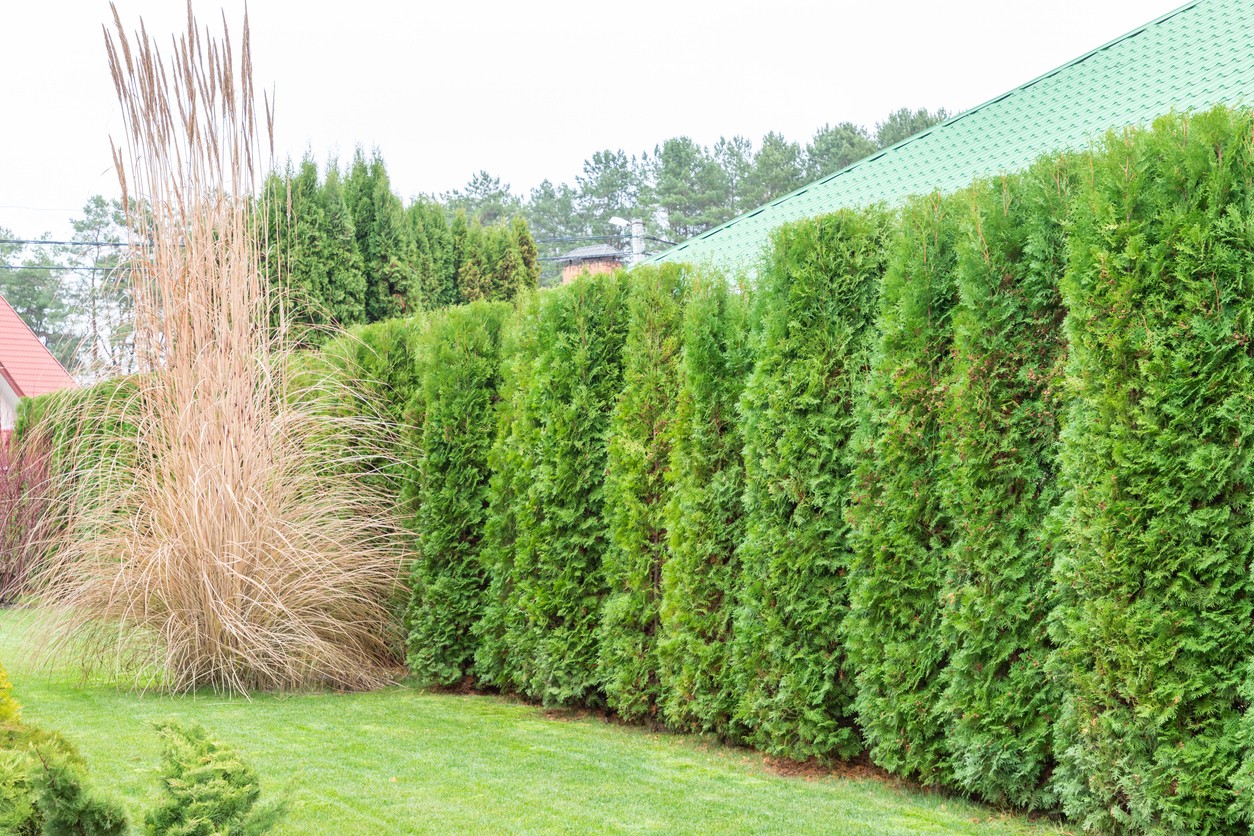
Tall green thuja hedge. High hedge of evergreen arborvitae thuja near a green turf lawn, and Cortaderia selloana is a nice flowering grass for the garden, pampas grass in the backyard garden in autumn, scenic place, nobody—hedge of thuja.
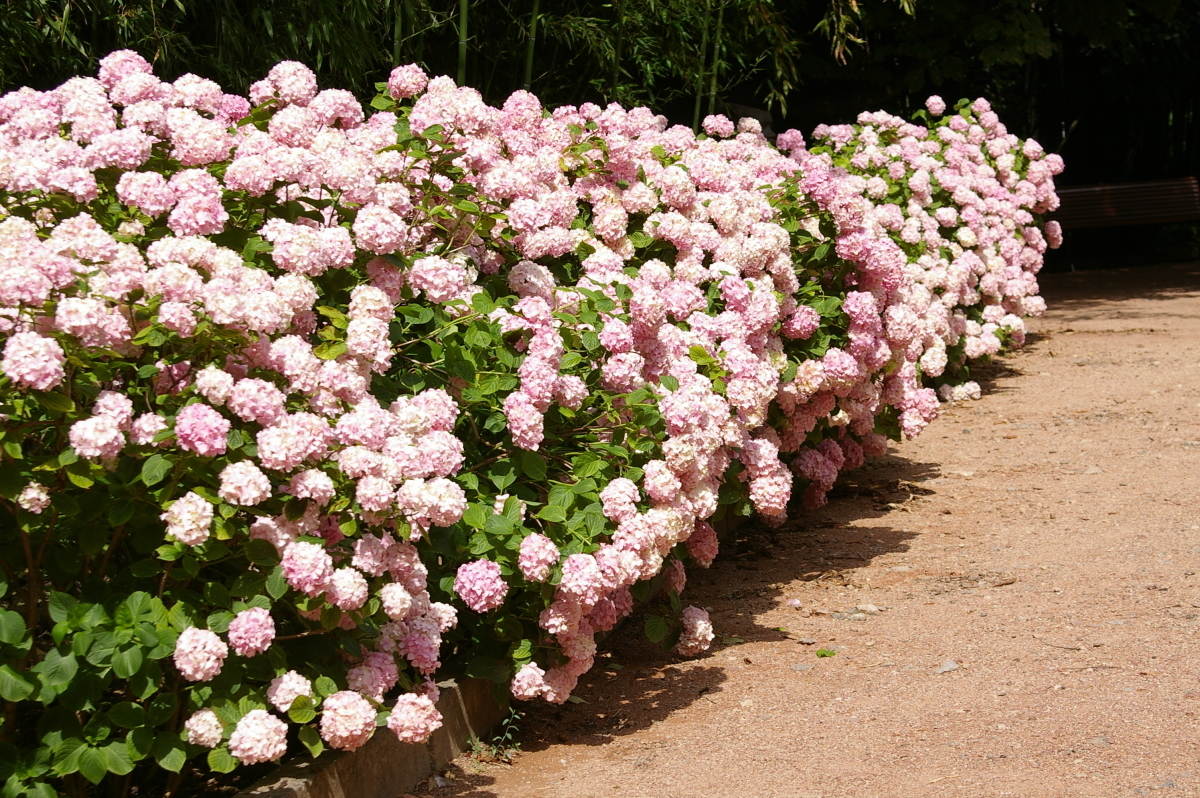
- Spruce trees make a fairly wide hedge — they are chosen if space allows. It is important not to let the top of the hedge grow unchecked and not to allow the plants to grow excessively upward, as subsequent heavy pruning of the central shoot can have a significantly adverse effect on growth and development. It is best to opt for a trapezoidal hedge, with the base wider than the top, to avoid the “legs” of the plants becoming bare due to insufficient light. This shape is easier to create with conifers.
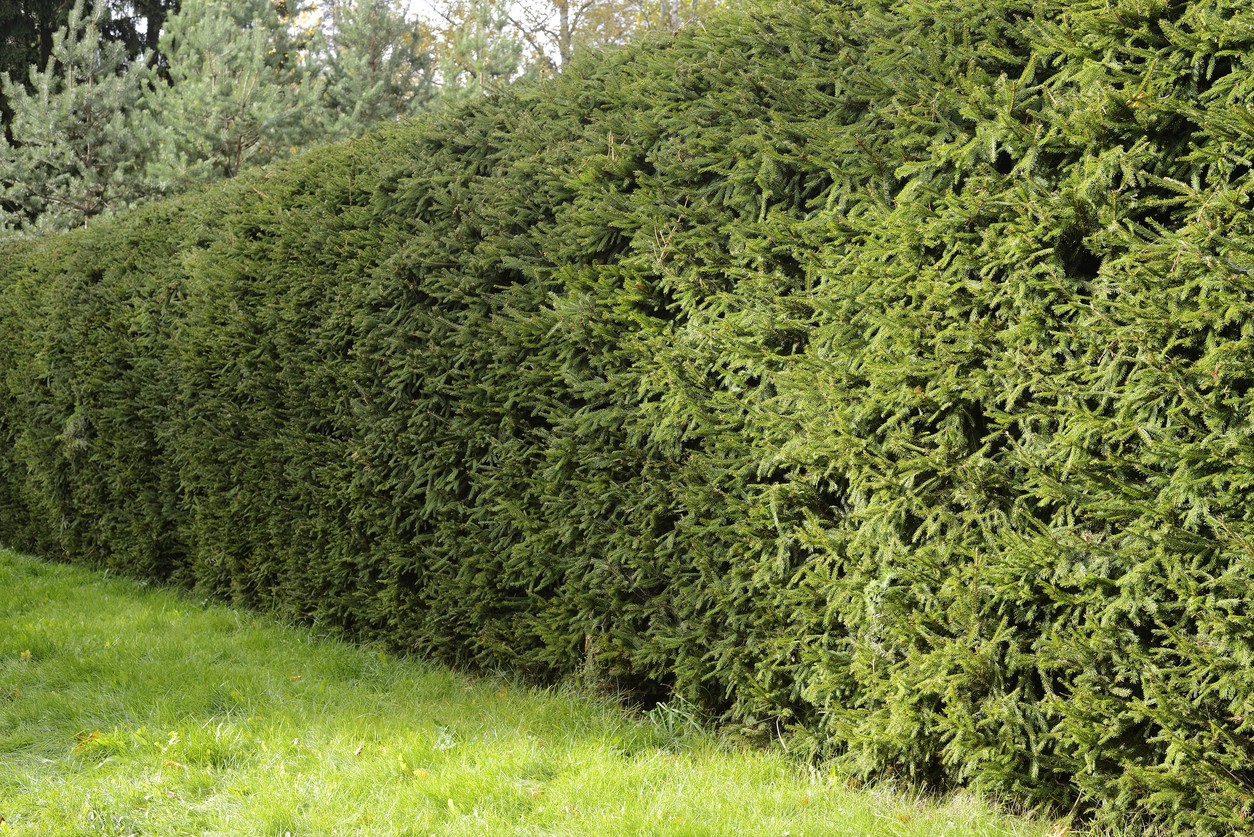
a solid, thick green hedge of spruce
Features of forming a hedge from conifers
Conifers exhibit distinct characteristics in shoot formation. For the first year or two after planting, the plants are not pruned, allowing them to establish a strong root system in their new location. The bottom of the hedge is formed first, followed by the middle and upper parts.

A smiling handyman in glasses trims and shapes a conifer hedge with a modern electric trimmer on a sunny day. Side view of a happy, focused man pruning evergreen bushes outdoors. Concept of gardening services.

It should be remembered that it is undesirable to prune perennial coniferous wood, so it is not recommended to touch shoots older than 2-3 years.
It cannot be said that conifers are more capricious than deciduous trees. However, they are more sensitive to certain negative factors: they are less tolerant of early-spring sun, freezing rain, and strong, frosty winds. Some specimens may die during the winter. Yew, thuja, and spruce are relatively resistant to these factors, but even among them, some mortality occurs. To replace a plant in the future, you will need to purchase a specimen that is suitable in terms of age and appearance to the remaining ones.
Deciduous hedges
There are many deciduous species suitable for tall hedges, but it is essential to choose a species whose size is close to the expected height of the hedge.
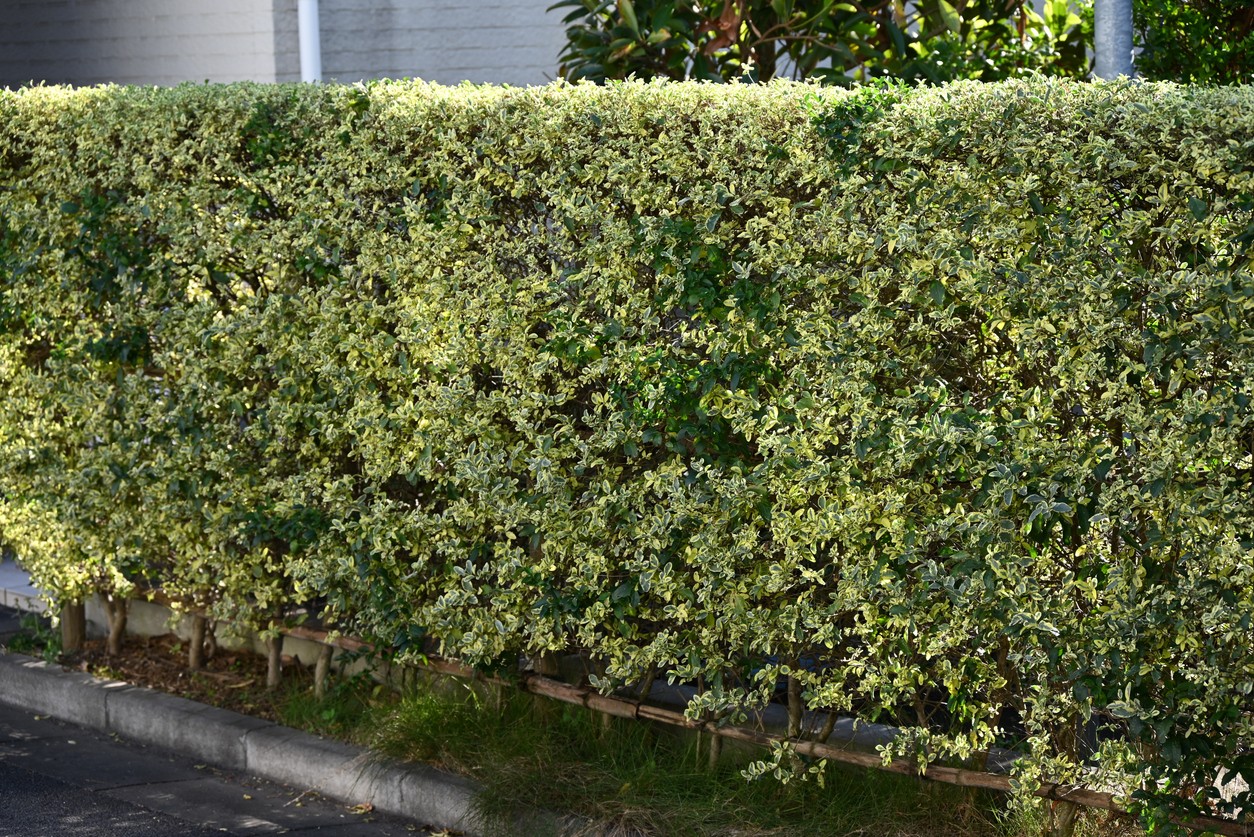
A hedge of variegated Japanese spindle ( Euonymus japonicus ). Celastraceae is an evergreen shrub—background material around houses.
Do you want a green wall no higher than 6,6-8 feet? Then, you should not consider plants that grow to 10-16 feet; otherwise, you will need to keep them in check with regular pruning. Once the maximum height has been reached, it will be enough to adjust the hedge’s width, which is much easier.
Deciduous plants for a shaped tall hedge
If you want a strict hedge with a precise shape, the following deciduous plants are suitable:
- hawthorn plum-leaved, b. pinnatifid, b. single-petaled — dense, thick, prickly;
- tree peony — medium density and thickness, with an interesting texture;
- black chokeberry — dense, thick, easy to trim, but does not bloom or blooms only occasionally;
- glossy cotoneaster — grows up to 8-10 feet, keeps its shape well, and is easy to trim;
- birch — grows to 6,5-8 feet, tolerates pruning well and holds its shape;
- barberry, Amur barberry — within 8-10 feet, fine-textured, fairly dense thorny hedge;
- Viburnum kalinolistny or dogwood (white ‘Sibirica’, blood-red) — At heights of 26,25 to 32,81 feet, the hedge becomes looser and less sturdy, but grows quickly.
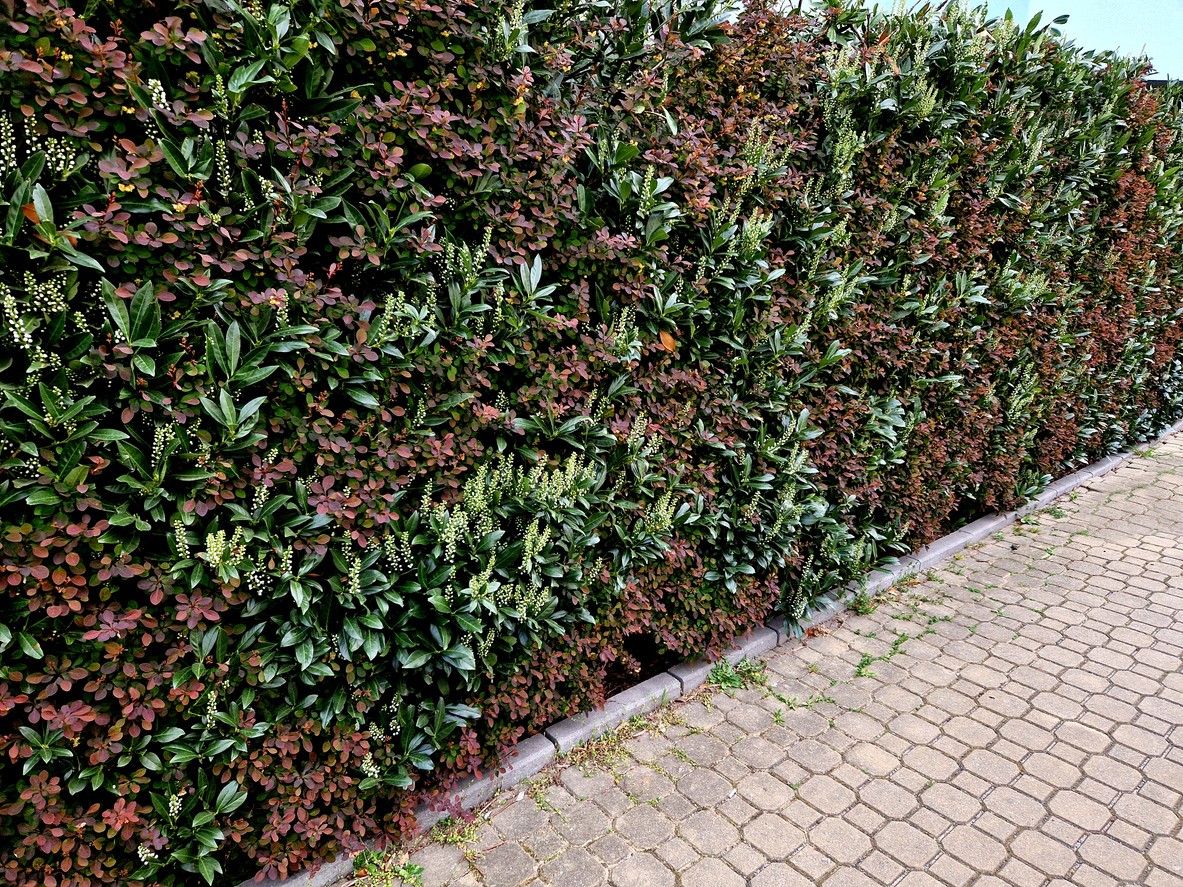
A combination of the appearance of two bushes in a hedge. Red and white colors and evergreen shrub, purple Japanese barberry, atropurpurea, thumbergii, thunberg’s barberry, otto luyken, prunus laurocerasus, novita

Remember that plants in a tall hedge need to be allowed to spread slightly each year, by at least 0,8-1,2 inches. This will ensure the contour remains a network of young shoots with succulent leaves, keeping the hedge bright and healthy.
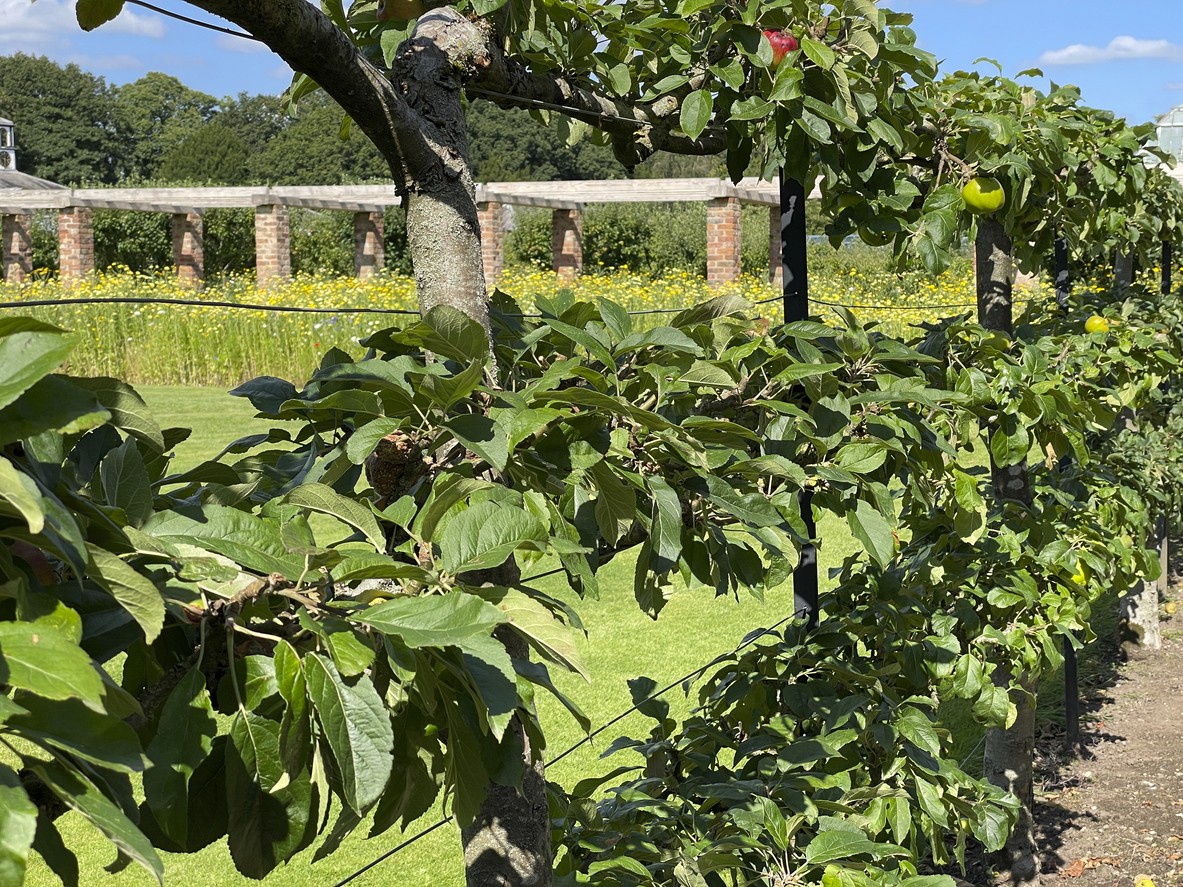
Row of espalier pears fruit growing in a garden, Espalier pears growing in a pear orchard
Trellis hedges are also considered to be shaped hedges. In this case, narrow walls are formed by intertwining and/or growing branches, which are initially sparse but gradually fill the space over time. Apple trees, lime trees, willows, elms, pear trees, and some vines (such as maiden grapes) are suitable for espalier planting.
Deciduous plants for free-growing tall hedges
The following plants are suitable for free-growing (or minimally pruned) tall hedges:
- Viburnum gordovina — a shade-tolerant plant that forms a dense, thick wall of dark green color with white-felted leaves at the bottom;
- lilac (common lilac, Hungarian lilac) — any variety, as well as standard forms with regular planting of a low hedge of shrubs along a row of lilacs;
- Canadian IRGA, I. Lamarck — quite loose, raised, as the bottom of this shrub becomes bare over time, the crown is concentrated in the upper half of the trunk;
- Coronilla, including some tall varieties such as ‘Virginal’ and ‘Zoya Kosmodemyanskaya’ — within 6,6-8 feet, less often 10 feet, quite shade-tolerant;
- Cherry (including felt cherry — about 6,6-8 feet) or blackthorn. It is undesirable to prune these crops for several reasons: they stop flowering and fruiting. When pruned, they begin to produce vigorous suckers, which, when cut out, inadvertently encourage the plant to regrow.
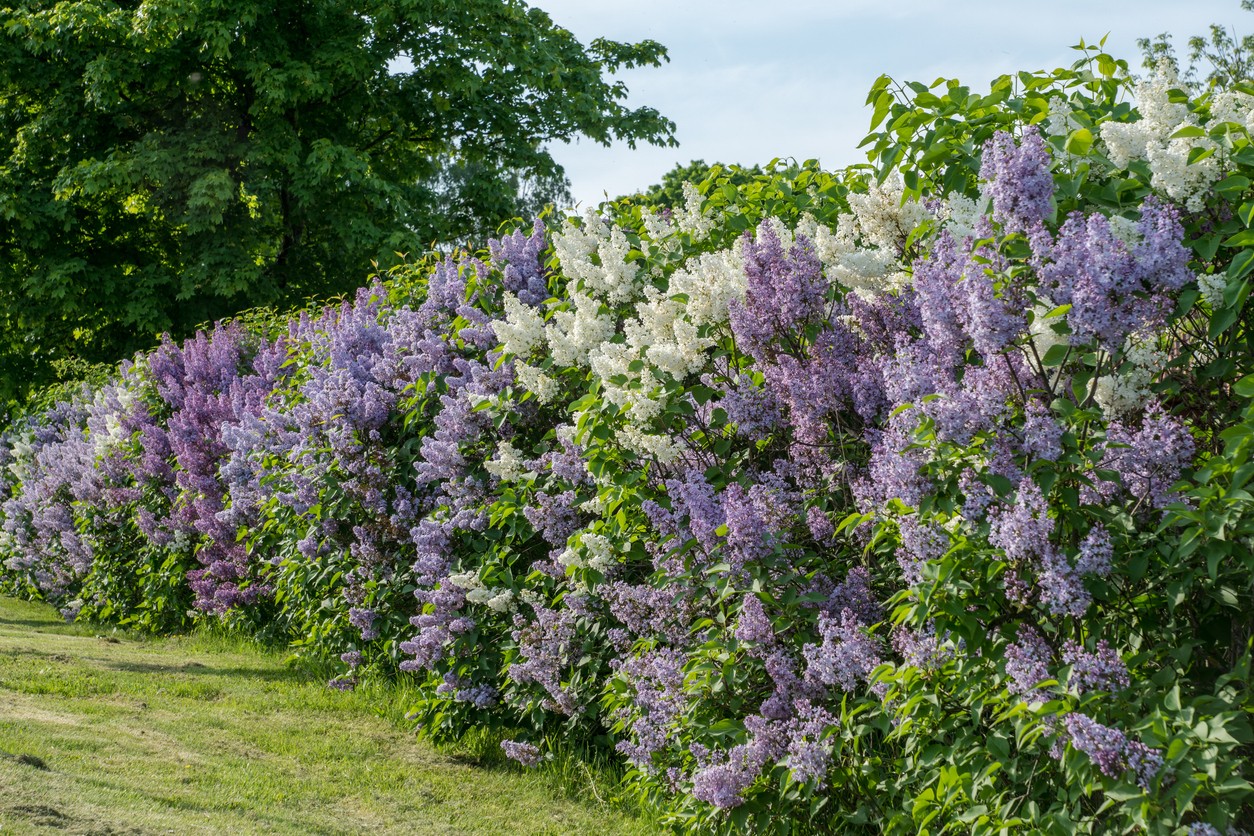
Beautiful summer view of a hedge in Sweden, filled with white and purple lilac flowers in full bloom
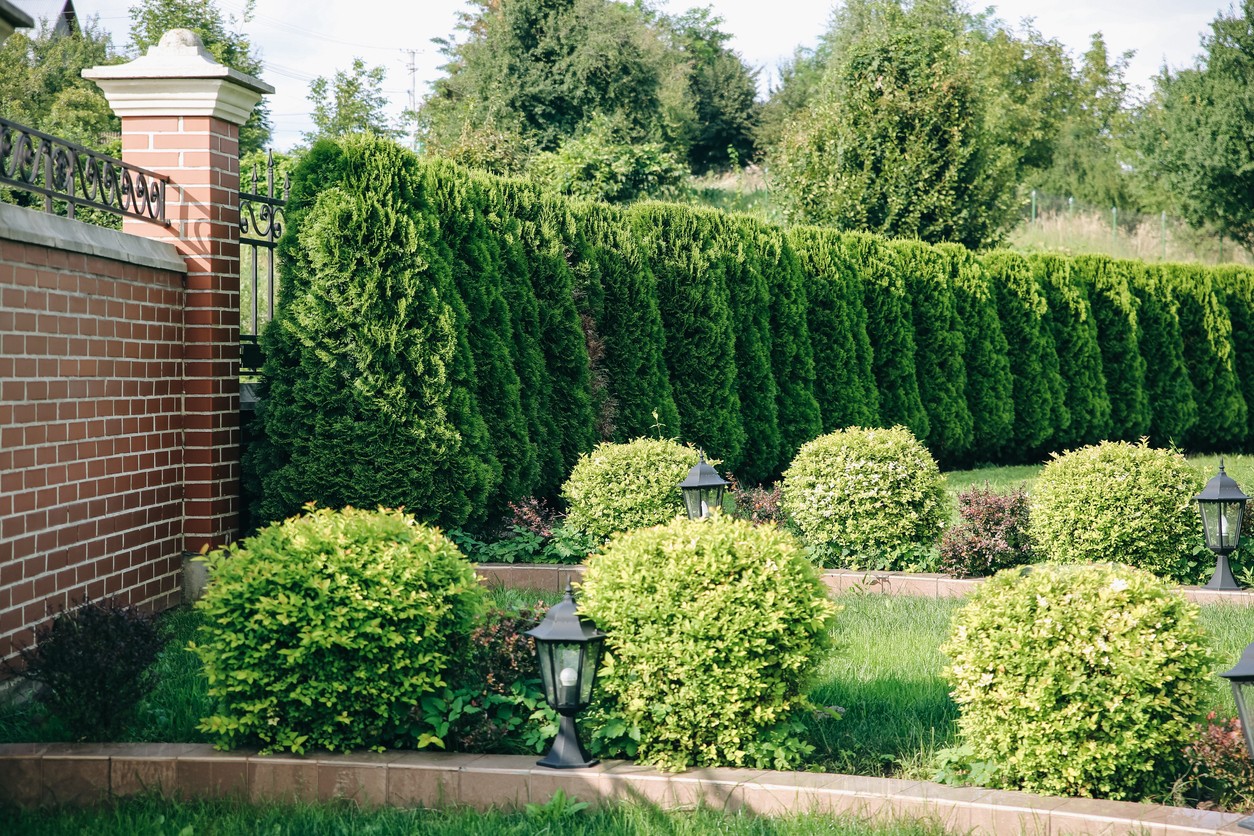
Planting, placement, and care
Plants are planted in trenches 16-20 inches wide and 20-28 inches deep (deeper trenches are dug where a large drainage layer is needed, about 8-12 inches deep). The distance between plants depends on the crop and type of hedge: 12-28 inches for a shaped hedge and 3,2-5 feet for a free-growing hedge. Yews and thujas are planted about 20 inches apart when creating a single-row hedge. Spruces are planted about 28 inches apart.
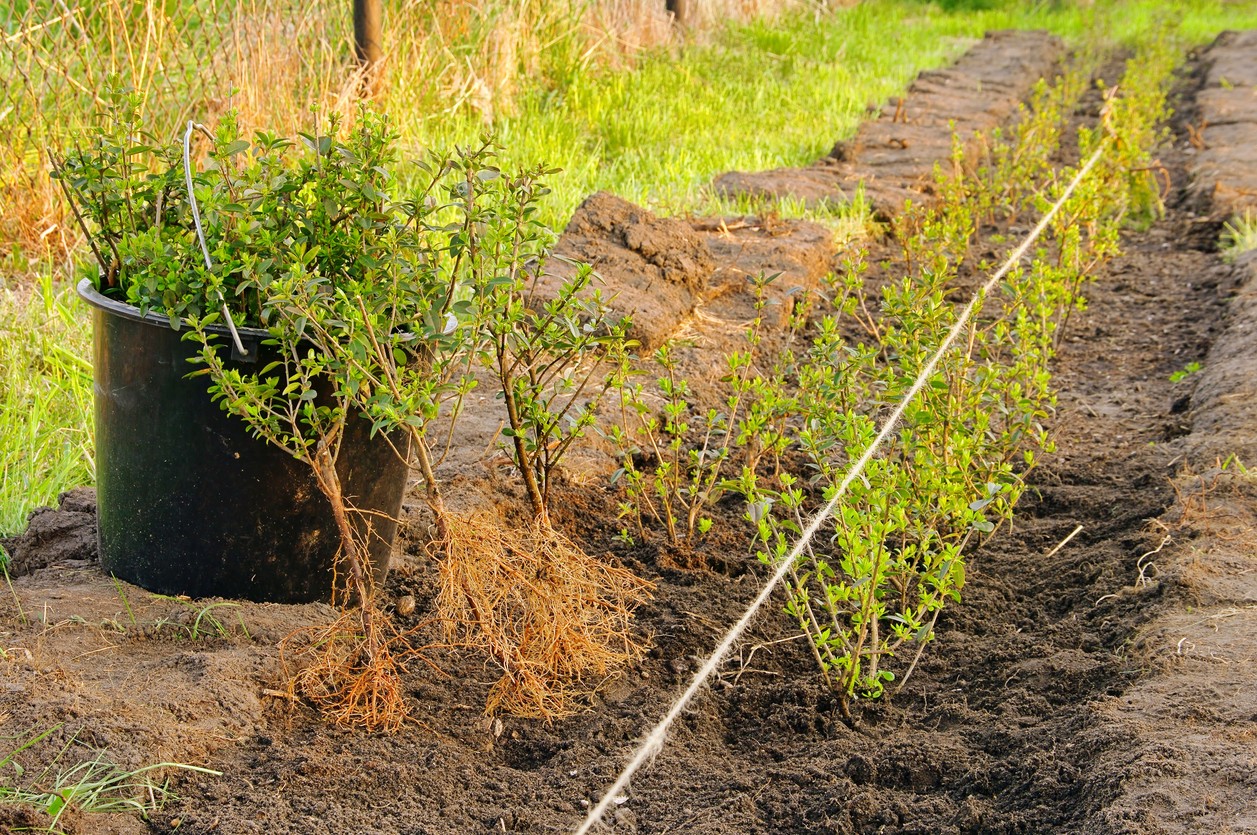
planting a hedge in the garden
Free-growing hedges can be flowering and generally require less maintenance, but they can grow up to 5-6.5 feet wide, which may not be suitable for every site. Trimmed hedges usually measure 1,7-3,3 feet wide, but pruning to maintain a compact shape must be done regularly, year after year.
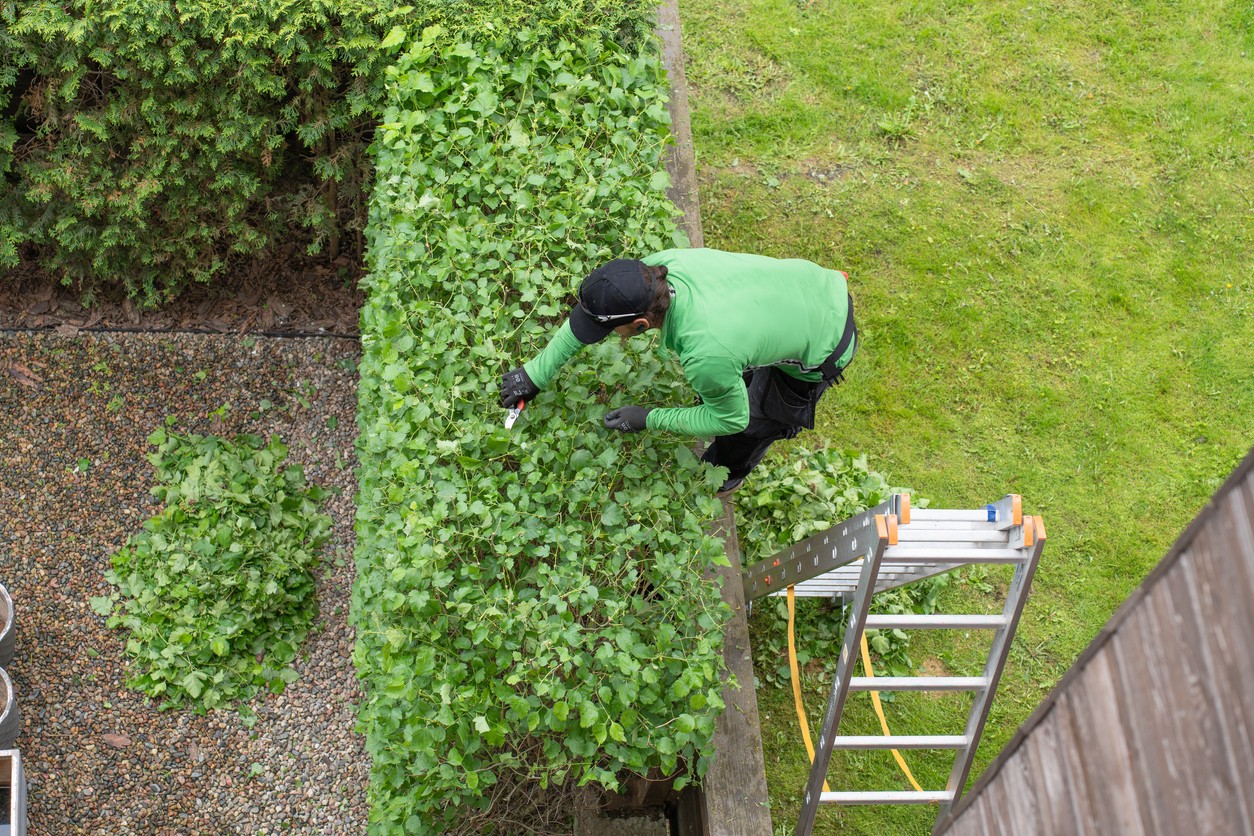
A gardener cutting a hedge. High-quality photo
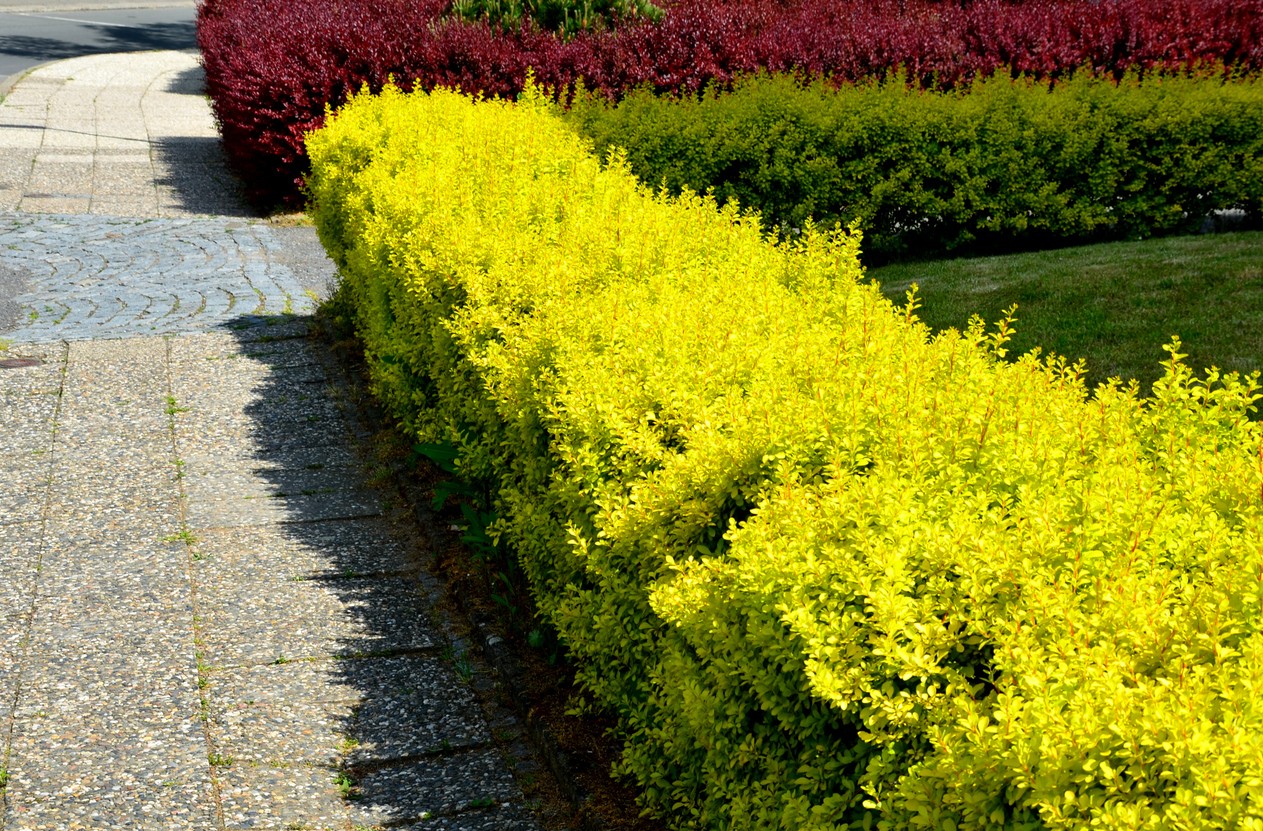
Keep in mind that not every species will work well in a free-growing hedge. For example, slender forms of western thuja (most often ‘Brabant’ and ‘Smaragd’) are suitable for this purpose, while spruce and yew will need to be restricted with formative pruning.
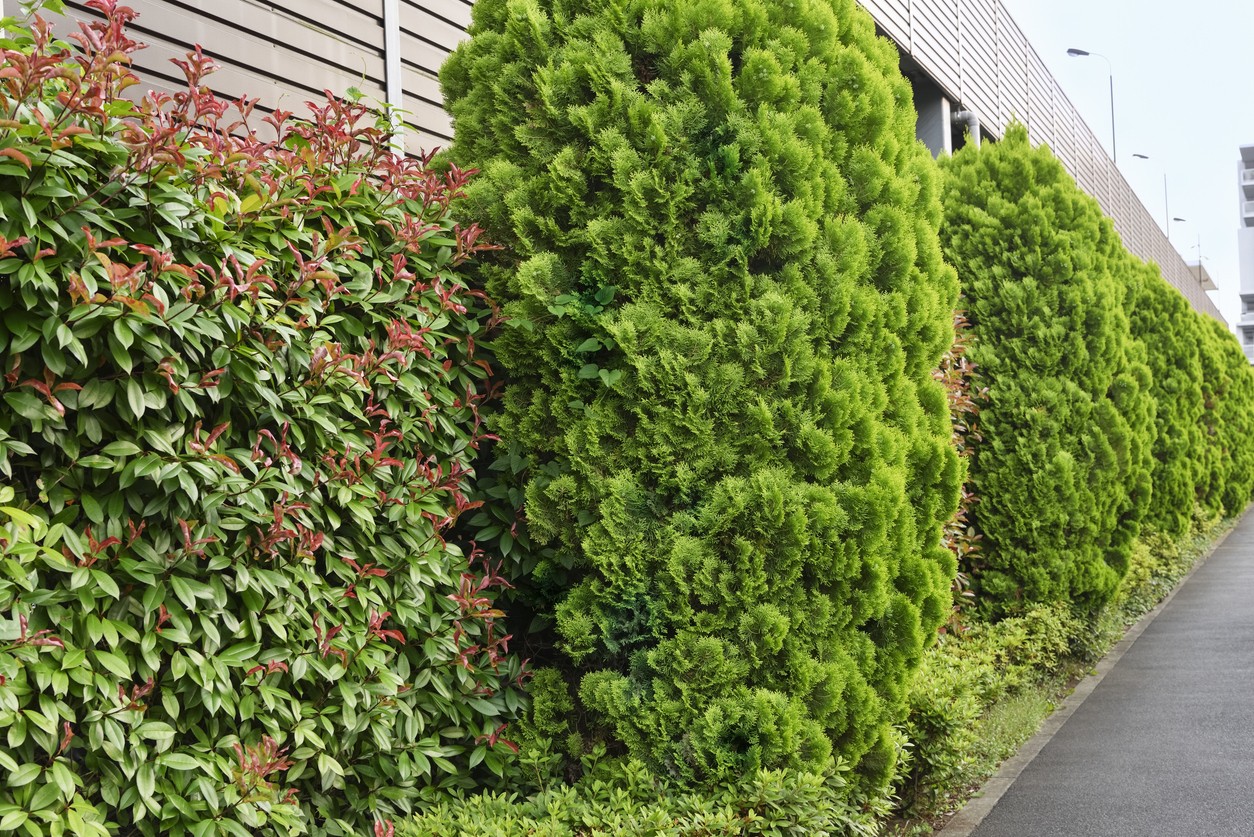
Hedge plants in early summer. Tokyo Japan.
The distance between plants in a trellis fence depends on the type of trellis chosen and ranges from 0,12-0,16 inches to 16 feet. The work involved in constructing such a fence cannot be called simple, and the trellis itself must be strong enough to withstand both the pressure of the plants and the wind. When the plants form a dense wall, the supports are removed. Significant difficulties may be associated with the direct formation of plants on the trellis, but the result will undoubtedly be pleasing to the eye.
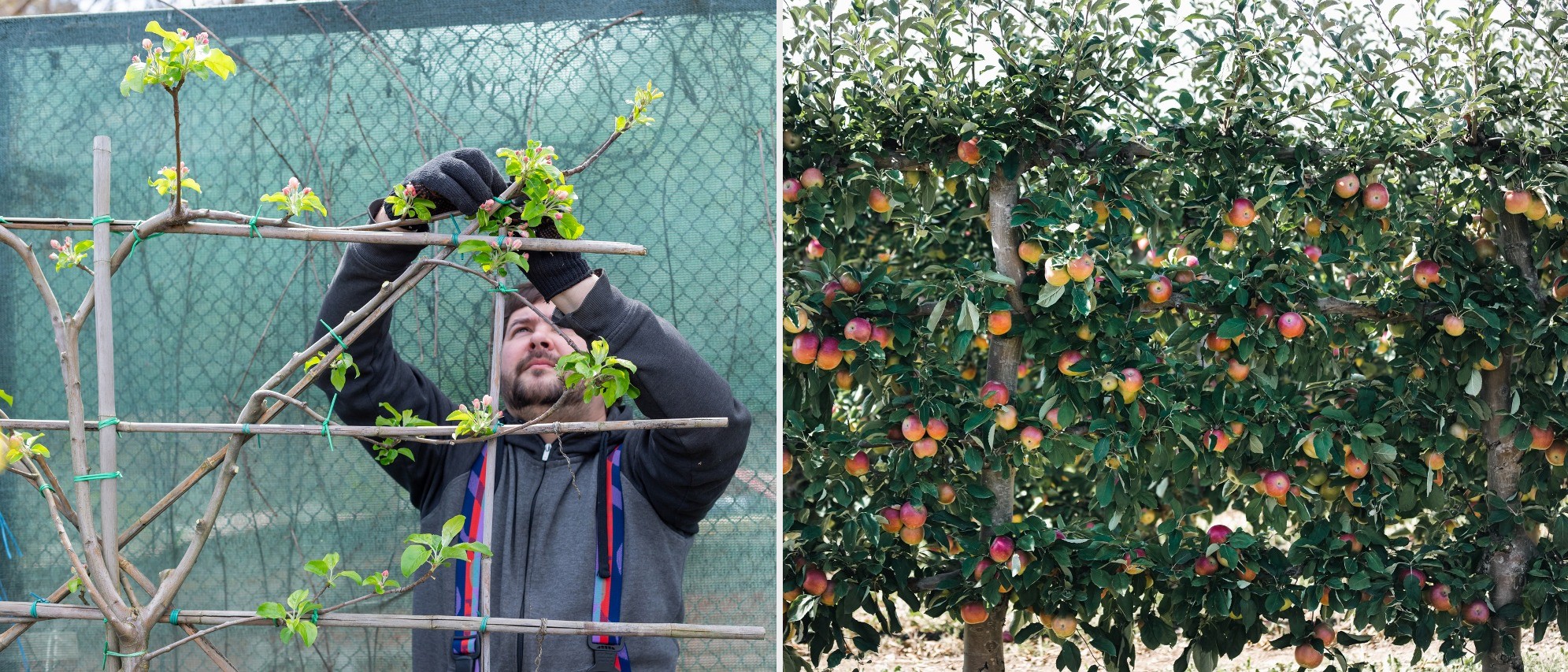
Installing a trellis fence may not be easy, but the result will undoubtedly be pleasing to the eye.
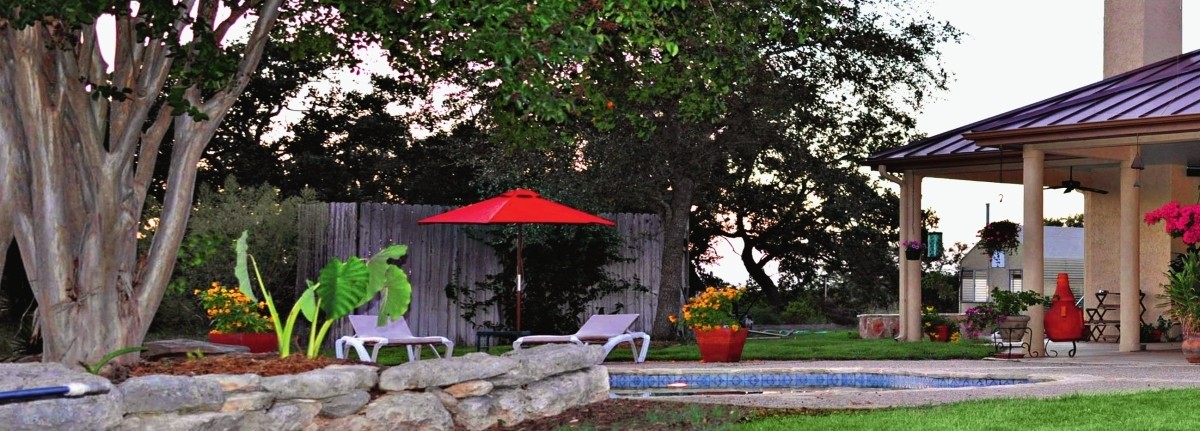
The surrounding environment should promote the healthy growth of the hedge’s plants. For example, a solid fence will significantly reduce the amount of light reaching the plants. And why would you need it if the hedge is going to become a dense wall in the coming years? An alternative in this case would be a metal picket fence, trellis, or mesh fence.
Leave enough space between the fence and the hedge to allow for proper plant care and trimming. Leave at least 20 inches between the wall and the planned edge of the hedge. The edge is estimated because, over the years, even with regular pruning, the hedge will grow in width, albeit slightly. For example, if you plan to create a yew hedge 23,6-27,6 inches wide, you need to leave about 31,5-39,4 inches from the center of the planting trench to the fence.
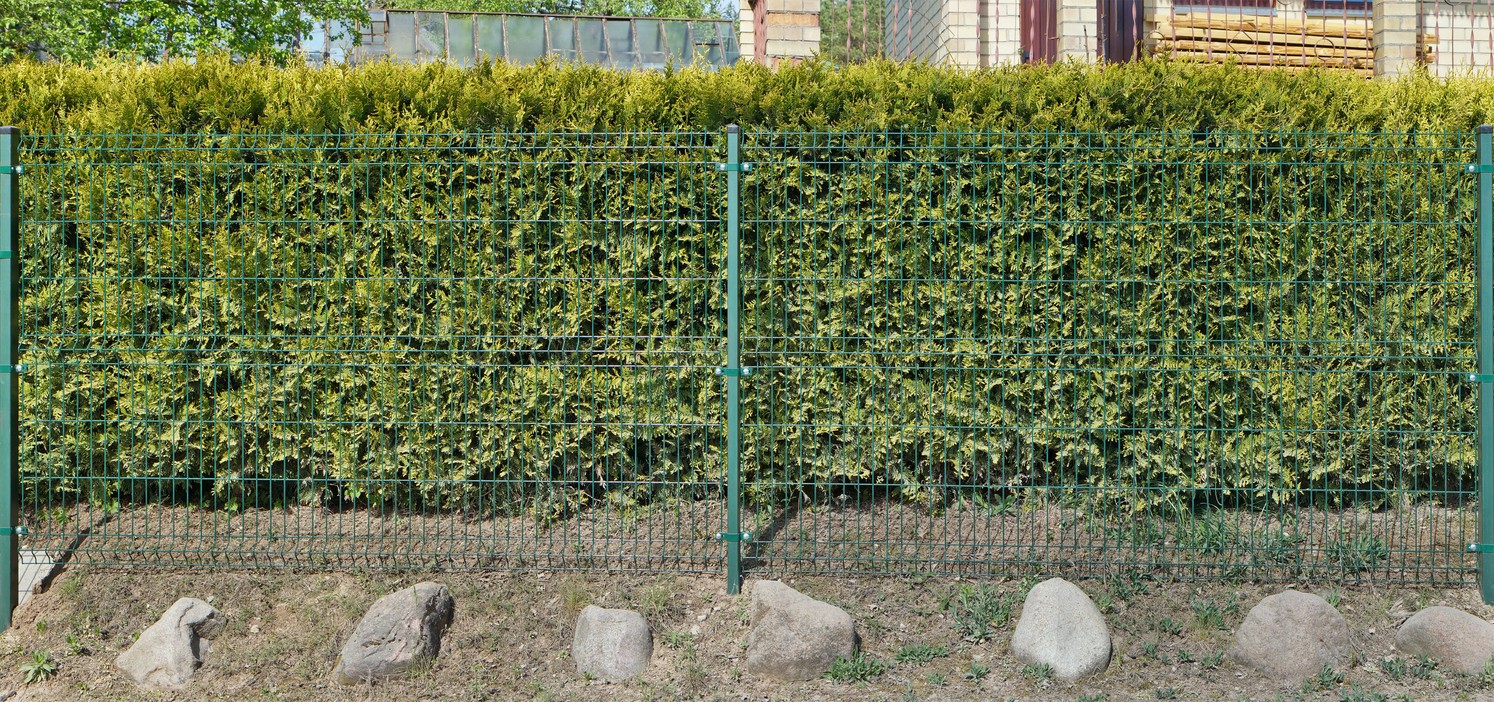
Correct rural green hedge. Subshort-haired coniferous trees behind the metal gauze. Granite boulders strengthen soil.
The presence of ground-based communications—such as overhead power lines—must be taken into account.
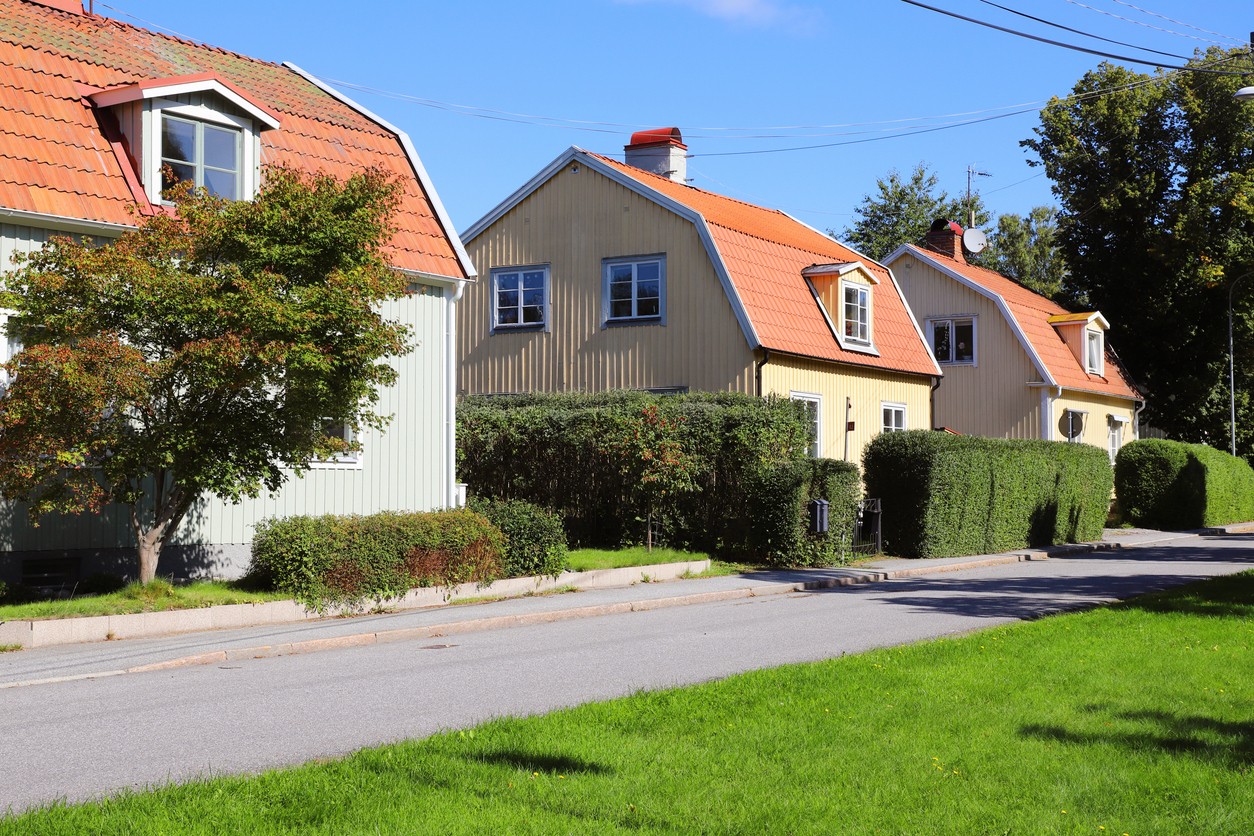
Swedish detached houses and residential buildings built in the 1920s.
The idea of growing a hedge on your property comes to mind for almost every gardener. We hope that this article has given you all the necessary information if you are planning to have tall green borders.
❓ Questions and answers

How fast does a privacy hedge grow compared to building a fence?
While a fence offers instant privacy, fast-growing hedge plants like Leyland cypress can reach 3–5 feet per year, creating a tall living wall within a few seasons.
Are hedges cheaper than fences in the long run?
Planting a hedge may cost less upfront than installing a wooden or vinyl fence, and with proper care, it lasts decades without replacement costs.
What maintenance does a tall hedge require?
Hedges need regular watering, mulching, and trimming 1–2 times per year to keep them dense and attractive. In contrast, fences require repairs and repainting.
Which hedge plants work best for cold climates in the U.S.?
For northern states, evergreens like boxwood, holly, or yew are hardy choices. In warmer states, magnolia or wax myrtle are excellent alternatives.
Arthur Lansley: Certified arborist with 15 years of experience. Specialist in trees, shrubs, and landscape design. I can help you choose, plant, and maintain your trees.


24 Responses
[…] A tall hedge instead of a fence. How to create and maintain it […]
[…] A tall hedge instead of a fence. How to create and maintain it […]
[…] option is to use coniferous varieties for hedges, which burn out on their own in early spring, but feel good when planted in […]
[…] A tall hedge instead of a fence. How to create and maintain it […]
[…] A tall hedge instead of a fence. How to create and maintain it […]
[…] A tall hedge instead of a fence. How to create and maintain it […]
[…] A tall hedge instead of a fence. How to create and maintain it […]
[…] A tall hedge instead of a fence. How to create and maintain it […]
[…] A tall hedge instead of a fence. How to create and maintain it […]
[…] A tall hedge instead of a fence. How to create and maintain it […]
[…] A tall hedge instead of a fence. How to create and maintain it […]
[…] A tall hedge instead of a fence. How to create and maintain it […]
[…] A tall hedge instead of a fence. How to create and maintain it […]
[…] A tall hedge instead of a fence. How to create and maintain it […]
[…] A tall hedge instead of a fence. How to create and maintain it […]
[…] A tall hedge instead of a fence. How to create and maintain it […]
[…] A tall hedge instead of a fence. How to create and maintain it […]
[…] A tall hedge instead of a fence. How to create and maintain it […]
[…] A tall hedge instead of a fence. How to create and maintain it […]
[…] A tall hedge instead of a fence. How to create and maintain it […]
[…] A tall hedge instead of a fence. How to create and maintain it […]
[…] A tall hedge instead of a fence. How to create and maintain it […]
[…] A tall hedge instead of a fence. How to create and maintain it […]
[…] A tall hedge instead of a fence. How to create and maintain it […]