Ornamental grasses in the garden: grass varieties, features of creating and caring for grass gardens

Ornamental grasses in the garden: grass varieties, features of creating and caring for grass gardens, and landscape design options.
Cereal gardens
Grain gardens are one of the latest trends in landscape design. Just three or four years ago, grains were considered weeds, but today they are appreciated and admired. By planting grasses in your garden, you will fill it with movement and music—the whispering and rustling of ears of grain swaying in the wind. In late autumn and even winter, covered with snow, they will become a decorative adornment for the sleeping garden.
What are cereals?
The grass family includes various plants. These include wheat, corn, and other valuable crops, whose seeds are used to make flour and cereals. All lawn grasses that spread like carpets across our suburban plots are cereals: bluegrass, fescue, and bentgrass. They can be found in meadows and fields, forests, steppes (the most famous being feather grass), prairies, and savannas.
Cereals are found on every continent. Amid the diversity created by nature, landscape designers have selected a group of grasses for gardening use, primarily for decorative purposes. There are approximately 300 different varieties of cereals, of which about 50 are capable of overwintering in the conditions of the northeastern states and the northern Midwest. Ornamental grasses vary in height from 6 inches to 10 feet (15 cm to 2-3 m), color (there are white, yellow, golden, green, red, and blue grasses), and “architecture” (there are soft and stiff ones that hold their shape well).
Visually light, many grasses, almost airy, instantly respond to every subtle breath of wind. They bend in one direction, then in another, “whispering” to each other—and the garden seems to come alive. In strong winds, the music of the grasses becomes louder, more anxious—but then, what else could the song of bad weather be?
Cereals covered in fog are beautiful. Sprinkled with snow or painted with frost, they are also attractive in their own way: in winter, their graphic nature is more pronounced. Cereals can be combined with flowering annuals and perennials, with conifers or other shrubs, or planted as solitary plants. Some of them are used to create compositions of dried flowers: the flat, drooping spikelets of the quaking grass are beautiful, the soft, fluffy panicles of the lagurus are stunning, and the large panicles of the reed, on the contrary, can reach a length of 16 inches (40 cm).
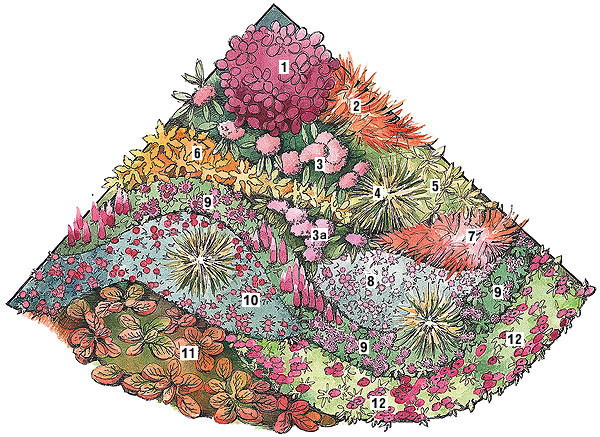
The period of maximum decorative appeal for this landscape flower garden is autumn, when most of the plants turn purple, crimson, and orange. Three types of grasses with different textures are included in the composition: translucent clouds of Transparent molinia, bright red fountains of Rotsilber miscanthus, and broadleaf flat-spiked inflorescences that look as if they have been ironed. The wave crossing the flower bed in the middle is “painted” not with one “color,” but with a mixture of three: Roma astrantia, Chinese astilbe Purpurlanze, and Atropurpureum onion. In the spring, daffodils will look good in place of the not-yet-grown poskonniks, and chionodoxas in place of the asters. The combination of dirty pink inflorescences of leatherleaf and Siberian cottonweed gives the flower bed a special charm.
-
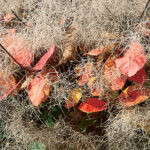
- Photo 1 Leathery skumpia
-
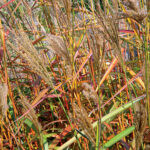
- Photo 2 Miscanthus Rotsilber
-
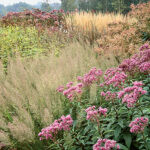
- Photo 3 Atropurpureum (3), Purple Bush (3a)
-

- Photo 4 Molinia Transparent
-
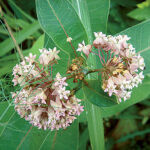
- Photo 5 Siberian cottonwood
-
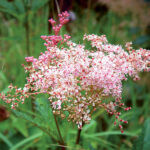
- Photo 6 Red meadowsweet Venusta Magnifica
-
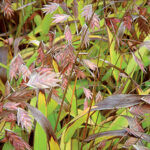
- Photo 7 Broadleaf flat-stemmed plant
-

- Photo 8 Small-flowered aster Coombe Fishacre
-

- Photo 9 Astrantia Roma
-

- Photo 10 Cushion-shaped aster Kristina
-

- Photo 11 Badan Baby Doll
-
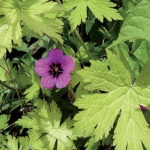
- Photo 12 Geranium Ann Folkard

A cereal garden is called a “low-maintenance” garden because it requires little work. All you need to do is cut off last year’s dry leaves and stems with spikelets in the spring. However, there are three things to keep in mind.
First, you only need to be taken care of if you plant suitable plants for your conditions (soil, light) and your intended compositions.
Second, some grasses (Phragmites australis, Miscanthus sacchariferus, Spartina pectinata) grow very quickly thanks to their robust creeping rhizomes. They behave aggressively towards surrounding plants. Therefore, experts recommend planting these species in containers, which are then dug into the ground, or limiting their growth with plastic or slate borders.
And thirdly, it is recommended to plant only varietal grasses that reproduce by dividing the bush. Species reproduce by seeding, and in a couple of years, you will have to weed them out of your garden like weeds.
Love of warmth
For gardening, the most important classification is the division of cereals into “warm” and “cold.” “Cold” (or cold-growing, cold-season) cereals are those that naturally grow in temperate climates: they thrive in average daily temperatures of 54-59°F (12-15°C). These include Hakonechloa (or Japanese grass), spreading borage, canary grass, sharp-flowered violets, pike, and others. In the northeastern states and the northern Midwest, they wake up in early spring, grow quickly, and are already decorative by mid-summer. During the hot months, growth of these grasses stops, but with the onset of autumn, it usually resumes until cold weather arrives.
“Warm” (heat-loving, warm-season) grasses are not visible in spring and even in June in our latitudes—they wake up in the second half of summer, waiting for the average daily temperature to rise to 68-77°F (22-25°C). These are plants of tropical and subtropical zones: miscanthus, imperata (bright red grass), millet (one of the grasses that grows in “clumps”), and molinia. In plantings, “warm” grasses go well with a variety of bulbous crops. In early spring, you can admire how tulips, daffodils, and chionodoxa wake up against the backdrop of straw-colored miscanthus. When the bulbous plants gain strength and begin to bloom, the grass stems are cut off. And in July-August, miscanthus will once again take center stage, with its fresh shoots and then sultan flowers.
Sun-shade
As in any plant family, there are different types of grasses: some need sun, others prefer shade; some grow well in moist soils, others in dry soils. Thus, in sunny areas with infertile sandy loam soils, it is recommended to plant native steppe and southern mountain species such as elimus, fescue, and oatgrass on sunny loam, plant miscanthus, flat-stemmed grass, millet, molinia, and spartina. Grasses suitable for partial shade and fertile soils include sedges, melica, lizuka, spodiopogon, and hakonechloa. Marsh plants such as mannik and canary grass need moist, humus-rich soils. Canary grass, like some other grasses, is sometimes feared because it spreads quickly, displacing neighboring plants. But there are also non-aggressive varieties of canary grass: Picta, Luteopicta. In addition, they are more compact and shorter than the rest.
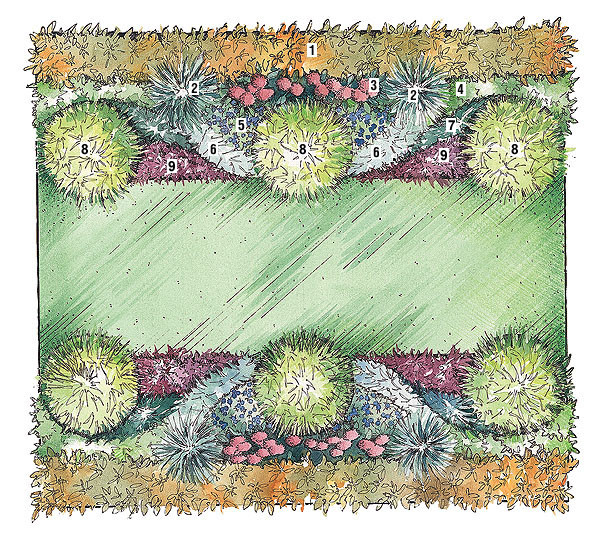

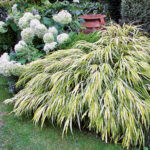
A flower bed designed in a regular style frames the grass path. The Japanese grass Hakonechloa, cascading in cascades, is the star here, with its most interesting variety being Aureola.
-
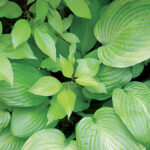
- Photo 1 Dogwood Aurea
-

- Photo 2 Miscanthus Variegatus
-

- Photo 3 Spotted flycatcher Album
-

- Photo 4 Clopogon White Pearl
-

- Photo 5 Siberian catnip
-

- Photo 6 Falaris Luteopicta
-
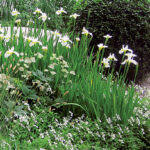
- Photo 7 Siberian iris Alba
-
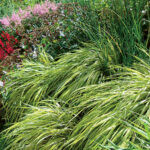
- Photo 8 Hakonechloa aureola
-

- Photo 9 Spreading aster
Ensemble or solo?
Children of wild steppes and meadows, grasses give the garden a corresponding character—naturalness, spontaneity, and a slightly careless chaos. Therefore, they are traditionally included in landscape flower beds. Still, they are also used in the creation of regular compositions, skillfully utilizing the rigidity or, conversely, the softness of the “bush” form. To introduce a particular species into the garden design, it is necessary to imagine what it will look like at the peak of its decorative potential—its height, color, and ears.
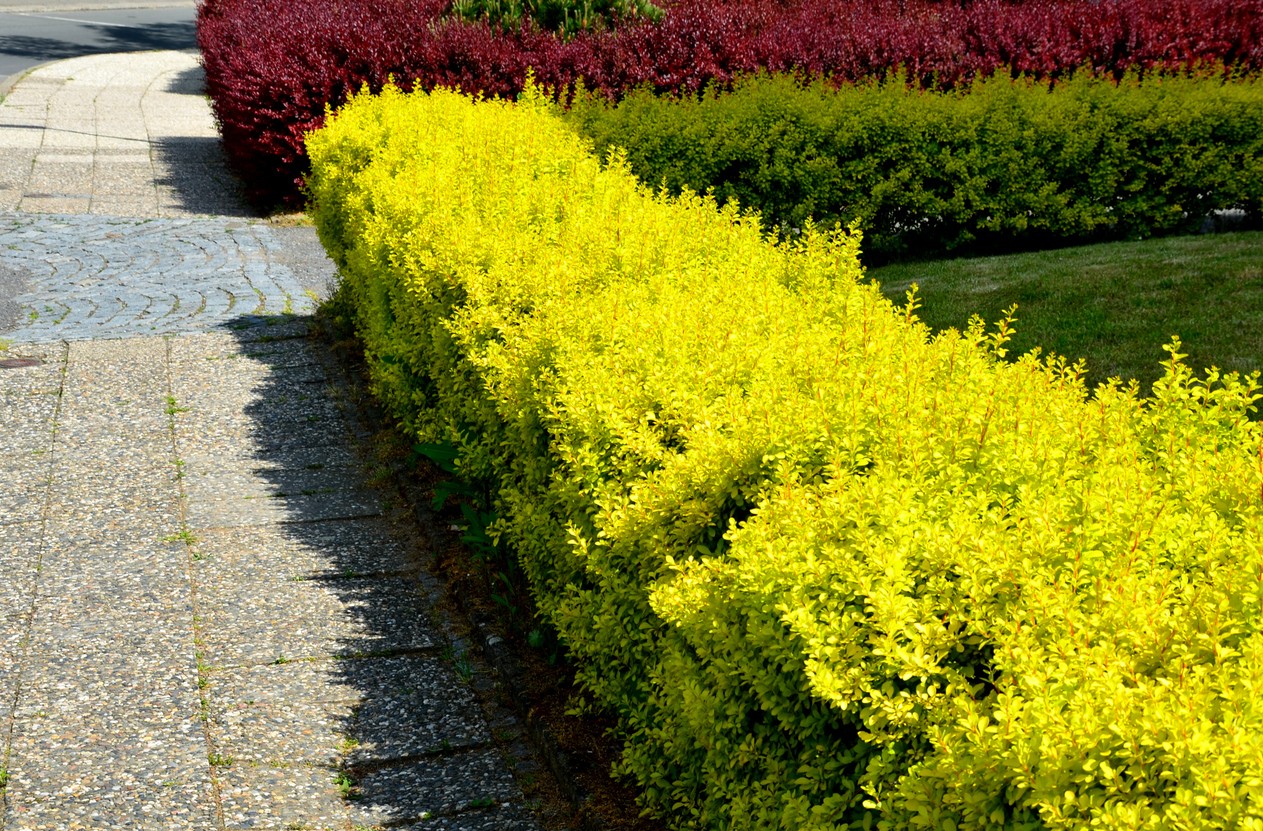
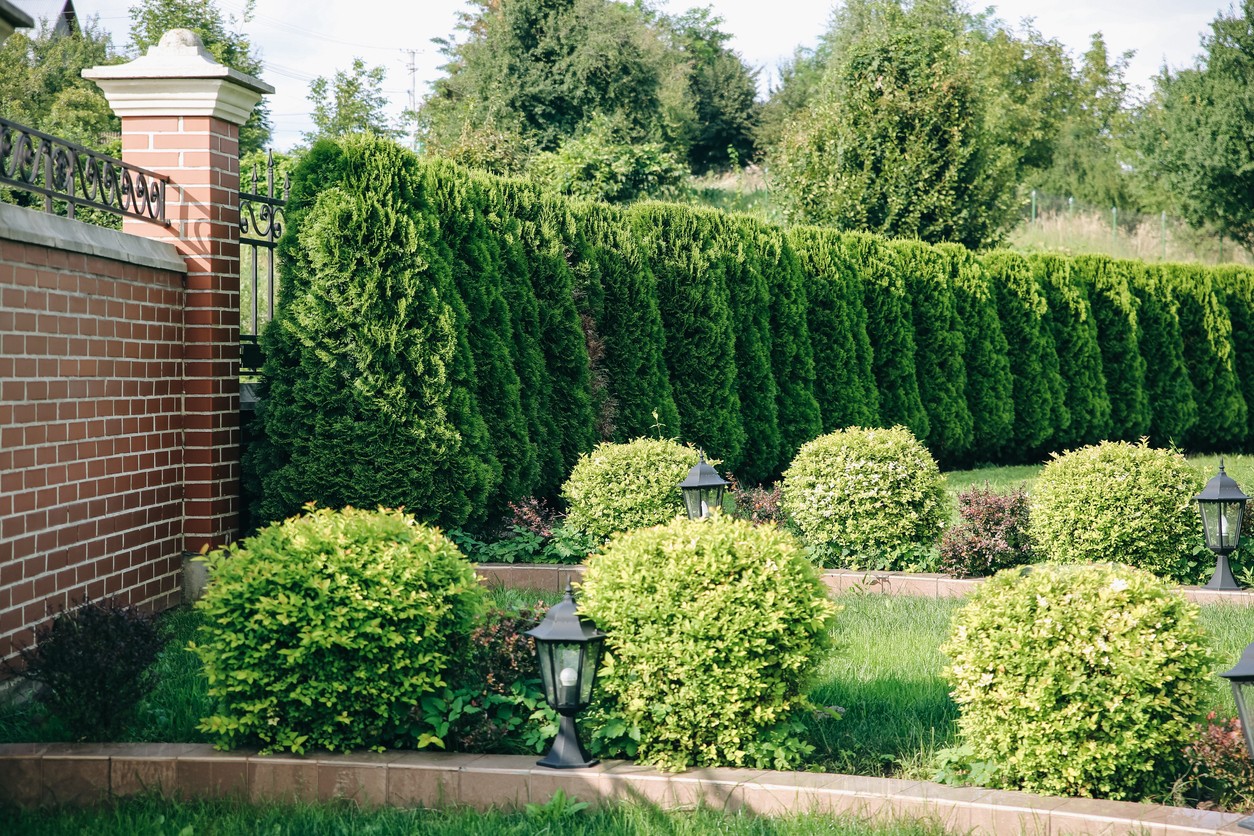
Some grasses look better against a dense wall of plants or a fence. For example, molinia, which turns bright yellow in autumn, stands out well against a green or bright red background (hawthorn or irga plantings). Other grasses need to be viewed “against the light”—for example, Pendula sedge. In short, each plant looks impressive in its place.
Expert opinion
Grasses look best in gardens with a so-called “open border”—an imitation of a steppe or meadow. Plants are selected depending on lighting and soil conditions. For example, you can mix pampas grass, onions, and astrantia, arranging the planting as a round flower bed with a diameter of about 39-118 inches (1-3 m). A fashionable trend in modern flower beds is tall plants that “pop out” from the mass of lower ones. In a regular landscape, single plantings of grasses look good: Molinia, Pennisetum, and Elymus. The latter, by the way, is found in almost any garden, and many people try to get rid of it, citing its aggressiveness, which is entirely unnecessary. Elimus must be limited with a border tape. And if you plant it against the backdrop of a trellis with maiden grapes, such plantings will look very nice. The contrast between trimmed shapes and grasses is interesting. In the front area, against the backdrop of a strict hedge of spruce, hawthorn, or physocarpus, it is a good idea to plant “architectural” plants: tall varieties of molinia (Transparent, Sky Racer), miscanthus (Florida, giant) – their height sometimes reaches 118 inches. (3 m).
Tatyana Koysman, landscape architect, director of the Gertrude Garden Art Center
Millet is recommended to be combined with glossy foliage (for example, hostas, badans) or with plants that change color during the season (peonies, peltiphyllum, buzulnik). After all, millet also changes: in spring it is green, then it turns golden, cherry-red or blue (Claude Ninc variety). Such a composition will transform several times during the season, giving guests and hosts the impression that they are entering a new garden each time.
Miscanthus goes well with roses and onions. It looks good in both formal and landscape gardens and is decorative year-round. In spring, it is bright green tufts; by June-July, it begins to grow, then blooms, forming a golden haze, and stands all winter.
Tall varieties of miscanthus and molinia harmoniously combine with tall herbaceous perennials (helianthus, asters, helenium, veronicastrum, tall mountain plants, bugleweed). Their color in dense plantings is irrelevant—everything blends, creating a “color shock.” Compositions that include shrubs are interesting: for example, Diabolo physocarpus combined with bright asters and Goldfeder miscanthus. Grasses can also be used to decorate staircases, both front and “forest” ones, which are surrounded by greenery. Next to the steps of the front staircase, the Pendula variety of oat grass looks good in the sun—a gray grass about 60 inches (1.5 m) tall, leaning toward the ground.
-

- Photo 1
-

- Photo 2
-

- Photo 3
-

- Photo 4
1-5. The beauty of cereals is quiet and unassuming. Each species and variety has its own unique beauty: Imperata is attractive with its red arrows (1), Pennisetum with its fluffy spikelets (2), Miscanthus with its striped leaves and large panicles (3), and millet with its delicate inflorescences, as if gathered from individual “droplets” (4). Fescue resembles a blue ball (5) and looks good both in single plantings and in compositions.
-

- Photo 5
-

- Photo 6
-

- Photo 7
-

- Photo 8

6. Miscanthus’s ability to grow large masses is used to create plant screens.
7, 10. The graceful Nassella with its delicate hair-like leaves does not winter well in the northeastern states and the northern Midwest. However, it can be grown in containers and brought into a cool room for the winter.
-

- Photo 9
-

- Photo 10
-
- Photo 11
-

- Photo 12

8, 9, 12-14. Cereals and perennials are combined in compositions based on the principle of contrast—color and texture.
-

- Photo 13
-
- Photo 14
-

- Photo 15
-
- Photo 16
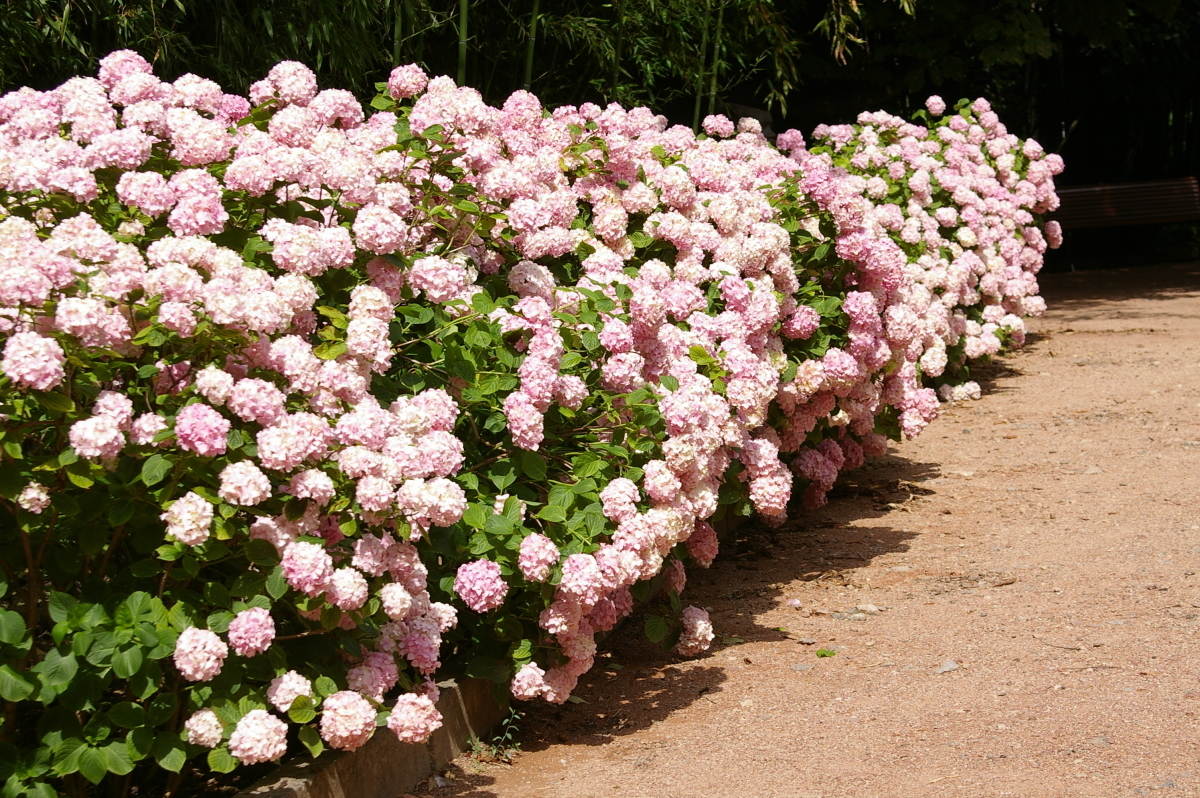
11, 15. Grasses are also used to decorate staircases: cascading Hakonechloa grasses look good on low steps, while Molinia grasses are suitable for a grand staircase decorated with flower pots.
16. Include tall varieties of miscanthus (such as Graziella) in compositions of tall and very tall plants, such as sunflowers, heleniums, bugleweeds, and some varieties of asters. Densely planted plants in a flower garden will support each other.
-
- Photo 17
-

- Photo 18
-
- Photo 19
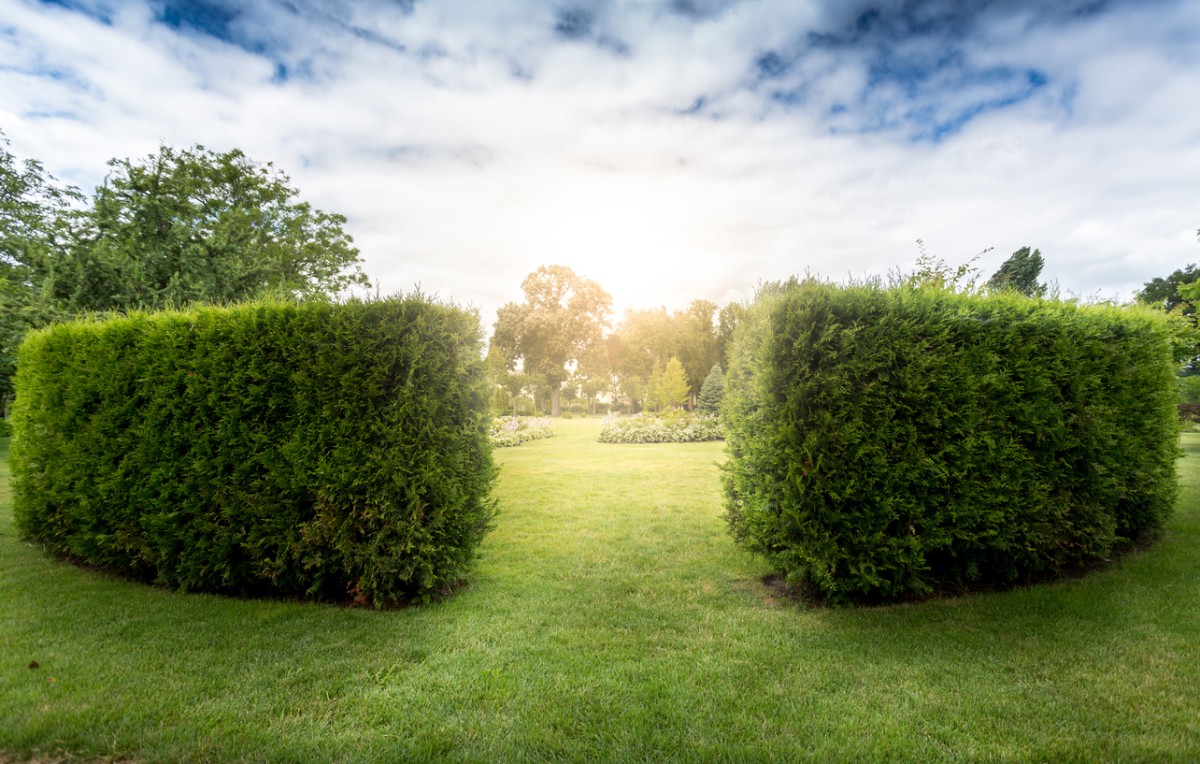
17, 18. Many grasses change the color of their leaves during the season. For example, Hakonechloa changes from green or golden yellow to pink and apricot tones.
19. Pennisetum is an annual grass with an unusual bronze-burgundy color.
-

- Photo 20
-

- Photo 21
-

- Photo 22

20. Some varieties of miscanthus are so frost-resistant that they can be grown in raised beds.
21, 23. Grasses frame the paved area near the well—the soft cushions of hosta contrast with the stiff, upright leaves of imperata.
-

- Photo 23
-

- Photo 24
-
- Photo 25

22, 24, 25. Decorative grasses are appropriate in any area of the garden—along paths, near ponds, or next to trees. It is important to choose varieties that will thrive in the given conditions (light, humidity, soil) and blend with their surroundings in terms of color and height.
❓ Questions and answers

How do I care for ornamental grasses?
Most grasses are easy to care for. They prefer well-drained soil and full sun but can tolerate partial shade. Water regularly while establishing, then only during dry spells. Prune back old foliage in late winter or early spring before new growth begins.
When should I cut back ornamental grasses?
Cut back grasses in late winter or early spring once growth has stopped and before new shoots appear. Some people leave the seedheads through winter for visual interest and habitat value.
Can ornamental grasses spread or become invasive?
Yes — some running grass species can spread aggressively. Choose clumping varieties if you want controlled growth, or use borders and containers to limit spread.
Which ornamental grasses work well in U.S. gardens?
Popular choices include Miscanthus (maiden grass), Fountain Grass (Pennisetum), Feather Reed Grass (Calamagrostis), and native species like Switchgrass and Little Bluestem for texture and seasonal color.
Sofia Lorenson: An expert in floriculture and floristry with 10 years of experience. I will help you create the garden of your dreams, which will bloom from spring to fall.