
How to care for peonies in a flower bed and in a bouquet: all the details and useful tips
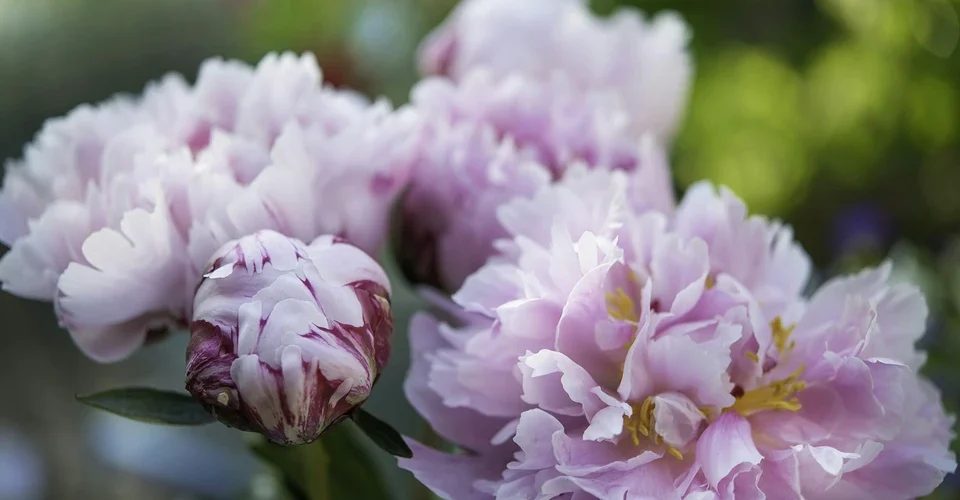
Do you dream of decorating your garden with peonies? Or have you placed a beautiful bouquet in a vase? You can learn how to care for these luxurious flowers in our article.
Peonies are often found in gardens. They are used in landscape design, make excellent bouquets, and, at the same time, are among the most undemanding plants: they do not need frequent transplanting, live for decades, and respond gratefully to careful care. Even if you water this flower, it will grow and bloom happily. And if you plant peonies in open ground and care for them according to all the rules, the flowering bush will become the main decoration of the site.
Everything you need to know about planting and caring for peonies
Planting rules
How to choose a location
Choosing the correct location for peonies is key to ensuring the bushes are lush and bloom profusely. For the plant to thrive in an area, it must meet several conditions.
- The flower needs enough sun. This means it should not be planted near house walls or solid fences, or under the crowns of spreading trees. But it also does not like direct sunlight, so the ideal choice would be a location where the flower bed is lit in the morning and evening and is in the shade or partial shade during the day. If there is no such area, then choose conditions that suit the variety you have purchased. For example, non-double varieties are unpretentious and can grow in both low light and full sun. Tree-like varieties tolerate a lack of sunlight better than an excess of it. Early peonies bloom before the summer heat sets in, so that they can be planted in direct sunlight.
- Since the rhizome overwinters in the ground, you need to choose a place where there is always a lot of snow in the cold and the wind does not blow it away; otherwise, the soil will freeze along with the root system, and the plant will not survive the winter.
- In spring, meltwater saturates the soil, and this flower cannot tolerate excess water, so it is better to plant it on high ground where waterlogging is impossible.
- The soil must be well-drained and aerated. It should be neutral: high acidity must be reduced with dolomite or limestone flour and ash; sand can be added, but in small quantities.
- Peonies require a lot of nutrients, so it is best to plant them directly in fertile black soil or loam, which retains fertilizers well; otherwise, you will have to fertilize them endlessly.
Tip: Make sure that the groundwater is no closer than 3.3 feet (1 meter) to the surface—it is destructive to the roots.

How to care for peonies in a flower bed and in a bouquet | Social media accounts of blogger lunalana.sad

Planting times
Most gardeners choose to propagate peonies by division—the simplest and most reliable method. With this approach, the rhizome can and should be planted in early autumn. Spring planting is also possible, but it requires more conditions to be met, making it more difficult.
September is the best time to plant these flowers. The plants are dormant, so they are easier to transplant and withstand the associated manipulations. In addition, roots take better hold in cool weather (in spring, the ground may be too warm for them), so by the time the shoots appear, they will be able to absorb nutrients from the soil thoroughly. However, do not plant peonies too late: it is best to do this before mid-October, when there is no frost yet.
When planted in spring, plants often do not have time to take root and may not survive the summer heat. To prevent this, planting should be done from March to mid-April, when it is not too warm outside. Please be prepared for the fact that there won’t be any flowering in the first summer. Moreover, if you notice buds on a specimen planted in the spring, it is better to pick them off; otherwise, instead of adapting and taking root, the bush will spend all its energy on forming flower stalks.

Planting times | Social media accounts of blogger putannikovana

Planting technique
Planting peonies is not difficult; even a novice gardener can handle it. Before planting, you need to prepare the soil: remove weeds, dig it well, and add organic fertilizer (manure, compost, etc.).
After that, you can plant the plants.
- Dig a hole 23.6 inches (60 cm) deep and wide.
- If the soil is heavy, place drainage material (gravel, bricks, expanded clay, or sand) at the bottom.
- The next layer should be manure or humus.
- Make a fertile mixture by mixing the excavated soil with 1-2 cups of dolomite flour (can be replaced with bone meal), ash, and compost (both no more than 1.1 pounds (500 g)). You can also add superphosphate or other complex fertilizers.
- Carefully examine the rootstock and cut off any damaged areas with a sharp sterile knife or pruning shears, and treat the cut areas with crushed charcoal.
- Fill the hole with some of the soil mixture.
- Carefully place the root system in the hole and spread out all its parts. Make sure that the roots are not buried too deeply and do not touch the manure, if you are using it.
- Begin to carefully cover the roots with the soil mixture, trying not to break them. The growth buds should be at a depth of 1.4-2 inches (3.5-5 cm). If they are too low, the plant will not bloom; if too high, it may freeze in winter.
- Then compact the soil (it is better to do this with your hands so as not to damage the buds) and water.
Tip: If the water spreads when watering, form a low rim of soil around the seedling to contain it.

Planting technique | Social media accounts of the kennel dom_s_pionami_v_sadu

How to care for peonies on your plot
Watering
Peonies are not water-intensive plants. They only need a couple of buckets of water once a week in the height of summer. And if the weather is cool and rainy, you won’t need to water them at all. The root system of these flowers extends very deeply, allowing them to reach moisture reserves in the lower soil layers. But if there is a prolonged heat wave, you can water the flowers every three to four days.
This plant should not be watered at the root. This is due to the peculiarities of its root system: the absorbing roots are formed mainly at its edges. And it is this part that absorbs water and nutrients. The younger the bush, the smaller it is: the absorption zone in a young peony is located 7.9-9.8 inches (20-25 cm) from its center, and water should be poured exactly there. In older plants, this area is wider, so it is preferable to water them at a distance of 15.7 inches (40 cm) from the central stem.
Since it is inconvenient to walk around the flowers with a watering can or bucket, it is better to dig a shallow groove around each flower and pour water into it. You can also lay a hose with holes in it in a ring and run water through it at low pressure. Make sure that a thick crust does not form on the ground after it dries, as it prevents the roots from breathing. If it does form, break it up and loosen it.

How to care for peonies on your plot | Pixabay

Fertilization
Fertilizer application is another essential part of the instructions for growing and caring for peonies properly. This plant can grow in poor soil, but then it will not be able to delight you with large buds, and may not bloom at all. For the bush to bloom profusely and delight you with its luxurious appearance, you will need to fertilize it. However, seedlings do not require fertilization for the first two years if organic and mineral substances were added to the soil during planting.
Starting from the third year, the plants are fertilized during the following periods:
- as soon as the snow melts;
- at the budding stage;
- during flowering;
- when the flower bed has finished blooming.
Fertilizer is not applied during the winter.
Complex potassium-phosphorus compositions are suitable as fertilizers. Organic fertilizers are also good: humus, compost, mullein infusion, etc. The use of nitrogen is highly controversial: some flower growers consider it necessary, while others argue it is either unnecessary or required only in minimal amounts.
The table will help you identify problems and determine what this flower culture needs.
| Substance | Signs of Deficiency Recommended | d Fertilizer Type |
|---|---|---|
| Nitrogen (N) | Leaves turn pale or yellow, and shoots are small and thin. | Compost, blood meal, fish emulsion, or urea-based fertilizer. |
| Potassium (K) | Leaves turn purple. There are a few flowers, and they are smaller than expected. | Wood ash, kelp meal, or sulfate of potash. |
| Phosphorus (P) | New leaves grow small and bluish-green, while older leaves turn yellow at the edges and curl. Flowers are sparse and small. | Bone meal, rock phosphate, or composted manure. |
Tip: An excess of minerals is just as harmful as a deficiency. Peony beds are most often overfed with nitrogen. Lush, rapidly growing bushes can recognize this with almost no buds.

Fertilization | Social media accounts of blogger putannikovana

Protection from diseases and pests
Changes in the leaves or petals of flowers can indicate not only a lack of nutrients, but also diseases. Fungal and other diseases often affect this flower, and the sooner you start fighting them, the better the result will be. As a rule, any treatment begins with removing all affected parts of the plant; otherwise, the pathogen will easily spread to neighboring bushes and infect them.
Then you need to determine what happened to the peony and begin treatment.
| Disease | Symptoms | How to Combat |
|---|---|---|
| Spotting | Spots that spread across the entire leaf as they grow, causing it to die. | Copper sulfate and other copper-based preparations, fungicides. |
| Powdery mildew | A powdery coating appears on the leaves, which then wilt and become deformed. | Calcined soda, fungicides. |
| Rust | Rusty-colored patches on the leaves. | Bordeaux mixture, fungicides. |
| Gray mold | Brown spots and gray coating on the root collar and leaves. | Potassium permanganate solution, copper sulfate, replacement of the topsoil. |
| Ring mosaic | Yellowish rings and half-rings on the leaves. The bush usually must be destroyed, but mildly affected plants may survive if isolated and monitored. | Remove and destroy infected plants; isolate others. No chemical treatment available. |
Prevention of diseases is quite simple.
- Do not plant too densely; make sure there is air between the stems.
- Pluck and destroy affected parts of plants promptly.
- Make sure that leaves from diseased trees do not fall on the flower bed.
- Take care of timely feeding of the plants: this will give the flowers strong immunity.
- Periodically (once every 7-10 days), spray peonies with biofungicides, copper sulfate, or Bordeaux mixture.
Tip: An unexpected but effective way to combat disease is to remove ants from flower beds. They can spread a variety of diseases, infecting all the plants in their path.
Various insects are just as dangerous to flower beds as fungi and viruses: aphids, spider mites, thrips, wireworms, nematodes, and others.
Some of them feed on leaves and buds, while others live underground and eat roots. If the pests that have found their way into the garden are significant, they are easy to spot and destroy in time, but many are so tiny they are impossible to see, and the gardener only learns of their presence after it is too late to help the plant.
To prevent this, summer peony care must include all possible measures to deter insect infestation.
- Regularly treat the bush with broad-spectrum insecticides (alternate between different products).
- Periodically wash the plants with a hose: the water jet will knock the pests to the ground.
- Water the plants with remedies prepared according to folk recipes. This can be a solution of calcined soda, tar soap, or diluted vinegar, etc.
Tip: attract birds to your garden by placing feeders with a small amount of food. When the birds come to feed, they will also peck at insects in your flower beds and vegetable garden.

Protection from diseases and pests | Pixabay

Pruning
When answering the question of how to care for flowering peonies, it is essential to mention regular pruning. There are two ways to do this.
- Flowers are cut off after they wilt. In this case, the bush will bloom profusely.
- One or more buds are left uncut, and the rest are removed as soon as they appear. This method allows you to grow flowers to their maximum size.
A more serious measure is planned pruning. It takes place in two stages. Immediately after flowering, all excess parts are cut off: dried leaves, wilted flower stalks, diseased parts, etc. This is done with sharp pruning shears, whose blades are disinfected. Then, before winter, when the leaves have completely turned yellow and the temperature outside is around zero, the stems are thoroughly pruned. If the plant is young and strong, 1.6-2 inch (4-5 cm) shoots are left above the ground; if the peony is diseased or very old, it can be cut flush with the soil.
Tip: Do this on a dry, sunny day so that the cuts heal quickly. If you do it in the rain, there is a high risk that the stems will start to mold and rot.

Pruning | Social media accounts of blogger liudmila_glushanina

Wintering
Many gardeners love peonies because they do not need to be dug up for the winter. After autumn pruning and phosphorus and potassium feeding, the bushes must be covered. Sawdust, pine branches, fallen leaves, peat, compost, etc., are suitable for this purpose. The mulch layer should extend far enough around the stem to cover the entire root system. If there is a chance of a windy or snowless winter, geotextile or spunbond can be laid over the mulch. When snow falls, it is raked into a snowdrift over the wintering bush.
In areas where winters are not too harsh, only weak, young, and diseased plants should be covered, while long-lived plants can be left as they are.
The next question that arises for every gardener is how to care for peonies after winter, because coming out of hibernation is no less important than preparing for it.
What do you think should be done in spring?
- The first rule of gardening is not to worry if the shoots take a long time to appear and not to try to dig them up. Some varieties take quite a long time to sprout, and if you try to check whether they are in the soil, you can easily damage them, delaying flowering for a whole year.
- If there is a lot of snow, drainage ditches should be made for meltwater to flow into.
- Peat mulch should be removed (peonies do not like it), as should old foliage (pests can hide in it).
- Cut off the stems that have dried out over the winter (leave the ones that are darkened but soft and elastic, as they may still grow).
- You also need to loosen the soil to give the roots access to water and air. But although loosening is an essential part of spring care, you should not rush into it: you should wait until the first stems sprout, otherwise there is a high risk of damaging them without noticing them in the ground.
If you follow these simple rules, your flowers will overwinter without any problems.

Wintering | Social media accounts of blogger pionbotan
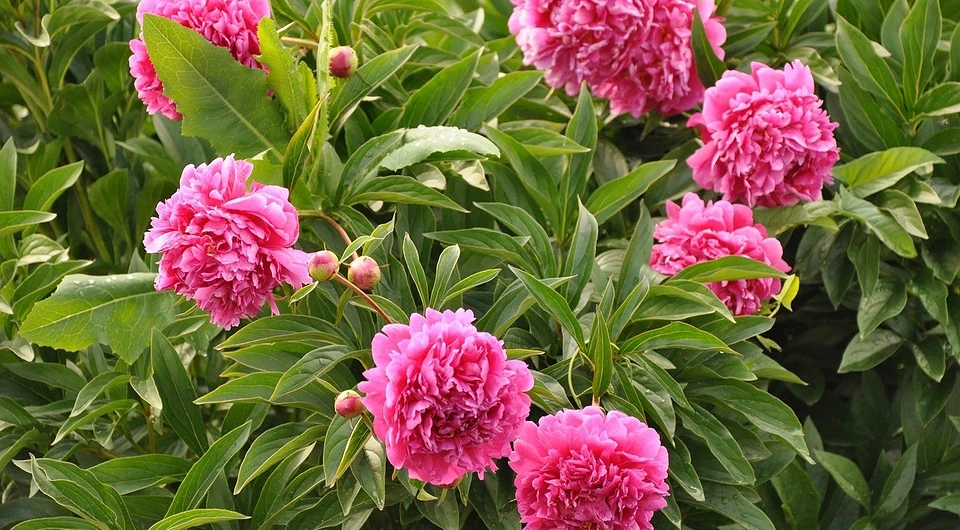
How to prolong the life of a bouquet
We have figured out what to do and how to care for peonies so that they bloom. But what is needed to keep cut flowers standing in water for a long time?
- Trim the stems and repeat this procedure daily.
- Choose a large vase in which the flowers will only slightly touch each other, but not stand close together — they definitely do not like proximity. It is also desirable that the container be made of dark glass or opaque, as bacteria multiply more actively in light in water.
- Peonies have quite a lot of leaves, which start to rot when wet. Therefore, they must be removed entirely from the part of the stem that will be in contact with the liquid.
- Pour slightly warm water if the buds are still closed and you want them to bloom quickly, and cold water if you’re going to delay the wilting and falling of the blooming bouquet (you can even add ice cubes during the day).
- The vase should be refilled every day, as these plants are very demanding in terms of water quality: it is advisable to let the water stand for at least a day so that the chlorine evaporates. Other harmful substances settle to the bottom (this part of the liquid should be poured out).
- To make the arrangement last longer, you can add disinfectants and nutrients to the water. It is better to buy special additives at a florist’s shop, which will both protect the cut plants from pathogens and feed them — in this case, the flowers will stay fresh and beautiful for up to two weeks.
- It is best to place the bouquet in a place where there is no direct sunlight or drafts: delicate petals are very sensitive and cannot tolerate either.
If the peonies have already arrived slightly wilted, you can try to restore their freshness. To do this, spray them with cool water from a spray bottle so that the drops fall on the stems, leaves, and petals. Or take thin, thick paper, wet it, and wrap the bouquet for several hours until it dries. High humidity will invigorate and strengthen the plants.

How to prolong the life of a bouquet | Social media accounts of blogger _dekabrist_ka_
❓ Questions and answers

How often should I water peonies during the summer heat?
Once peonies are established, they typically need about one deep watering per week during hot, dry spells. If it’s been cool or rainy, you may skip watering. Avoid shallow frequent watering — aim to moisten the root zone about 8–12″ (20–30 cm) from the stem for mature plants.
How can I cut a peony bouquet to last longer in a vase?
Trim stems daily, remove any foliage that will sit in water, use slightly warm water if buds are still closed (cold if already open), change the water each day, and place the vase away from direct sun and drafts. These steps help extend vase life to up to 10-14 days.
Do peonies need special winter protection in colder U.S. climates?
Yes — although many peonies are hardy, in zones with wind or little snow cover, it’s wise to mulch the plant base after the foliage dies back. Use pine branches, leaf mulch, or fabric cover if snow is sparse. In milder zones, you may leave mature plants uncovered, but still remove old foliage in spring.
What are common disease or pest issues with peonies, and how should I handle them?
Common problems include powdery mildew (white film on leaves), gray mold on stems, and rust spots. To protect your plants, ensure good air circulation (don’t plant too densely), remove and destroy infected leaves, and consider organic sprays like neem oil or a copper-based fungicide early in the season.
Sofia Lorenson: An expert in floriculture and floristry with 10 years of experience. I will help you create the garden of your dreams, which will bloom from spring to fall.


5 Responses
[…] How to care for peonies in a flower bed and in a bouquet: all the details and useful tips […]
[…] How to care for peonies in a flower bed and in a bouquet: all the details and useful tips […]
[…] How to care for peonies in a flower bed and in a bouquet: all the details and helpful tips […]
[…] How to care for peonies in a flower bed and in a bouquet: all the details and helpful tips […]
[…] How to care for peonies in a flower bed and in a bouquet: all the details and helpful tips […]