
How to fertilize peonies in the fall so that they bloom luxuriously in the summer: a list of products
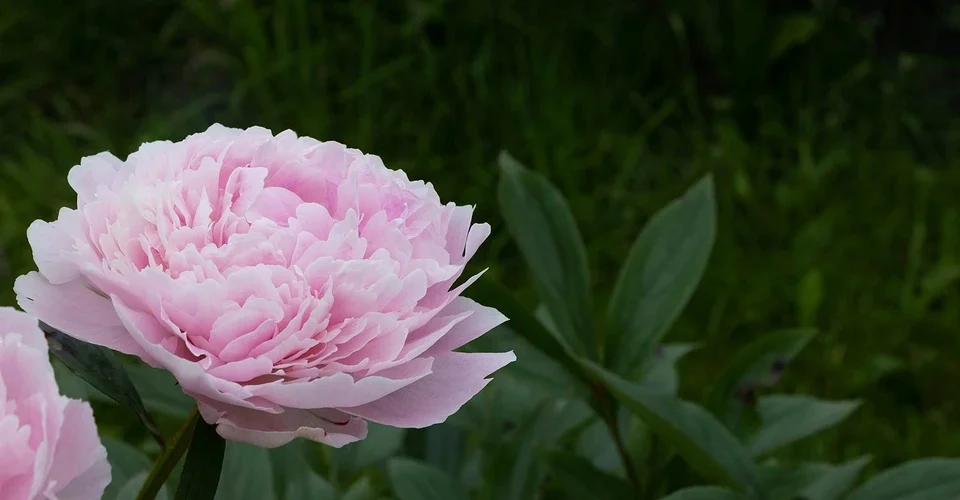
In September and October, peonies require proper care, the basis of which is correct feeding. Without it, the buds will not grow large and bloom profusely next summer.
In autumn, gardeners traditionally focus on their vegetable gardens, preparing the soil for future planting, and often forget about flowering perennials. Many people think that peonies are so unpretentious and undemanding that after they wilt, it is enough to cut them back so that they can safely overwinter and bloom again the following summer. However, this is not the case. These flowers need fertilizer support before the cold season. We will tell you what to feed peonies in the fall and how to do it correctly.
All about feeding peonies before winter
Why do you need to feed them in the fall?
When peony bushes start to fade, it may seem like they’re already going into hibernation, and it’s best to leave them alone. But this is a big mistake: at this time, the plant needs attention and care; otherwise, you may not see beautiful blooms next summer.
Although peonies look lifeless from September to November, their powerful root system continues to work actively, storing nutrients for winter and early spring. All summer long, the bush spent its energy on luxurious, lush flowers, drawing the minerals it needed from the soil. And even if you did not forget to water it regularly and fertilize it, the soil at the end of August is usually very depleted and cannot provide everything this crop needs.
Autumn feeding replenishes the lack of minerals and organic substances, helping the flower survive the cold without loss and quickly start growing in the spring. If you do not fertilize the plantings, the bushes will not produce large flowers in the next season, or may not bloom at all. Moreover, if severe frosts occur, this perennial may not survive, becoming weakened and deprived of essential micro- and macroelements.
In addition to saturating the plant with useful substances, it is advisable to perform several simple yet essential tasks, such as pruning and protecting it from pests. By combining proper feeding of peonies in the fall and preparation for winter according to all the rules, you can achieve spectacular flowering year after year.
It is advisable to feed the bushes, even if they look completely healthy; if the buds are small, pale, and quickly wilt, it is necessary to do so.
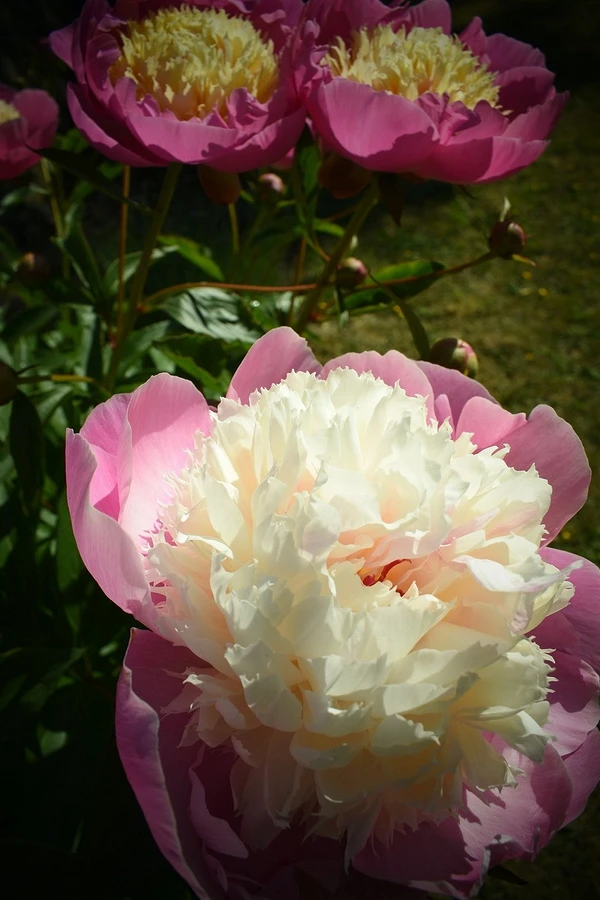
Why do you need to feed them in the fall? | Unsplash
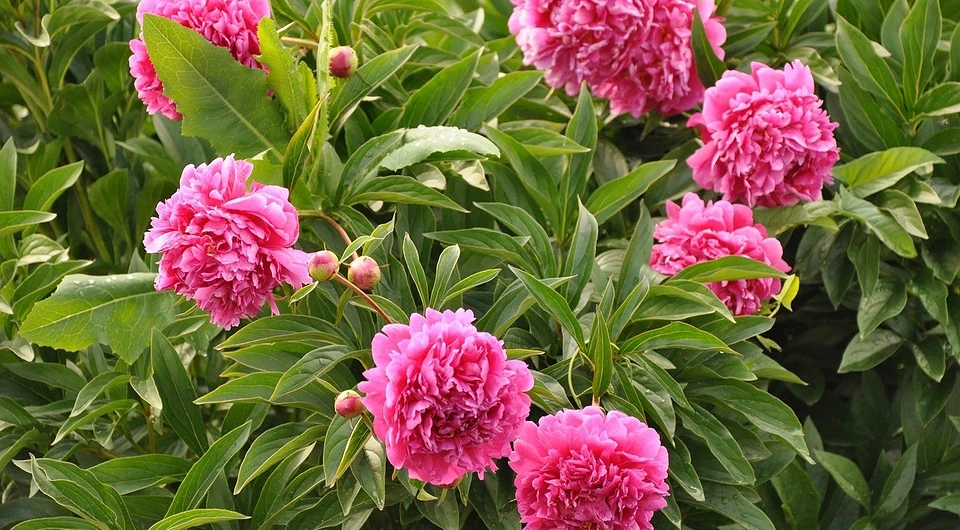
How to feed peonies in autumn before winter
There is a wide range of nutrients to choose from: mineral or organic fertilizers, store-bought or made according to traditional recipes. It is best to combine different fertilizers so the plant receives comprehensive support before winter.
Mineral fertilizers
Minerals are considered the basis of autumn support for peonies. If it is not possible to fertilize the bushes to the maximum, then adding a mineral composition is the first step.
The best substances for the plant before winter are potassium and phosphorus (it is best to check the dosage on the packaging). Thanks to these substances, the plant will be able to lay new buds for the coming year. Magnesium and sulfur can also be added to them. Industrial preparations such as superphosphate, potassium sulfate, kalimagnesium, etc., are suitable.
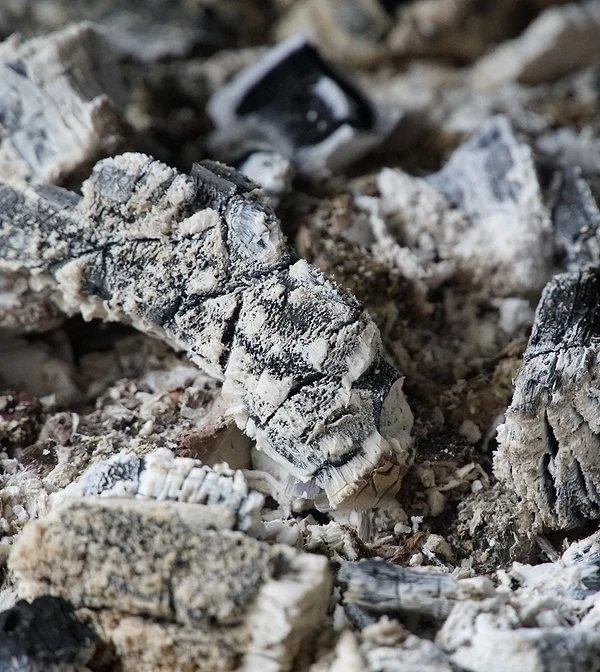
In turn, the best option for feeding peonies in September is wood ash. It contains enough calcium and potassium, along with a bit of phosphorus. To increase the amount of the latter element, add bone meal to the composition.
Tip: You can simplify the task by choosing a ready-made complex fertilizer for flower crops, marked for fall use.
Peonies should not be fed with nitrate, urea, or other nitrogen-containing products before winter. This substance stimulates the growth of green mass, which is entirely unnecessary in the fall: when cold weather arrives, the plant should go into dormancy rather than continue to grow.
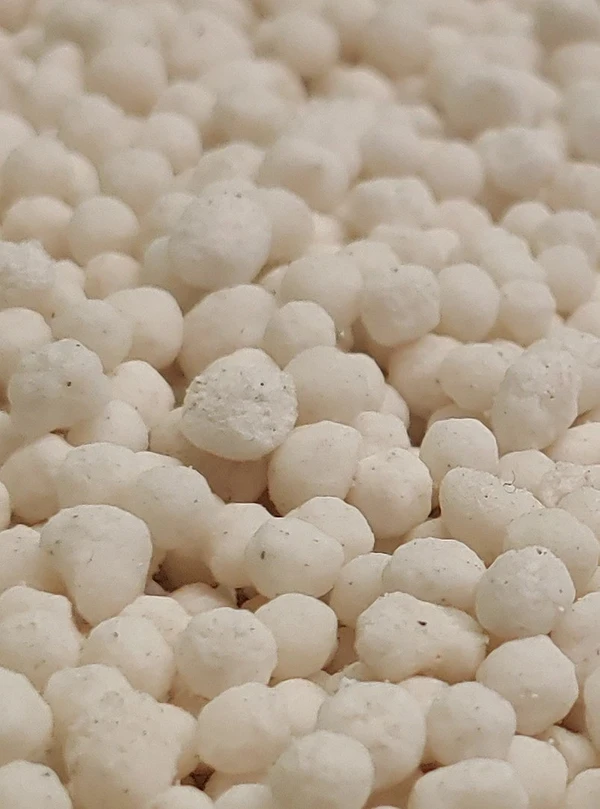
Mineral fertilizers | Pixabay

Organic
From this category of fertilizers, peonies will appreciate compost and rotted manure. They are diluted in warm water at a ratio of 1:5, infused in a dark place, then diluted to 2.6 gallons (10 liters) of liquid, and watered at a rate of 0.5 gallons (2 liters) of solution per bush.
Peat should only be used as a fertilizer for flower beds in one case — if the soil has a strong alkaline reaction. This organic substance, although considered beneficial, strongly acidifies the soil, so if the soil has a neutral, slightly alkaline, or even more acidic reaction, it should not be added under any circumstances.
(Peonies do not like overly acidic soil.) Fresh manure is also prohibited, as it contains nitrogen, which plants do not need before winter.
Organic | Pixabay

Folk remedies
If you don’t have store-bought fertilizer, you can make your own. In addition, folk recipes are used alongside industrial ones.
How to fertilize peonies in the fall (in August and September, before pruning) with such remedies?
- Coffee grounds contain many minerals and can be successfully used instead of some commercial fertilizers. However, they should be used sparingly (once after flowering is enough); otherwise, the soil will become too acidic.
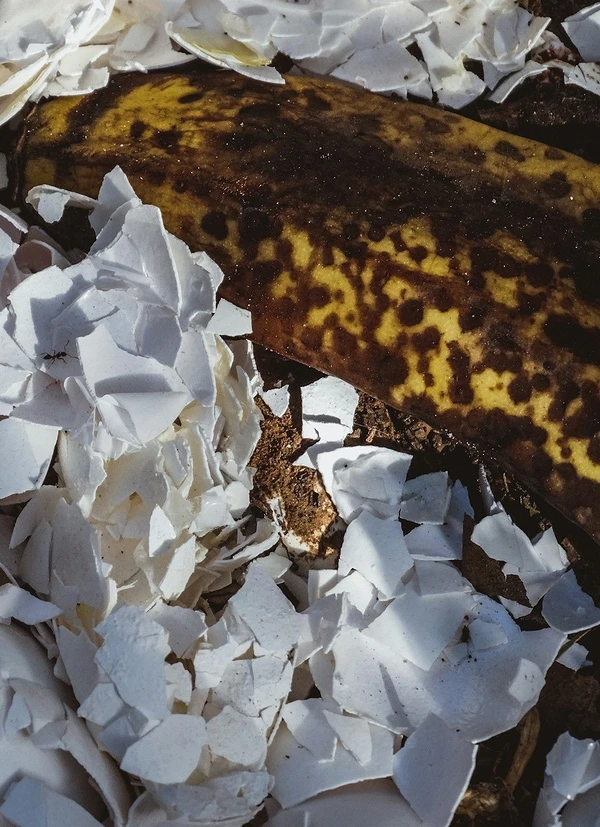
- Banana peels are an excellent source of potassium, magnesium, and other essential nutrients. Banana peels can be dried in the oven and ground into powder, which can then be used to make a solution for watering. Alternatively, they can be finely chopped and buried shallowly (do not spread the peels without covering them with soil, as they will start to rot and attract insects).
- Eggshells are also suitable for feeding. To do this, pour 1.3 gallons (5 liters) of water over the shells from 10 eggs and let them steep for several days. 0.1 gallons (half a liter) of this infusion is enough for each bush.
It is advisable to combine these additives, as some are rich in potassium, others in phosphorus, and still others in other important micro- and macroelements. Together, they will have a much more pronounced effect than separately.
Tip: Don’t try to treat your flowers to yeast bread infusion. Although this fertilizer strengthens the crop’s health at other times of the year, before winter, it can cause increased plant growth, which is highly undesirable.
Folk remedies | Unsplash

How to apply fertilizer
In autumn, only root feeding is used, as the leaves wither and dry out, unable to absorb and transport nutrients. Also, it is best to do this before mid-October (aim for 30-45 days after the end of flowering) and strictly observe the dosages. If you give the bush too much nutrition or do it too late, it will start growing again and will not have time to enter a dormant stage before the onset of cold weather. Another important rule is to feed before pruning.
First, apply mineral fertilizers, as they are much more important than organic fertilizers at this stage. If you do not have time to add organic matter to the soil, it will not be critical to the plant, but without phosphorus and potassium, it will not be able to delight you with beautiful flowers next season.
You can use both liquid and dry compositions. In the first case, the substance is diluted according to the instructions and watered in a circle at a distance of 9.8-15.7 inches (25-40 cm) from the stem (where the suction roots are located). In the second case, the granules are placed in a trench dug at a short distance from the base of the bush, then sprinkled with earth and watered abundantly.
Tip: if the weather is rainy, it is better to use dry fertilizers (they will dissolve more easily in wet soil without additional watering), as peonies do not need excess water — dampness can cause their roots to rot.
It is not necessary to bury organic matter in the soil. It is enough to scatter it on the surface; under the influence of precipitation, the nutrients it releases will gradually pass into the ground, enriching it and making it more fertile.

How to apply fertilizer | Social media accounts of blogger liudmila_glushanina

What else needs to be done
Autumn is the best time to improve the soil if, for some reason, it is not suitable for peonies. Sand is added to clay soil to improve drainage, and dolomite flour or lime is added to acidic soil. In addition, it is worth treating the plantings and soil with fungicides and insecticides as a preventive measure to destroy insect larvae and disease spores.
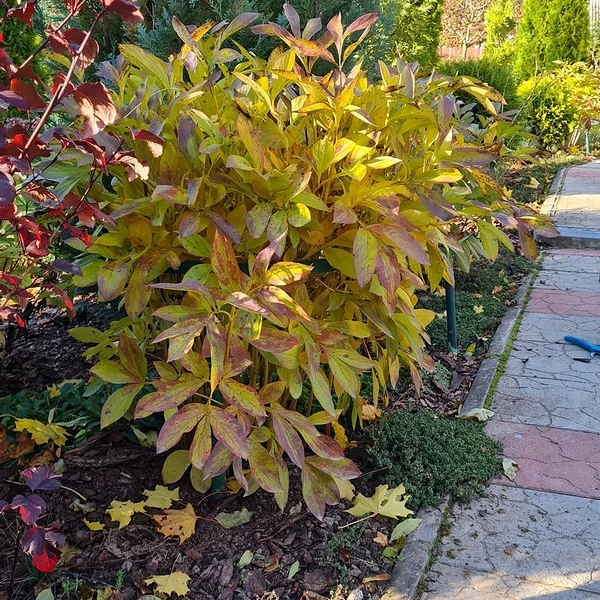
Also, before winter, peonies must be pruned; otherwise, their stems will rot from the cold and become a source of infection in the garden. This is done when the bush finally enters a dormant stage. This is evident in the completely yellowed foliage: this condition indicates that the root system has absorbed all nutrients.
Please don’t prune the plant immediately after flowering, when the foliage is still green. At this time, it is forming growth buds for the following year. Without green mass, photosynthesis slows, and the bush cannot obtain enough of the necessary substances for its development, so flowers will not appear on it in the summer. It is advisable to wait 1-1.5 months, then apply mineral fertilizers, and only then start pruning.
Shorten the branches with a sharp, clean knife (it is advisable to disinfect it with alcohol or boiling water), and sprinkle the cut with ash or activated carbon. Leave 1.2-2 inches (3-5 cm) of stem above the ground on healthy specimens (this is necessary so as not to accidentally damage the renewal buds, which are located close to the rhizome), and cut diseased or old ones down to the ground. This method is suitable for all herbaceous varieties. Tree-like varieties are pruned differently: woody parts are usually left untouched, and only excess shoots growing in the wrong direction are removed.
The cut green mass is thrown away outside the site or burned (as it may contain parasite larvae and bacteria).
Herbaceous peonies do not need to be covered (except for newly planted ones), but the space around them should be mulched to protect the roots from frost. Dry leaves, humus, sawdust, and other materials are used as mulch. Young seedlings are covered with spruce branches, cardboard, or non-woven material. If you decide to insulate the soil with peat, it is advisable to remove it in the spring to avoid altering the soil’s pH.
Tree-like varieties require more thorough winter preparation: they must be reliably protected from frost. To do this, their branches are carefully tied and covered with spruce branches, burlap, or spunbond. It is best not to throw the material directly onto the bushes, but to make a frame for it so that air remains inside.
How to fertilize peonies in the fall so that they bloom luxuriously in the summer | Social media accounts of blogger liudmila_glushanina
❓ Questions and answers

What type of fertilizer is best for peonies in autumn?
Choose a fertilizer rich in phosphorus (P) and potassium (K) rather than nitrogen (N), since at this stage you want the plant to prepare for cold, not grow more foliage. Also consider organic options like compost or aged manure.
When is the right time to apply fertilizer to peonies in the fall?
Apply the fertilizer about 30–45 days after the end of flowering and before heavy frosts hit. Make sure the plant has started to go dormant (yellowing foliage) so that feeding supports root and bud development rather than above-ground growth.
Can I use the same fertilizer regimen I used in summer for my peonies in autumn?
No — the needs are different. Summer fertilizing often focuses on nitrogen for green growth and blooms; in autumn, avoid high-nitrogen products and instead concentrate on nutrients like phosphorus and potassium to help the plant survive winter and bloom next year.
Sofia Lorenson: An expert in floriculture and floristry with 10 years of experience. I will help you create the garden of your dreams, which will bloom from spring to fall.


2 Responses
[…] Preparation for the cold weather begins with fertilization. In spring and summer, flower bushes consume a lot of nutrients for active green mass growth, bud formation, and flowering. During this period, the root system is “deprived” and receives almost no nutrition. In early autumn, the roots really need nutrients to lay new buds and build up reserves for winter. Therefore, peonies need to be fed. […]
[…] is no need to feed peony bushes in the fall. If they were properly fertilized in the spring and summer, they will have enough nutrients to […]